
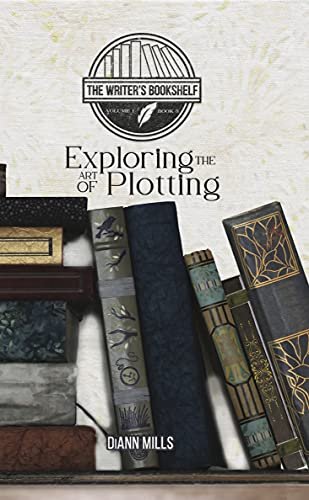
Exploring the Art of Plotting Your Book

Last month in part one of my Exploring the Art of Plotting two-part series, I discussed what multiple award-winning author DiAnn Mills says about characters, story idea, story line, theme, concept, and premise in her book, Exploring the Art of Plotting. In this book, DiAnn pulls from her years of studying the craft of writing, along with her experience penning novels, to educate writers on the many twists and turns of plotting.
As I mentioned previously, DiAnn explores how plot is developed, how to overcome obstacles, and how to increase stakes in the pages of Exploring the Art of Plotting. She shows writers how to begin a novel, how to fix sagging middles, and how to end with a satisfying resolution. She also includes exercises at the end of each chapter for further guidance.
Today I’ll cover several writing nuggets DiAnn shares about the power of setting, story pacing, and developing a writer’s voice.
The Power of Setting in Plotting
According to DiAnn, setting is the physical environment where a story takes place. A strong setting challenges character, plot, dialogue, and narrative by adding a twist in the protagonist’s journey to reach a goal. Setting gives the story an extra dimension by adding stumbling blocks for the protagonist in every scene. An author needs to establish the time, date, season, and culture of where the story takes place. Show enough setting for readers to envision the story world.
Use sensory perception to root the protagonist into his or her surroundings. Sights, smells, sounds, tastes, and touch paint the scene. The more credible a writer shapes the setting, the more he or she adds strength to a story because it forces the character to respond.
DiAnn mentions the seven universal emotions to add to our stories: surprise, fear, anger, sadness, disgust, happiness, and contempt. She says to move your characters around in the setting and initiate a psychological response. An unexpected change in a protagonist’s environment reveals the true inner self by displaying strength or weakness.
I have attended many of DiAnn’s workshops and one thing she often mentions is the antagonistic setting. She says that using setting as an antagonist increases stress, tension, and conflict for the protagonist striving to achieve a goal. She suggests writers use the character’s fears and weaknesses against him or her. Outline the characteristics of an unexpected force rising against the protagonist, and watch plot twists emerge that can take the story deeper.
An antagonistic setting means shaky ground for the protagonist. It gives a plot power.
Story Pacing
DiAnn defines story pacing as the writer’s ability to move the story ahead with intriguing words and sentence length. Faster pacing ensures action and uses the scene’s mood to add stress, tension, and suspense.
To accomplish a faster story pace:
- Choose an active voice with strong verbs.
- Create shorter sentences, paragraphs, and scenes.
- Develop action driven hooks at the beginning and ending of a scene.
- Enlist snappy dialogue.
- Focus on shorter words and hard consonant sounds.
- Hold back on reaction scenes.
- Limit characters in a scene.
- Raise the stakes in the scene/chapter hooks.
To achieve a slower pace:
- Add more description.
- Choose an active voice using nouns and verbs that have soft consonant sounds.
- Create longer sentences, paragraphs, and scenes.
- Detail reaction scenes with character-building introspect.
- Expand dialogue with additional action or internal reflections.
- Focus on longer words.
- Slow the stress and tension.
Story pacing is the writer’s means of controlling emotion and mood.
Developing a Writer’s Voice
DiAnn believes developing a writer’s voice in not a fill-in-the-blanks exercise. The definition of voice is two-fold:
- Everything a character experiences, demonstrates, and expresses according to his or her traits.
- The writer’s unique style of writing or author’s voice.
I love how DiAnn says that voice shows the writer’s fingerprint, a way for readers to identify style. Developing a writer’s voice takes time. No two characters should ever quite sound alike. Voice is a subconscious activity stamped with personal style, word choice, originality, and passion for the project.
A writer’s genre also influences word choice.
A lot to think about, but when a writer tunes out the critics and writes the story of their heart with a character they love, the voice emits from their fingertips.
Finally, don’t be afraid to be you. A distinct voice means having the confidence to allow your personality to shine through your story.
These nuggets taken from Exploring the Art of Plotting are glimpses into the wisdom found in DiAnn's book. To thoroughly gain all she has to teach about the art of plotting, grab a copy of her book and read it for yourself.
Which of these nuggets did you find especially helpful?
I wish you well.
Sandy
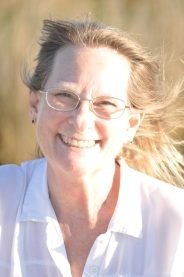
Hello, everyone. As a new writer for Write2Ignite, here's what you can expect from me in the coming months. In my posts, you'll find words of encouragement for writers, book reviews, and discussions on the craft of writing. I am a regular contributor to Guideposts devotional books as well as a conference speaker. I write articles, devotions, and stories for adult and children’s publications. Looking for words of encouragement or gluten-free recipes? Then check out my blog at https://sandykirbyquandt.com
Excellent advice! All of it!
I love using setting as another “character” in my longer stories. The setting can either help or hinder our characters. And it’s an opportunity to have our main character show their creativity and “smarts”. How they use the setting can make all the difference.
And I’d like to add two more suggestions to the emotion list: hope and hopelessness. I used both of them in a situation in my YA fantasy, and both in the same scene. Just one of the black moments in the story. The hard part was figuring out HOW to get them out of the situation they were in. That took ME some creativity and smarts. haha!
Pam, thanks for the additional suggestions regarding hope and hopelessness. Wonderful thoughts.
Sandy
The setting as an antagonist. As hurricanes hit, I’m aware of that. Carol Baldwin
Absolutely, Carol. It’s something we may forget at times.
Sandy
Thanks for such a helpful summary of DiAnn’s plotting suggestions!
You’re welcome, Kathy!
What great info! Quite a bit of gold in this blog post! Thanks!
Thanks so much, Marci. DiAnn’s book is filled with “gold”!