
At Write 2 Ignite, we're very excited about our upcoming Master Class on lyrical language with Natalee Creech and we hope you are too! In her first post Natalee talked about what to expect at her class. Today we're getting a behind the scenes look at her revision process. What a treat!
A PEEK at NATALEE'S REVISION PROCESS
Hello, Write2Ignite writers!
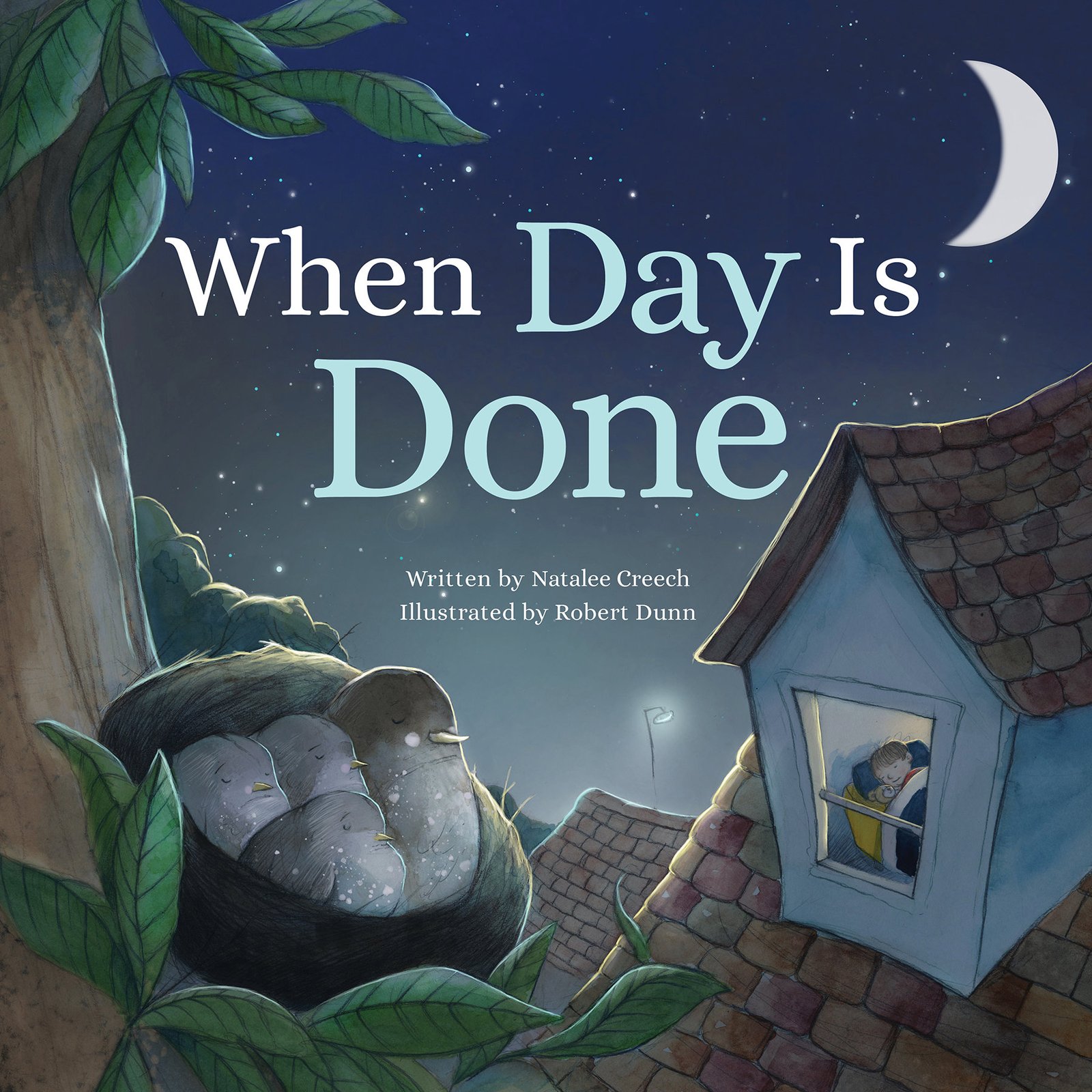
I thought you might be interested to take a look at a stanza from When Day Is Done – how it started, and how I revised it to become what was published. I’ll lead you through what I was thinking as I edited that verse to make it sound more musical.
When Day Is Done is a quiet going-to-bed book that reassures children than even though it is time to sleep now, everything they love and want to do will still be there tomorrow. It is a rhyming book in which each stanza contains three lines that rhyme with each other, then a fourth line that is repeated at the end of each stanza. The manuscript began with the titular line that is repeated throughout. That phrase, “we sleep when day is done,” randomly appeared in my head one day and I liked the sound of it, so I decided to see what kind of a story or poem I could shape around it.
Let’s get started:
Safe in bed we dream our dreams
While overhead the moonlight beams
At silver stars or so it seems
We sleep when day is done.
Initially this stanza feels pretty strong, especially for a first draft! (Please note that this particular manuscript was more polished as a first draft than any of my others. I am not sure why, but it is absolutely atypical! I revised Nothing & Something for literally years. When Day Is Done came together in a month or two.)
Let’s take a look at what works:
Alliteration: dream our dreams (also repetition), silver stars, so it seems, day is done
Assonance: we sleep,
Rhyme: dreams/beams/seems, internal rhyme: bed/overhead
But… both the word choice and rhyme of “so it seems” felt weak. Saying that it seems like the moonlight is beaming at the stars weakens the personification. And “safe in bed” was okay, but the word choice didn’t sing.
Here’s a second attempt:
Tucked in tight we dream our dreams
While overhead the moonlight beams
And stars swim by in silent streams
We sleep when day is done.
What works:
“Tucked in tight” conjures up the same image as “safe in bed” – cozy and warm - and adds alliteration. The internal rhyme of tight/moonlight replaces the internal rhyme of bed/overhead.
I eliminated “or so it seems” from the third line which made the second line stronger. I liked the alliteration and assonance of the new third line as well as the personification of the stars swimming by.
But… the line didn’t feel smooth to say. “And stars swim” was tricky! Possibly it was the 4 consonant sounds in a row: and stars… or possibly it was moving your tongue from the /t/ sound in stars to having your lips form the /w/ sound in swim. In the end, the why was not important. It felt tricky so it needed to be revised because the text should feel effortless.
In my third attempt I settled upon this, which is what was published:
Tucked in tight we dream our dreams
While overhead the moonlight beams
At silver stars in silent streams
We sleep when day is done.
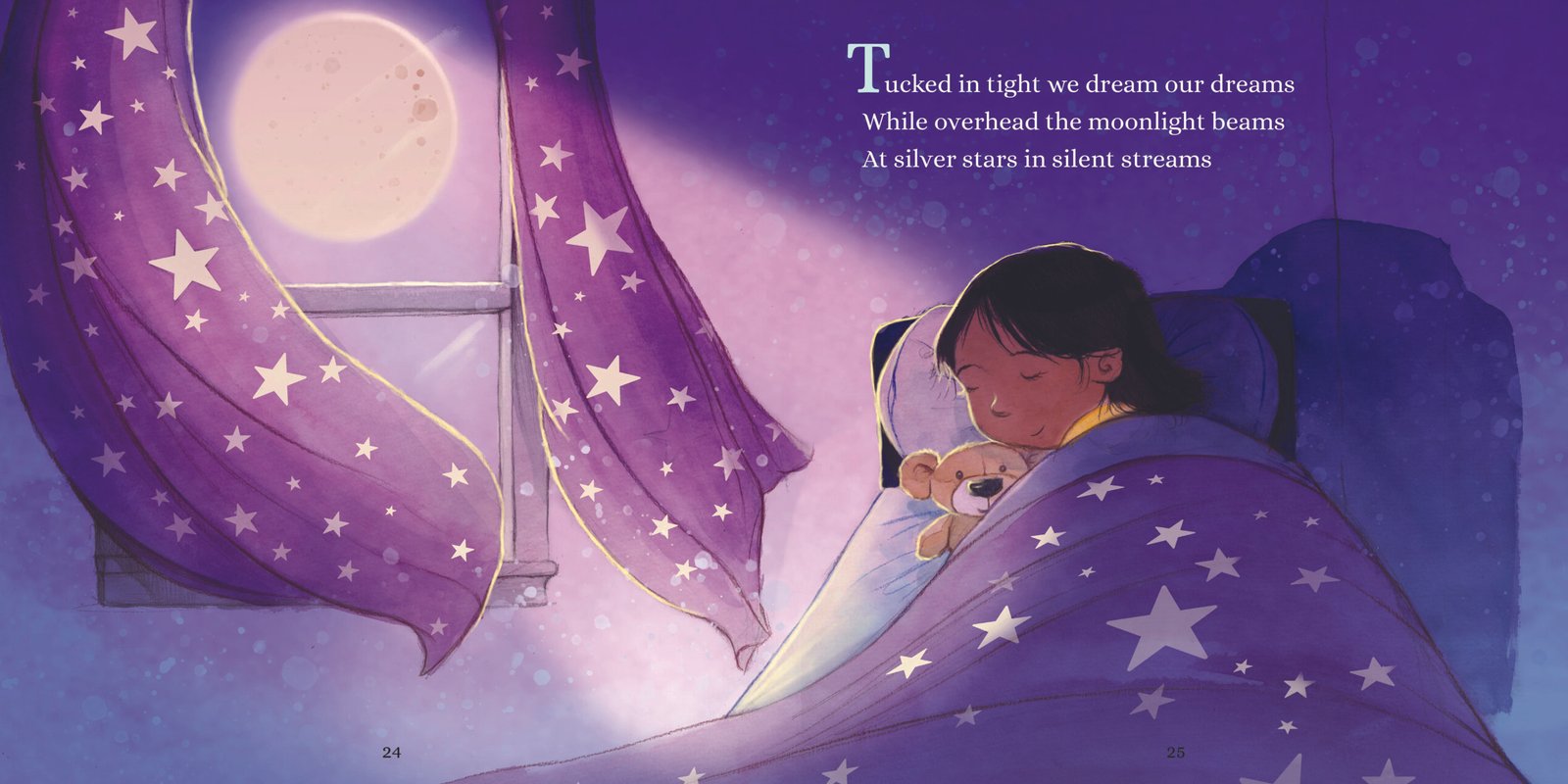
I lost the assonance of by/silent but the line still contained alliteration. Most importantly, it flowed better.
Books with lyrical language are meant to be read aloud and the words should flow effortlessly. Read your manuscripts aloud and examine each word to see if it is pulling its weight. Cut words that are fillers - along for the ride - and replace them with words that will not only mean what you want to communicate, but sound pleasing to the ear.
If you want your words to sing and your musings to make music, I invite you to join me and other Christian writers for a master class on lyrical language in prose: Sept. 28 from 9:30 - 5:15. (Recordings will be available for a limited time if you cannot make it on that day.) Check out this jam-packed schedule and register here!
Award-Winning Author and Speaker

Natalee Creech is a children’s author who is equally at home in Canada, (where she grew up) in the U.S., (where she studied education) and in South Korea (where she taught for many years). Weekly trips to the local library and listening to read-alouds for four children helped foster a love of language from an early age. Natalee currently teaches preschool at a classical Christian school where she gets to help kids fall in love with God and all things good, true, and beautiful. She lives in Oklahoma with her husband, two children, and two cats.
Natalee’s picture books, Nothing: Nothing Can Separate You From God’s Love and Something: One Small Thing Can Make a Difference, were both ECPA Christian Book Awards finalists in the children’s category, though her family’s favorite is the more lyrical When Day Is Done.
Connect with Natalee
Facebook: facebook.com/nataleecreechauthor
Twitter: x.com/NataleeCreech
Instagram: instagram.com/nataleecreechWebsite: nataleecreech.com
DOOR PRIZES FROM NATALEE!
Natalee is giving away a copy of each of her wonderful picture books at the master class! Jean Hall reviewed NOTHING! a few weeks ago.
Thanks for this peek at your process! I love when I read something out loud and it physically feels good in my mouth while I’m reading! If that makes sense.
I have a vendor event the day of the Masterclass, so I’ll catch the replay, unless it rains buckets. Then I’ll be there live. Looking forward to it!
Stellar blog post, Natalee! Thanks. See you Sept. 28.
Great post with specific tips! Thanks for sharing your process!
Exceptional post with excellent examples! 🙂
We have family coming in that weekend, but I’m hoping I can pop in for an afternoon session or two. If not, I’ll catch the recordings. Thanks, Natalee.
Turning beautiful words into something truly enchanting. Thank you for sharing this behind-the-scenes look and your process. Can’t wait for the master class.