
"My people, hear my teaching;
Psalm 78:1-8
listen to the words of my mouth.
I will open my mouth with a parable;
I will utter hidden things, things from of old—
things we have heard and known,
things our ancestors have told us.
We will not hide them from their descendants;
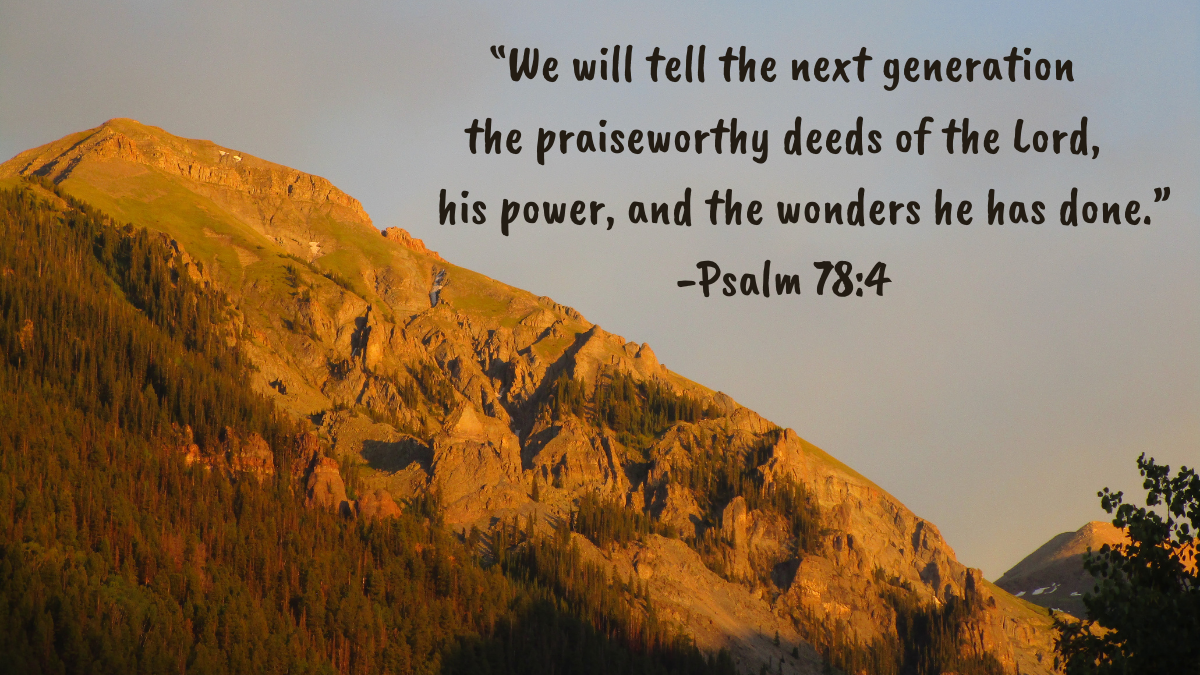
we will tell the next generation
the praiseworthy deeds of the Lord,
his power, and the wonders he has done.
He decreed statutes for Jacob
and established the law in Israel,
which he commanded our ancestors
to teach their children,
so the next generation would know them,
even the children yet to be born,
and they in turn would tell their children.
Then they would put their trust in God
and would not forget his deeds
but would keep his commands.
They would not be like their ancestors—
a stubborn and rebellious generation,
whose hearts were not loyal to God,
whose spirits were not faithful to him."
Tell the Next Generation
One of the most important tasks we have as Christians is to tell the next generation of the goodness of God. In passing on the stories of God's faithfulness, in teaching His commands, and in speaking of His power and might, we share the foundational truths of our faith. We show that God is capable of handling all of our needs and that He is both just and merciful. Knowing what the Lord has done builds our ability to trust in Him no matter what we face and teaches us about His character.
The Teachings of Psalm 78
In Psalm 78, Asaph, the chief musician in the time of David, urges Israel to tell the next generation of the wonderful works of the Lord. He emphasizes the importance of preserving and sharing Israel's history with her children. Why does he say that it's so important to share God's works? So that "they [the next generation] would put their trust in God and would not forget his deeds but would keep his commands," (Psalm 78:7).
Asaph wanted the next generation to know of both God's goodness and Israel's shortcomings, so that they would trust God and follow His commands. The events of Israel's history show repeatedly the patience and forgiveness of the Lord, while also showing the dangers of rebelling against Him.
The Goodness of God
Throughout the psalm, Asaph recounts Israel's history, with a special focus on how the Lord led the people out of Egypt and guided them through the desert.
During that time, God protected Israel, parting the Red Sea and preventing their enemies from following them. He guided them with cloud by day and fire by night. He provided for them, bringing water from stone and manna from heaven.
When in turn the people rebelled, the Lord tempered His wrath with mercy. He restrained His anger and forgave them repeatedly. Always the Lord was faithful to His promises, bringing His people to a land of their own.
In teaching this history, Asaph reminds us of God's character. The Lord is patient and loving, protecting His chosen people and providing for them. He is also just, not allowing sin to go unpunished. We see His power in each of His deeds; we see the full might and wonder of a God whose purposes never fail. In remembering the deeds of the Lord, we are reminded that our hope has a solid foundation. We can trust God because He has proven Himself over and again.
The Shortcomings of Israel
In his account of Israel's history, Asaph doesn't gloss over her mistakes. He tells the next generation of Israel's failures. The people, even after seeing the Lord's miracles, rebelled against Him. They grumbled. They put God to the test. Even after being rescued from Egypt, the people didn't believe in God or trust in Him.
When the Lord judged the Israelites, they turned back to Him with their mouths. Even so, Asaph says "their hearts were not loyal to him" (Psalm 78:37). Instead, they were faithless, "as unreliable as a faulty bow," (Psalm 78:57), and chased after idols.
Why does Asaph spend so much time emphasizing Israel's failures? As he said in the beginning, he didn't want the next generation to follow their ancestors' footsteps. He wanted the children to remember the Lord's deeds and to follow His commands faithfully. Seeing the goodness of God shows us that we can trust in Him. Seeing the results of Israel's sins, however, shows the dangers of turning our eyes away from God. We learn from their history how easy it is to grow complacent and to forget what the Lord has done for us. When we follow God and obey His commands, we find ourselves in the safety of His arms. Yet, when we pull away and rebel, we step into a world of danger and destruction.
What Will We Tell the Next Generation?
As children's writers, we have the opportunity to share truth with the next generation. We have the chance to share what we have heard and known with children so that they can put their trust in God and learn to keep His commands.
Whether we write directly of God's deeds or whether our fiction reflects foundational themes such as forgiveness and hope, we have the chance to tell the next generation that the Lord is real. Love is real. Mercy is real. We can speak of God's goodness, and God's justice as well. Our writing can show that people make mistakes, and that when we refuse to turn from wrong, there are consequences. We can show the hope and peace to be found in trusting the Lord. Our words can demonstrate the safety and wisdom that comes when we follow God's commands.
I hope in reading Psalm 78, we find encouragement to use our writing to share the wonders of the Lord's works.
Karley Conklin
Karley Conklin is a librarian by day, a writer by night, and a bookworm 24/7. For more of her writing, visit litwyrm.com
Thank you for this thoughtful inspiration. A good reminder to honor God, who gave us this gift of writing. 😊♥️
Wonderful post! I have some verses of this Psalm printed in the front of every one of my books. So important and you explained it beautifully, thank you!
Well said.
I like thinking about what are we saying to the next generation… thanks, Karly!
Yes! It’s so important to teach children about God. It’s the whole “train up a child” thing we know from Proverbs.