
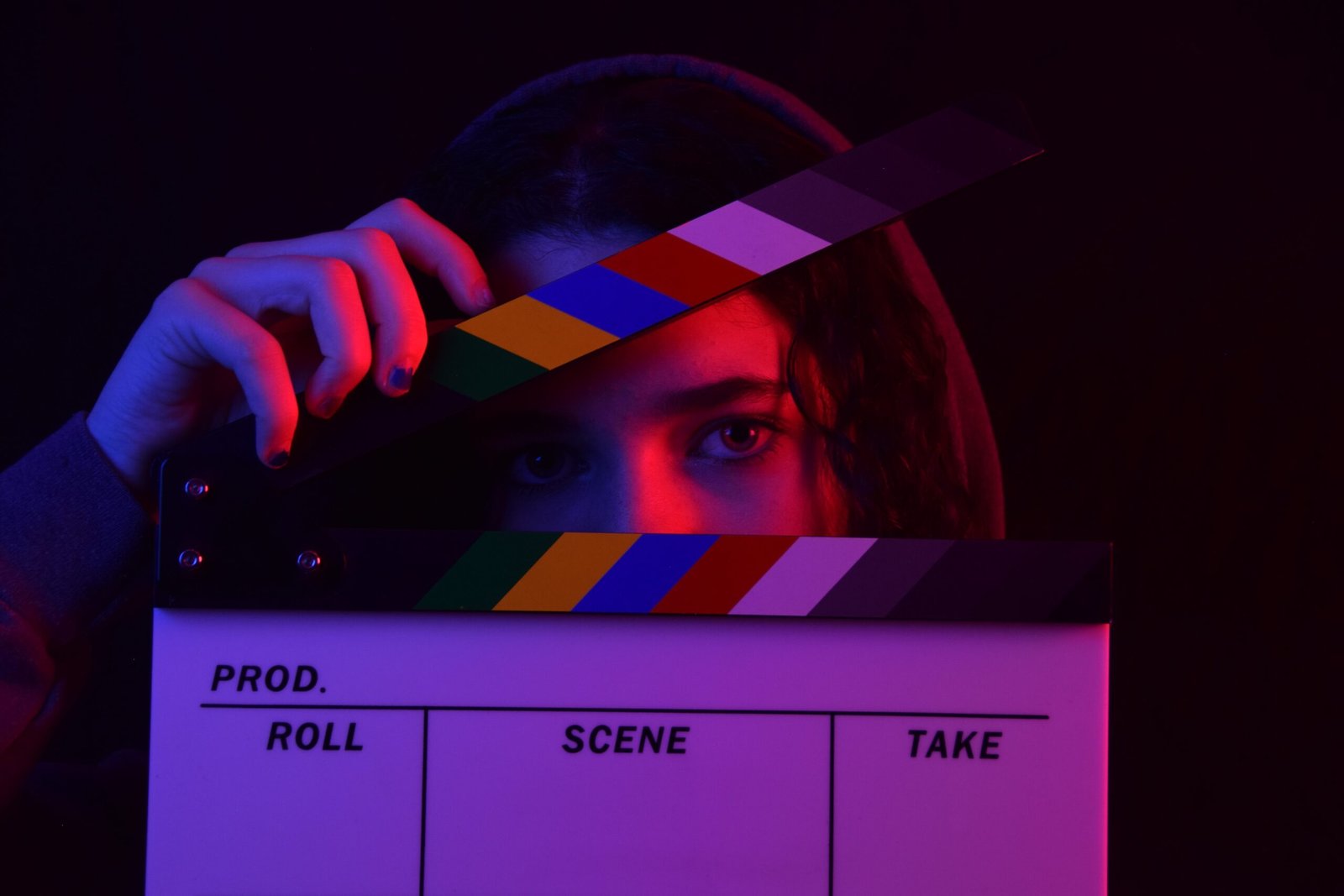
Although I have been published for over twenty years now, my background is actually in film. I have a bachelor’s degree in Cinema, where my emphasis was cinematography. Of course, God had other plans for my life than that of a budding filmmaker. Nevertheless, I learned many valuable lessons from my film school days that one can apply to writing. One of them is setting the scene.
A film is basically a narrative told primarily through visuals. Each scene that takes place will usually have multiple shots taken from various angles. When a film production films a scene, each detail is considered. For example, people get paid to know exactly how a table setting needs to look throughout a dining room scene, even when different angles are filmed, to give an editor reaction or dialogue cut aways. If a person takes a drink from a glass of water from one angle, then the level of that glass of water needs to match when a closeup shot is taken. Details are important.

For writing, we don’t have to be so persnickety with our details. However, here are some steps to help set the scene to make our writing more effective.
Take a Mental Picture
I don’t know about you, but when I write, I “see” the parts of my story. It’s like looking at a photograph in my head. I have to visualize what a room or area my character interacts with looks like. Sometimes I will even sketch out a scene, or write up a list of details to help me get a “feel” for what my character will encounter. This helps me greatly because I can use those descriptive details to move the story along.

But how much detail do you need to visualize? I try to think about as much detail as possible, just in case. You never know when something may be needed later on down the line.
Consider Point of View
Depending on your point of view, however, will determine how much you write about. If we are writing in 3rd person, the narrator will be the describer of the scene. If it’s 1st person, then we have to see things through the character’s eyes.

We do NOT need to share all the details with our readers. Why? Because not every detail will be important for them. They are important to the writer because they provide us with insight and motivation to make our scene realistic. But unless you need certain specifics for your story, it isn’t necessary to provide the reader with every detail.
Do a Walk-Through
You have an idea about the detail of your scene. You know whose viewpoint you are considering. Now put your character’s shoes on and take a walk through the scene. This will help you see what’s important and what’s not necessary to describe.
Let’s say a character walks into a bedroom. What does she see? And how do you describe that in such a way that you only give important details? Remember, we don’t need to share everything, just those things that will help the reader interact with the story to move it along.
Here are two examples of what you could include:
Example 1, 3rd Person:
Jean hurried into the tiny bedroom. She looked around at all the clutter, wondering where she had put her brush. Was it behind the stack of unopened mail? No. Was it under the pile of clothes on top of the bed? No. She peeked under the bed. There it was, sitting amidst a bunch of dust bunnies. Jean grabbed the brush, quickly shook off as much of the dust particles as possible, and ran out the door.
Example 2, 1st Person:
I was in a hurry as I ran into my room. I hated how small it was. It didn’t allow me any time to keep it clean. But in reality, I doubt I would have bothered so much. I was too busy with my two jobs, one of which I would be very late for if I didn’t find my brush! But where did I put it? I checked behind the stack of unopened mail. Nothing. I looked through the pile of clothes on the bed, which I couldn’t remember if they were clean or dirty. Nothing there either. I finally looked under the bed. Eureka! I pulled my brush out from amongst all the dust bunnies, quickly shook off what I could, and headed out the door.
Setting the scenes in your head can truly help develop your story. By knowing what a character could possibly encounter, and using only those details that are important, writers can keep their stories flowing and their readers turning the pages to find out more.

What techniques do you use to set a scene in your stories?
Unsplash photo credits in order: Mason Kimbarovsky, Manki Kim, Paolo Aguilar, Trac Vu, and Ben White.

Catherine L. Osornio has written inspirational articles for a women’s ministry newsletter, over 200 leveled reader stories for a school’s reading program, fiction and nonfiction articles for Clubhouse and Clubhouse Jr. magazines, The Declaration of Independence from A to Z, Thunder Comes a Rumblin’, plus various work-for-hire projects. A former elementary school librarian, Catherine is passionate about sharing the love of reading. She enjoys cartooning, illustration, and reading kids’ books. Email her at CLOsornio@verizon.net or visit her at www.catherineosornio.com.
Your walk-though suggestion is great advice! As important as setting is to me, I tend to form a static mental picture, which is sometimes difficult to hold on to. I think the act of slowly walking through my scenes will not only help solidify the picture, but, as you pointed out, will allow the most important details to emerge.
Thanks, Jennifer. By being more visual ourselves, our readers can “see” things better, too!
Details, details, details!! So important!
Love this Catherine! I didn’t know you had a degree in Cinema. When I’m writing my first draft, I like to think of it as a rehearsal with my characters. I run through the scene a few times in my brain before writing, but as I’m writing, I improvise some lines or ideas. Then I start it again “from the top.”