
Flipped for The Flip Dictionary
Flipped for the Flip Dictionary! Writers use a wide variety of resources. You probably own a dictionary (or two!) and a thesaurus. Perhaps you have a market guide such as the Christian Writer’s Market Guide on your bookshelf. You may use The Chicago Manual of Style, The Elements of Style by Strunk and White, or The Christian Writer’s […]
Fun Ideas for Researching Your Novel

In college, research papers would make my stomach churn. It felt like a daunting task that hovered over the fun of learning something new. As important as research is when writing a novel, I have learned that I can approach it in a way that makes it more fun and engaging. If you use your […]
Writing Resources: The Business Of Being A Writer

“Too few [writers] are open to the possibility that the business side calls for as much imagination as the artistic process itself . . . An open attitude toward business can provide focus, discipline, and, sometimes most importantly, self-awareness about what you want and expect from your writing career.”–Jane Friedman, The Business of Being a […]
A Season of Thanksgiving: Giving Thanks in Troubled Times
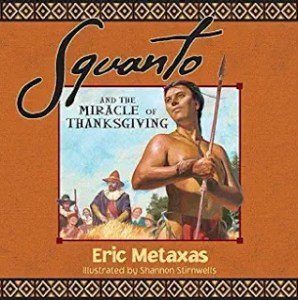
“Come, you children, listen to me; I will teach you the fear of the Lord.” Ps. 34:11 NKJV As a group of writers dedicated to sharing our faith with the next generation, do we effectively communicate thanksgiving and hope in difficult events as well as holidays? Why give thanks? The very first mentions of “thanksgiving” […]
So You Want to Be a Travel Writer? by Jarmila Del Boccio
Do you love to travel? Adore adventure? Can’t stand monotony? Love to write? Sound like someone you know? If so, travel writing might be for you. When the coronavirus is no longer a global threat, the world will slowly open for exploration. And when it does, you can be ready! So, travel writing is all […]
Reflections on Writing Dialogue by Emily Babbitt

As I’ve transitioned from news writing to fiction writing over the past few years, I’ve learned that writing dialogue is much different than recording quotes. I can’t tell you how many hours I spent transcribing interviews during my undergraduate degree in journalism. Every story I wrote for the school newspaper required at least two interviews, […]
5 Tips for Using Literal and Metaphorical Language, Part V (conclusion): Always Remember Context by Deborah DeCiantis
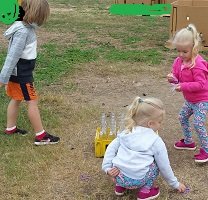
TIP #5 Use context to recognize, understand, and interpret literal and metaphorical language. Historical, social, cultural, and biblical contexts are essential for understanding literal and metaphorical elements in speech and writing. Accurate understanding should come before interpretation! A cropped photo automatically demands interpretation, zeroing in on details the user wants to emphasize while excluding others. In […]
5 Tips for Using and Understanding Literal and Metaphorical Language, Part IV by Deborah DeCiantis

TIP#4 Recognize valid situations where literal and metaphorical meanings co-exist. Statements may have both literal and metaphorical meanings without being ambiguous, equivocal, or contradictory. Acronyms and acrostics, homonyms and antonyms, sound devices like alliteration and rhyme, humor, and even puns, function as literal content and also as helpful memory aids. Today’s icons, emoticons, GIFs, and […]
Reflections from a Fiction Master Class by Jarmila Del Boccio
Our logo truly became a reality to me last Saturday as I attended the online Fiction Master Class taught by the gifted Joyce Moyer Hostetter. Not only has she written a popular MG Historical fiction series, but she is able to impart her knowledge of writing to her students in a simple and engaging way. […]
DRIVE: A Book Review by Kathryn Dover (and a Giveaway!)
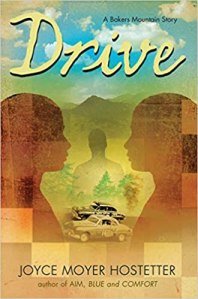
When I first heard about the Baker Mountain series by Joyce Moyer Hostetter, Drive, the fourth book in the series, sounded the most interesting. Drive occurs several years after the previous novel, Comfort, and follows the story of Ida and Ellie Honeycutt, Ann Fay’s younger twin sisters. REVIEW The cover of Drive is stunning; the […]