
Last month, I gave some general tips on writing picture books. Today, I want to look deeper into the craft.
What You Need to Know First
Our competition is fierce. Most beginning writers think starting with picture books is good because they’re short.
In a way, they’re right!
Picture books should be 800 words or less. This is a drop from when I first started, when publishing houses gave us a generous 1,000 words or less. What does this mean? We need to really write tight. That means you have to know your story at its most basic core. Remember, picture books rely heavily on the illustrations to tell what you haven’t written in the story.
Getting Their Attention
How do we get a kid’s attention? I like to start with dialog or action. Sometimes both. Action and dialog move a story forward. Not only does it engage the kids, it helps the adult who will be reading the story. Picture books are meant to be read out loud, so we have to keep who will be doing the out-loud reading in mind as we write.
I love reading to kids. I do all the voices and emotions. It makes the story come alive. I like to make comments and point things out in the illustrations as I read. Not everyone who reads to kids does this. My mom wasn’t one who put a lot of emotion or used different voices when she read to us. We still enjoyed being read to, but an animated reader makes a big difference. And how we write the story helps that.
We’ve all heard “Show, Don’t Tell”, right? Showing is one way to grab attention.
Here's an example from one of my picture books, Willoughby and the Terribly Itchy Itch. First, I’m going to tell you the beginning of the story. Then I’ll show you.
Telling:
Willoughby had an itch on his back and it was driving him crazy because he couldn’t reach it.
Showing through action:
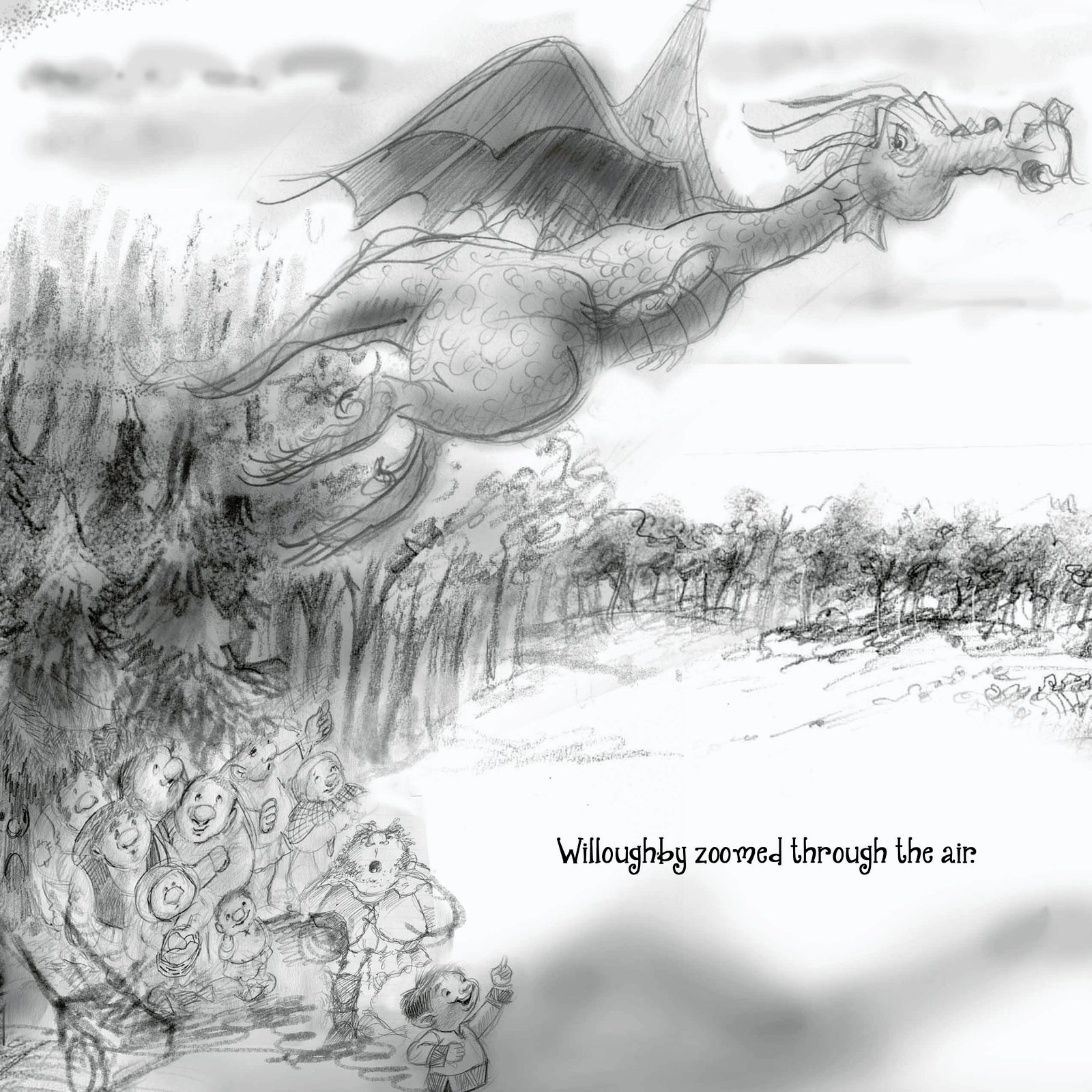
Willoughby zoomed through the air.
He twisted and turned.
He swooped up.
He swooshed down.
None of it stopped the terribly itchy itch.
See the difference? And look at the sketch. Kim Sponaugle, the illustrator, loves to add things in the illustrations that authors don’t tell in the story. See the people looking up? They’re a bit nervous, aren’t they? A dragon, clearly frustrated, is zooming over their heads. I think it’s hilarious! And I’d point it out to kids when I’m reading and we’d talk about if we would be scared that a dragon was zooming over our heads.
Word Choices Matter
Another way to get a kid’s attention is choosing specific words. As writers, we love words. Kids love them, too. We do need to keep our audience in mind, but in my experience, kids love learning new words. And they love words that are fun to say. This is important in our writing and also in the character names we choose. It’s why I chose to name my dragon Willoughby. It’s simply fun to say!
Let’s look at some words and compare them. See what you think.
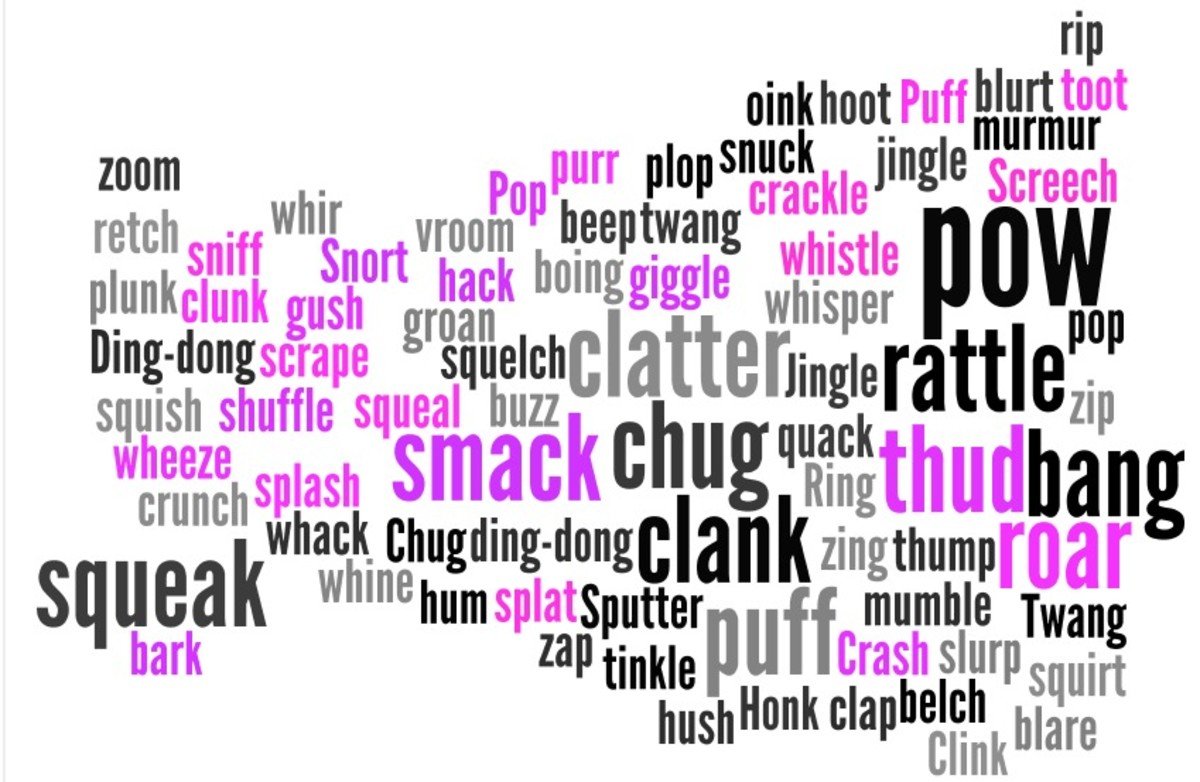
Onomatopoeia words: these are sound effect words. Kids love them!
Zip!
Kaboom!
Bop!
Crackle!
Whomp!
Swish!
You get the idea.
Verbs. Super important. Let’s look at the difference in these sentences.
Bobby walked slowly across the yard.
Bobby trudged across the yard.
Cindy put a hand on her mouth and gave a little laugh.
Cindy giggled. (Look at the difference in word count!)
In Conclusion
We’re writers. We love words. Word choices are super important, no matter what age group you’re writing for. So, we need to make sure we’re using age appropriate words in our stories, and if a bigger word works, you can add that.
Don’t stick in a big word simply for the sake of doing it so kids can learn it. They’re smart. They’ll know you’re trying to do a “grown up” thing. But if it’s a natural part of the story, they’ll love it!
See you next month!
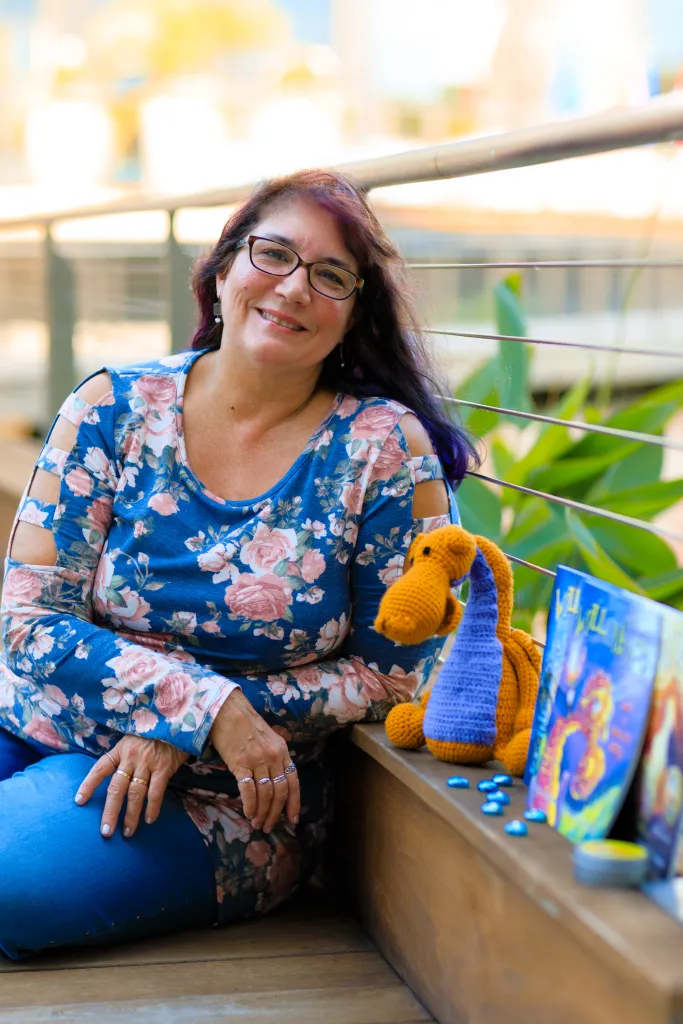
Pam Halter is a former home-schooling mom, has been a children’s book author since 1995, a freelance children’s book editor since 2006, and was the children’s book editor for Fruitbearer Publishing until January 2023. She’s the author of Fairyeater, a YA fantasy, and the Willoughby and Friends picture book series (available on her website.) Pam has also published short stories in Ye Olde Dragon Books , the Whitstead Anthologies and Renewed Christmas Blessings. Her first short story won Readers Choice in Realmscapes.
Pam lives in Southern New Jersey with her husband, Daryl, special needs adult daughter, Anna, and four cats. When she’s not writing, Pam enjoys spending time with her grands, reading, quilting, gardening, cooking, playing the piano, Bible study, and walking long country roads where she discovers fairy homes, emerging dragons, and trees eating wood gnomes.
Such good points – cutting favorite words is so hard!
It really is! We love our words, don’t we?