
Most people are familiar with villains – antagonists who cause conflict with the protagonists we (usually) root for in stories we read or write. But what are foils? What do they contribute to a protagonist’s conflict resolution (and sometimes, redemption)? Can an antagonist ever experience redemption?
Analyzing your character types may be a new concept or familiar technique, different from developing a character’s particular personality, habits, likes and dislikes, back story, and quirks. How do a story’s characters relate to one another, especially to the main character? How many characters are primary or main characters? Which ones are secondary – developed enough to be recognizable individuals but not quite as important in the story action (whether or not we’re particularly fond of them)? Who is the protagonist (in some cases, perhaps, more than one – perhaps siblings or best friends, engaged in the same conflict), with one or more antagonists?
What about antagonist(s) – a person, a group, or even a force like social prejudice, government, or nature? Does conflict between the story’s antagonist(s) and protagonist(s) exist in the same way at the end, or has their relationship changed in important ways?
While many characters will have individual traits, others may be types (cranky neighbor, prankster, gruff authority figure, geeky classmate, forgetful uncle, etc.) who serve a purpose in the action but whose characters do not develop. We call these static characters. They may be predictable, or we may use them in unexpected ways, but they’re still the same at the end of the story as when we first encountered them.
In Write2Ignite’s recent Master Class on writing chapter books and series, author, and editor Marianne Hering emphasized the role of foils in relation to main characters to provide contrast and challenge the protagonist in some way. The foil may be “a troublesome character, but not a true villain” (Hering). Foils may be primary or secondary characters whose differences point out strengths or weaknesses of the protagonist.
For example, in The Lion, the Witch, and the Wardrobe, Edmund, the “difficult” sibling, is often in a bad mood and argues with both his older siblings and younger sister Lucy. Out of jealousy when he feels ignored or disrespected, he lies about the land of Narnia which Lucy claims to have found, even though he has been there. Then, he falls prey to the witch whose spell has made it “always Winter, and never Christmas” there. Believing her promise to give him his favorite treat and make him a prince, he tells her when his three siblings arrive in Narnia. Edmund’s initial distrust of Narnia’s good creatures, who hope in the revered lion Aslan, contrasts with Lucy’s delight in meeting and befriending Narnians, and following Aslan.
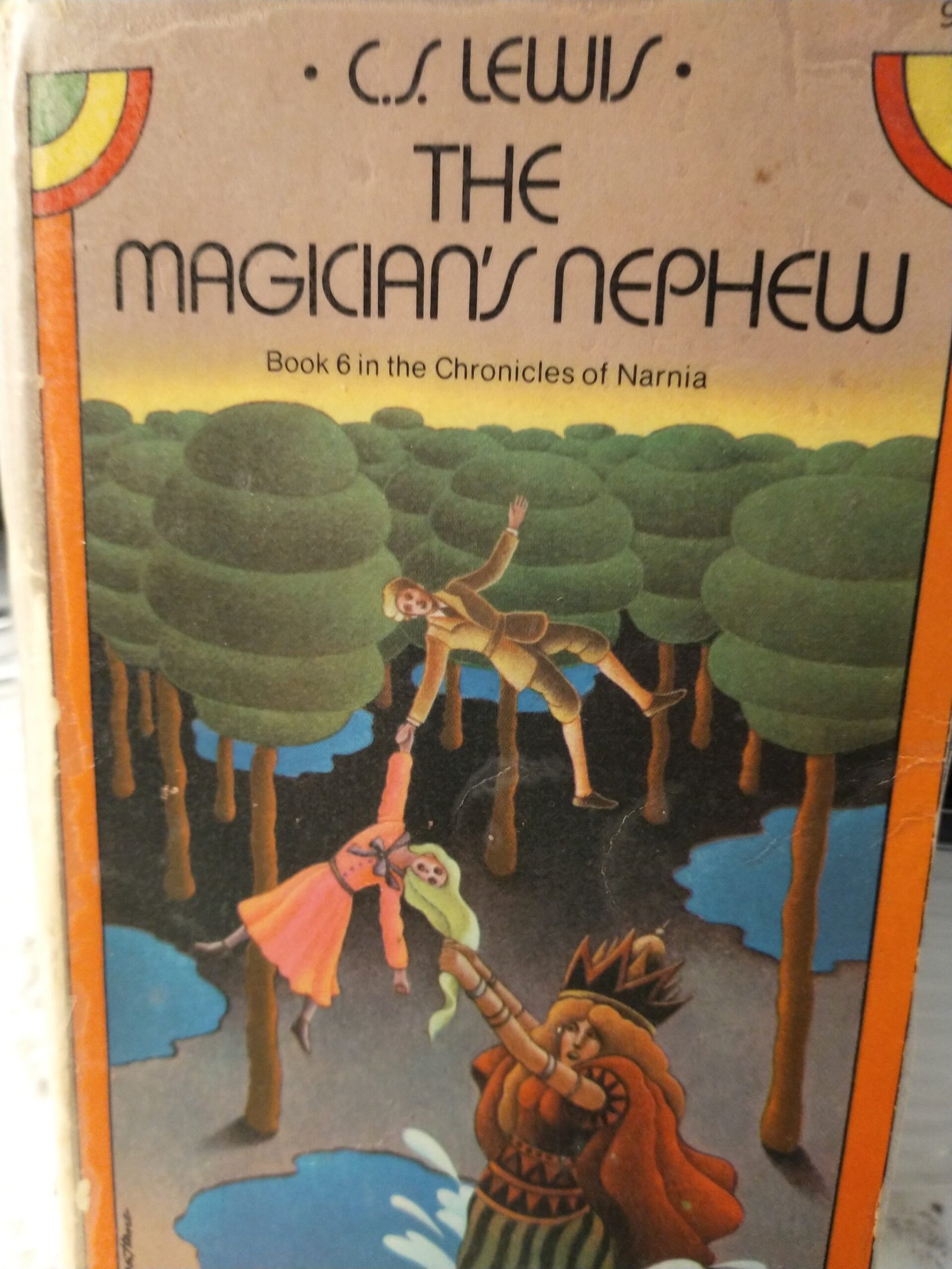
Yet Edmund is not the story’s true antagonist, nor is his character stagnant. While he may never share Lucy’s optimism and outgoing warmth, he recognizes his error in trusting the White Witch – the story’s actual antagonist – and regrets endangering his siblings and their Narnian friends. Edmund’s encounter with Aslan begins with terror and guilt, but culminates in his confession of wrong and Aslan’s forgiveness – redemption made possible by Aslan’s sacrifice on the Stone Table. This series of changes makes Edmund a dynamic character.
The Witch, however, remains an antagonist to the end. She refuses to accept her ultimate defeat, believing that somehow her power can overcome the “deep magic” of Aslan’s atoning sacrifice for Edmund’s guilt. She could find the same redemption Edmund has, but she lacks these essential components: self-awareness of her true condition and identity, willingness to acknowledge her faults, consideration for the interests and rights of others, and acceptance of her subordinate role before Aslan.
Redemption with less explicit religious symbolism is also common in picture books. In Berkeley Breathed’s Mars Needs Moms, a young boy at odds with his mother realizes her importance when Martians kidnap her. Milo’s conclusion that mothers are “thundering tyrants” (ostensibly, the story’s antagonists) begins to change when he awakes one night to see the kidnapping in progress and chases the Martians. Not yet self-aware, Milo “suddenly wondered why he would WANT to be dangling miles above Earth chasing his carrot-cuddling mother. . . He decided to figure it out later.” He manages to climb into the spaceship and put on a helmet.
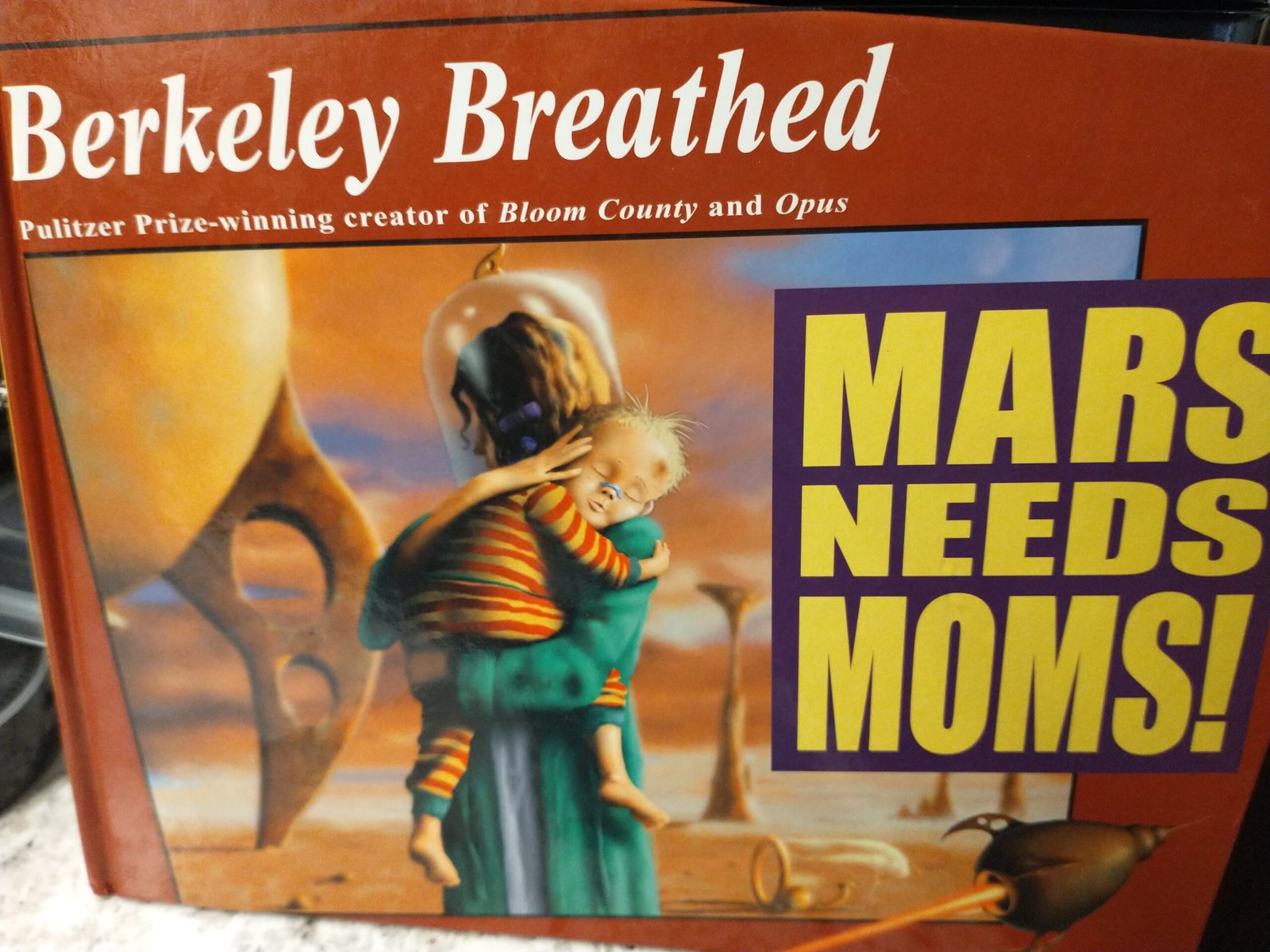
When they reach Mars, he learns why Martians, who have seen Earth’s mothers and their many services like “driving . . ., cooking and cleaning . . ., packing lunches, and bandaging boo-boos,” want moms for themselves. Martians serve as foils to Milo, recognizing the undervalued “treasure” Milo has failed to appreciate. As he starts to tell the Martians their need is “sensible,” Milo trips and breaks his helmet. Unable to breathe, he is dying when his mom places her helmet on his head. Milo is saved, but his mom is now dying.
“Suddenly he knew what was special about mothers.” His mom, smiling, says, “I’ll love you to the end of the universe.” Milo’s conflict is no longer with the mom whose disciplines and rules he had despised, but with the Martian atmosphere she cannot breathe. His new task, to save his mom, is now most important. Milo’s redemption comes through awareness of his mom’s value and intentions, understanding his previous wrong perceptions, concern for her needs, and recognition that he’s not sufficient to decide and accomplish everything on his own.
We can see Milo as the antagonist who becomes a protagonist, changing from a petulant, disrespectful child to a son who sees himself as a little boy in need of his loving mother and the structure she provides. Martians (not really villains) act as catalysts to change Milo’s attitude and resolve the conflicts with his mom.
Understanding how a story’s characters function in relation to one another and the action provides insight to fine tune a plot or a character’s motive, and sharpen distinctions we want readers to see (without having to spell them out) in characters’ perceptions, attitudes, and behaviors. Sketching out your characters’ categories and contributions to the story is a tool that can give writers a clear view of what and how well each part communicates with your readers. These interrelationships are particularly important to “showing, not telling,” and can help with revisions to improve pacing, wordiness, or other problems in the story’s flow.
Look for a future blog post on handling antagonists, villains, and foils in literature for very young children (preschool books) and increasing awareness of antagonists and more difficult conflicts in chapter and middle grade books.
Debbie completed a long teaching career in 2017, retiring from North Greenville University as Associate Professor of English. She previously taught English composition, literature, creative writing, and/or French at three other colleges and universities, library skills at two Christian schools, and served as an adviser to student newspapers and literary journals on both K-12 and college levels. She now serves W2I as the Assistant Director.
0 Comments