
In our recent Master Class on fantasy, author Amy Earls provided important tools for writing YA and MG fantasy. Today, team member Deborah S. DeCiantis gives her perspective (from many years of being an English college professor) to understanding classic fantasy.
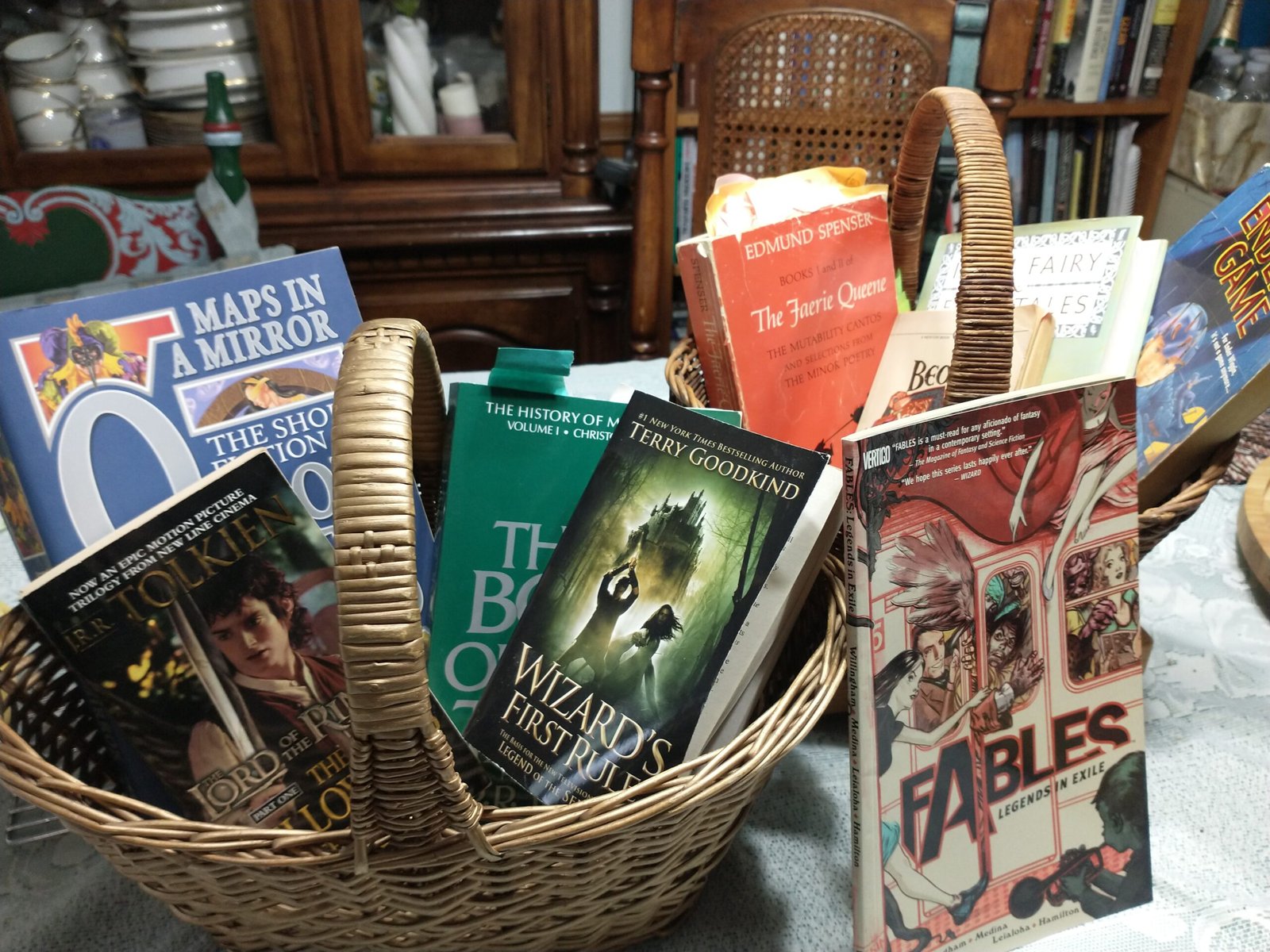
Fantasy fiction seems to attract definite responses: readers either love it or hate it. Fantasy’s defenders point to books like C.S. Lewis’s Narnia and space trilogy or Tolkien’s The Hobbit and The Lord of the Rings trilogy. Many of today’s fiction readers flock to paranormal and dystopian works, whether secular or Christian-themed.
Other readers disparage fantasy’s imaginative landscapes, societies, and inhabitants, based on distaste or distrust (or both) of entertaining or dark elements they believe distract readers from essential values and principles.
Historical examples of fantasy fiction include The Odyssey, The Arabian Knights, Le Morte d’Arthur, Gulliver’s Travels, Alice’s Adventures in Wonderland and Through the Looking Glass, George MacDonald’s The Princess and the Goblin and At the Back of the North Wind, L. Frank Baum’s Oz books, and Mary Poppins. Later twentieth-century works like The Once and Future King, Watership Down, Roald Dahl’s stories, Ray Bradbury’s stories, and The Dark Is Rising continue to appear on best fantasy book lists*, joined by more recent writers of fantasy/sci-fi like Ursula LeGuin, Anne McCaffrey, Madeleine L’Engel, Frank Peretti, Ted Dekker, J. K. Rowling, Philip K. Dick, and Neil Gaiman (not all Christian writers, but portraying some Christian worldview elements).
Differentiating The Elements of Fantasy Fiction
What elements distinguish “classic” fantasy fiction? How can fantasy writers for younger audiences apply these criteria to create excellent stories while avoiding common criticisms of the genre?
1. Maintain “honest” characters, dialogue, and story lines.
By “honest,” Josiah DeGraaf means true-to-life characters who behave as humans can be expected to in the worlds and situations they encounter. He cautions against portraying either dark, grim worlds “devoid of altruistic motives or true heroes” or idealized scenarios, “whitewash[ing] our fallen world.”**
In L. Frank Baum’s Oz, Dorothy displays common emotional reactions like fear and anger at injustice and violence in both her Kansas community and the fantastical world she enters with Toto. She is called on to discern which characters to trust and follow, tackle confusing situations, offer friendship and help, face consequences of decisions, deal with disappointing authority figures, and identify her core hopes and values. Without explicit faith elements, the story presents a moral universe recommending characters who avoid violence, desire family and friendship, forgive others, and nurture rather than impose power on others.
2. Incorporate redemptive (hopeful) elements.
While luck or chance may seem to prevail in characters’ perceptions and experiences (even in biblical utterances like Ecclesiastes 9:11), a world devoid of hope is inconsistent with Christian faith. Erin Greneaux’s post on classic children’s stories [ https://write2ignite.com/2024/01/11/four-elements-that-turn-childrens-literature-into-classics-by-erin-greneaux/ ] insists on “an ending with hope, but not happily ever after.”
C.S. Lewis’s final Narnia episode, The Last Battle, offers hope along with sad commentary about characters who are “no longer friends of Narnia.” The Horse and His Boy’s closing scenes send characters Shasta and Aravis, Bree and Hwin, to their rightful worlds; the villain Rabadash refuses the chance to submit to Aslan.
3. Provide memorable sensory details.
“Show, don’t tell” is a constant principle of writing craft. Today’s taste for graphic novels emphasizes the role of visual images in storytelling. Characters like Lewis Carroll’s Cheshire cat disappearing tail first, with its grin the last part seen, or battling White and Red Queens, are iconic, used in parodies and advertising. In pursuit of the March Hare, Alice comes to what “must be the right house, because the chimneys were shaped like ears and the roof was thatched with fur.”
A delightful example from Gail Tsukiyama’s (non-fantasy) novel The Samurai’s Garden describes young protagonist Stephen’s perception: “Matsu’s garden whispers at you, never shouts; it leads you down a path hoping for more, as if everything is seen, yet hidden. There’s a quiet beauty here I only hope I can capture on canvas” (p.31).
4. Ensure that fantastical elements relate directly to theme(s) (not “gratuitous,” just-because-I-can flights of imagination).
Lewis Carroll’s tales, with their dizzying cast of “mad” characters and confusing dialogue, might seem to violate this principle. Carroll fans have taken pains to research and document origins of his many images, from his diaries, local places, and period language. These inspirations to his fantastical creation deliver themes of children’s often comical (mis)perceptions as well as adults’ sometimes unreliable judgments and empty social conventions.
5. Portray coming-of-age or acquired knowledge, experience, and wisdom for both protagonist and reader.
Readers of Tolkien and Lewis have ample examples of characters’ growing insights through adventures, dangers, and unwise choices. Two of my favorites are Lucy Pevensie’s growing conviction of wrongdoing as she uses a book of spells to spy on people she knows (The Lion, the Witch, and the Wardrobe), and Bilbo’s growing acceptance of risk and self-sacrifice, behaviors eschewed by comfortable, “respectable” hobbits of the Shire (The Hobbit).
Whether you write fantasy, historical fiction, modern scenarios, or even nonfiction, storytelling elements in the best classic tradition never go out of style.
What are your favorite classic or modern fantasy books? What characters, descriptions, imagined worlds, and situations hold your attention?
MORE FANTASY TITLES
Here are three sample lists of fantasy books:
https://time.com/collection/100-best-fantasy-books/
https://www.beyondthebookends.com/best-fantasy-books-for-tweens-and- middle-grade-fantasy-readers/
https://reedsy.com/discovery/blog/best-fantasy-books
Debbie DeCiantis has learned that retirement after over 40 years of teaching, writing, and editing doesn't stop learning, activity, or goals and planning. Bodies may slow down and priorities change, but God brings opportunities and life lessons that can sharpen our perceptions, spark new projects, deepen old relationships and bring joy with new ones.
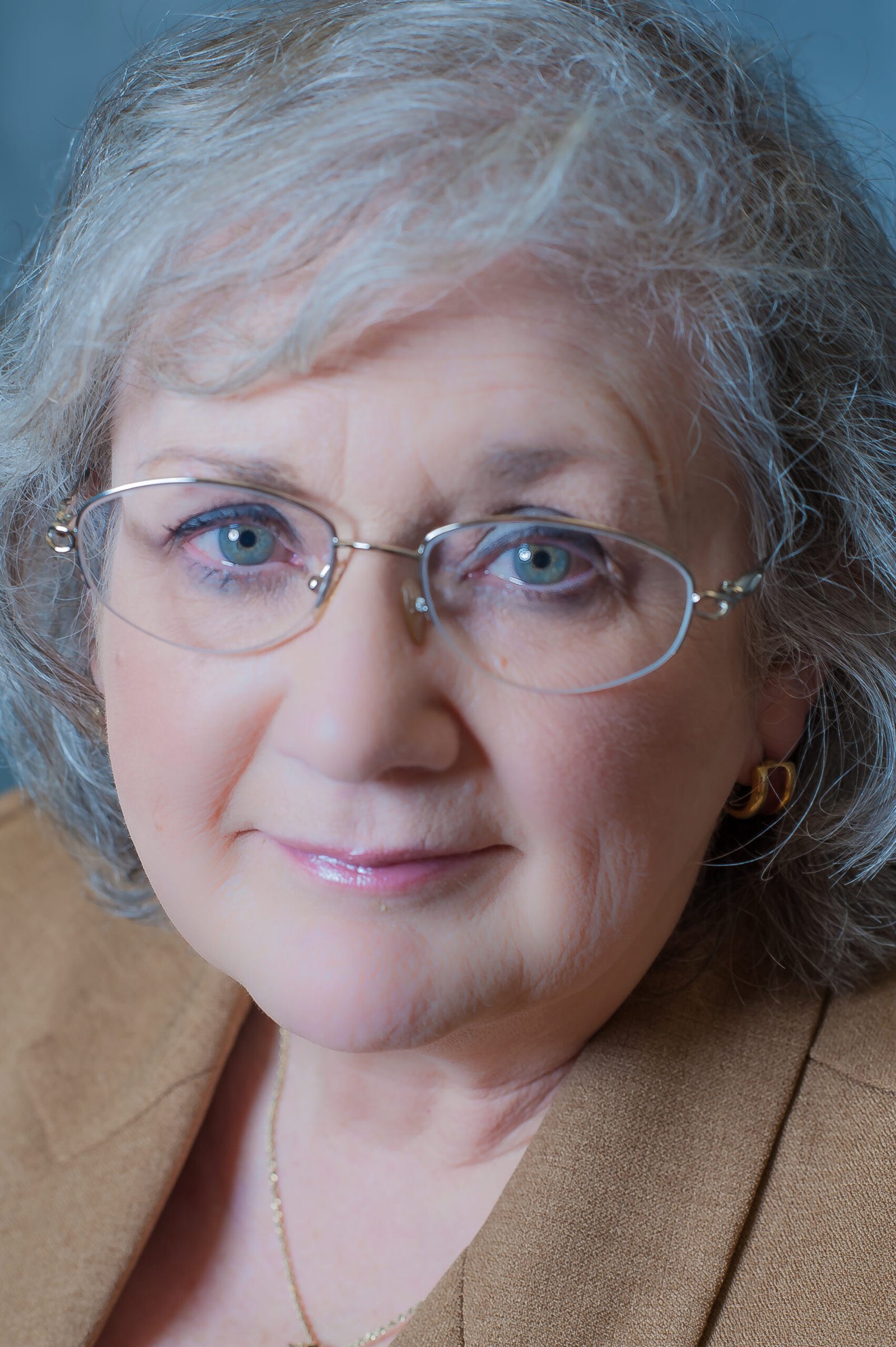
Staying in touch with former colleagues and students, answering occasional requests, spending as much time as possible with adult children/spouses and grandchildren, and participating in church as well as Write2Ignite Team make life anything but boring. Debbie and her husband enjoy life with their dogs in a (mostly) quiet rural SC community and continue to accumulate more books than they may be able to read.
0 Comments