The Laura Ingalls Wilder Companion Guide: A Review by Sally Matheny

What comes to your mind when you read the name of Laura Ingalls Wilder? Does it carry you back to when you were captivated by the freckle-faced little girl with braided pigtails from the popular television show Little House on the Prairie? Or does it warm your heart as you remember reading the historical fiction books she wrote based on her experiences and events during her childhood as a pioneer?  

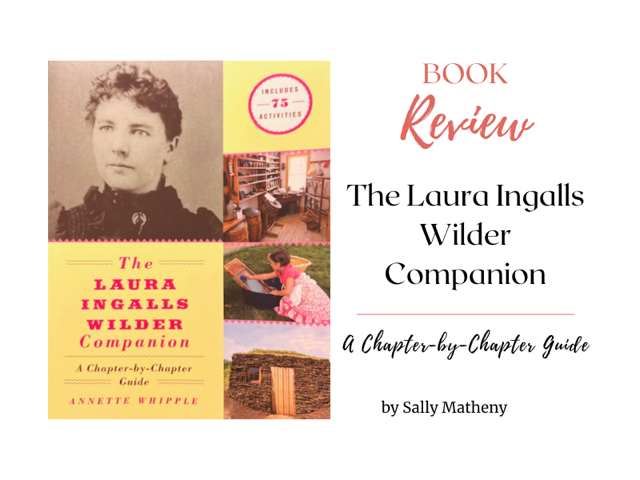
If you fell in love with the Ingalls family, or if you’re getting to know them through the Little House books, then allow me to introduce you to The Laura Ingalls Wilder Companion: A Chapter-by-Chapter Guide.

The Author

Annette Whipple is the author of twelve informational children’s books focusing on history and science. Her most recent publication is Quirky Critter Devotions: 52 Wild Wonders for Kids (Tyndale, 2024), which combines her passion for science with her personal faith. She’s also written articles and activities for several magazines, including Cobblestone and Highlights for Children. And she’s taught a Master Class for Write2Ignite!

Before becoming a full-time writer, Annette earned a BS in elementary education and taught elementary and middle school students. While teaching, she learned to love science and history.

Annette lives in Pennsylvania with her husband and three children. Learn more about Annette’s books and presentations here.

Also, be sure to visit this website, where Annette provides additional history and activities to accompany the book in this review.

Overview: The Laura Ingalls Wilder Companion Guide

Part I of this book is to be read alongside each of Wilder’s Little House books. Chapters open with a summary of the Little House book being covered. Children will learn more in the “Dig Deeper” sections. The “Live Like Laura” portions contain recipes and activities. Of course, there are “Live Like Almanzo” activities in the chapter about The Farmer Boy.  “House Talk” contains questions about each of the Little House books.

The author points out that the books are historical fiction, so not every word is factual, but they are based on real people and events. Engaging sidebars titled “Fact or Fiction?” are throughout the book, providing further information about events mentioned in a Little House book.

Each chapter contains black-and-white photos of places and objects mentioned in the Little House books. Also included are many photos of Laura Ingalls Wilder and her family—many of which I’ve never seen before. Jim Spence did an excellent job sketching illustrations for the activities.  

The back of the book includes a wonderful glossary of terms used in the Little House books. This list would be an excellent resource for spelling, handwriting, and other lessons in language art. Also included is a list of more resources to explore.

A Sample from the Chapter About The Long Winter

The chapter opens with an engaging introduction of the book. Then, there is a “Fact or Fiction?” sidebar stating how research shows that Wilder did not exaggerate the severity of the winter in 1880-1881.

The “Dig Deeper” section mentions one to three key points from fifteen of the thirty-three chapters in The Long Winter.

There are more sidebars. One discusses the difference between being hungry and starving. Another sidebar points out cold weather risks. And there’s another “Fact or Fiction?” about a family who lived with the Ingalls family during the hard winter.

Recipes for Ginger Water, Cucumber Tea, Buckwheat Pancakes, and Cranberry Jelly are included in the “Live Like Laura” section. Activity directions for creating a clothesline path and braiding a rug trivet are provided.

The chapter in The Laura Ingalls Wilder Companion Guide ends with discussion questions (“House Talk”) about The Long Winter. I like how there are a variety of comprehension questions, including those requiring reflection, inference, and evaluation.

This chapter used three black-and-white photos: one of Carrie, Mary, and Laura Ingalls as children, another of a train from the 1800s buried in the snow, and the third of two men cranking a handcar on railroad tracks. Also, black-and-white illustrations for the braided trivet activity were included.

Recommendation

Parents and teachers of children in the first through fourth grades will thoroughly enjoy using The Laura Ingalls Wilder Companion Guide. They’ll find the summaries and comprehension questions helpful. They’ll also appreciate the selection of photos and the variety of activities to solidify understanding. The Guide creates fun learning opportunities and will greatly add to all K-4 teachers’ resource books.

Are you a fan of Laura Ingalls Wilder? If so, which of her books is your favorite?

Disclosure of Material Connection: I received this book free from the publisher. I was not required to write a positive review. The opinions I have expressed are my own. I am disclosing this in accordance with the Federal Trade Commission’s 16 CFR, Part 255.

Motivated by the power of story, history, and His Story, Sally Matheny’s passion is telling the next generation wondrous things.

Her nonfiction writing appears in worldwide, national, and regional publications.

Learn more at SallyMatheny.com., where you’ll find encouraging blog posts, book reviews, and free resources.

Quirky Critters: A Devotional Review by Guest Blogger, Rachel Greene

The heavens declare the glory of God; the skies proclaim the work of His hands. 

Psalm 19:1

REVIEW

Annette Whipple certainly demonstrates this Bible verse in new devotional book for children.

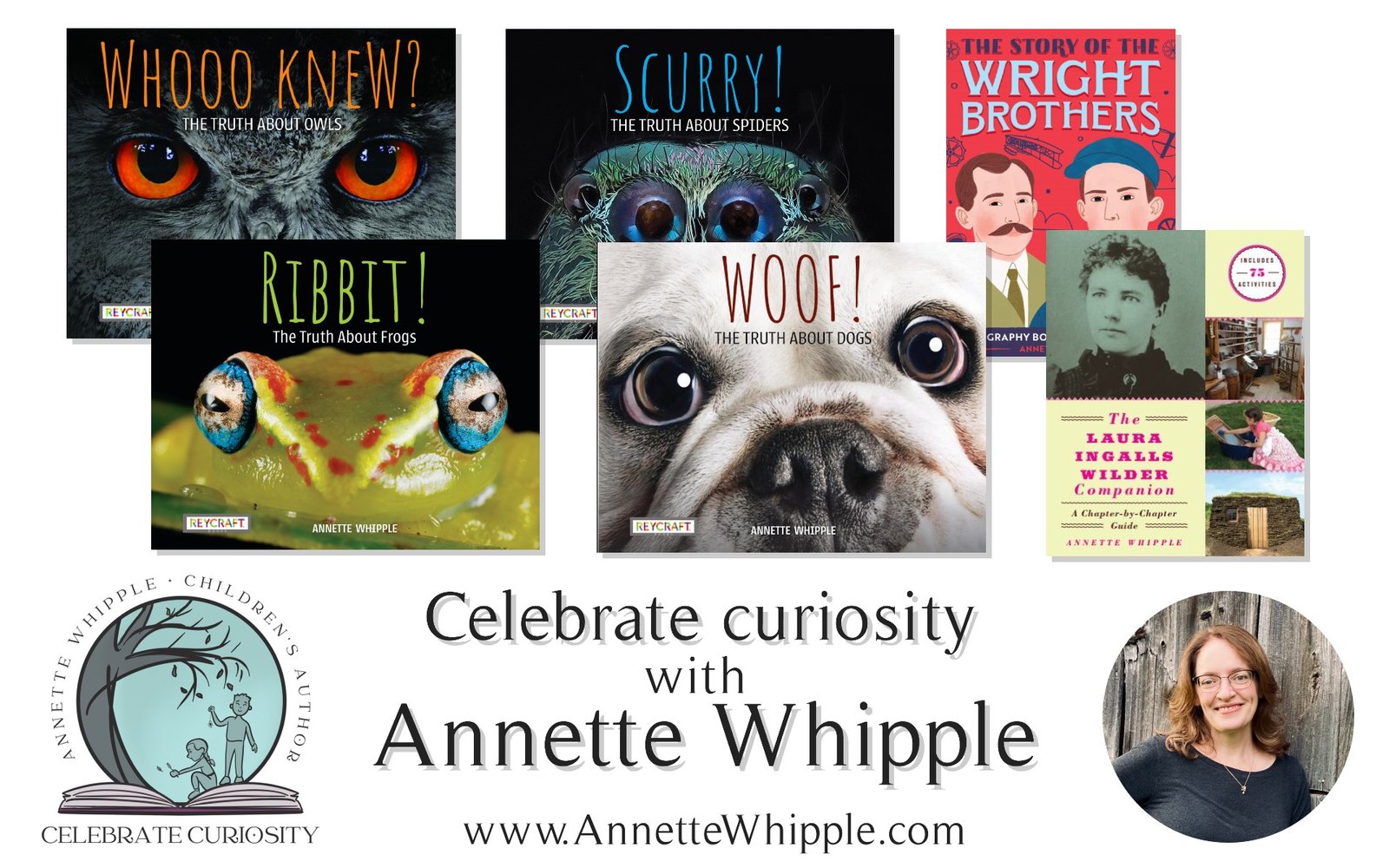
Annette, one of Write2Ignite’s former Master Class instructors, is a Pennsylvania author with a fun style. She brings animals into the story of how God loves people and how He wants Christians to conduct themselves. This is not her first trip to the zoo. She is the author of the Truth About series, including Whooo Knew? The Truth About OwlsShe has also published works in the historical realm: The Laura Ingalls Wilder Companion: A Chapter-by-Chapter Guide and The Story of the Wright BrothersYou can find her and her works at AnnetteWhipple.com and WilderCompanion.com.

Quirky Critter Devotions (Tyndale Kids, 2024) is a great read for kids and is still fun for the adults reading to little ones who still need help I loved reading it. Trust me. I’m way outside the age range.

With each of the 52 devotions there is a brief writing exercise, a prayer, and a verse. The verses are quite short. If you’re looking for a way to introduce memory verses into your little one’s daily routine, these would certainly be effective. The verses Annette has selected are really well matched to the fun facts she teaches.

Annette’s faith is evident in the way that she draws out the lessons from animals. One animal was the Marine Iguana, which listens to the calls of birds to identify danger. The lesson is to listen to wise counsel from godly people and their warnings when we err. (Proverbs 19:20). I love a good proverb. 

Annette also leaves plenty of room for kids to use their own creativity with drawing, research, and craft activities. The activities are simple enough for very little ones to participate in. She uses the opportunity to teach how to conduct proper research. The activities encourage talking to and learning from Christian adults. My personal favorite of the activities was inspired by the dance of the European Starlings. The photos and cartoons are vivid and compile a neat platform to spark the imagination of animal lovers.

The seven sections focus on different groups; including basic and “quirky” facts. She uses habitats, behaviors, and unique physical characteristics to draw lessons about God and His will from the nature He designed with such great wisdom: Proverbs 8:27a, 30. I (wisdom) was there when He set the heavens in place… I was constantly by his side, I was filled with delight day after day, rejoicing always in His presence.”

SUPPLEMENTAL QUESTION CARDS

Annette uses the love of nature to create and build an accessible tool to share the gospel with children. She has even broken it down and is offering these printable question cards built from the book. These cards are a great supplement if you’re home-schooling and want to have an easy springboard into animal sciences, or if you wanted to include them in your Sunday school and send your kiddos home with weekly devotions. 

Carol Baldwin shares Quirky Critters with three of her grandkids–with a variety of reactions!

GIVEAWAY

If you want to win this book, leave a comment; U.S. addresses only. The giveaway ends May 2.

ABOUT RACHEL GREENE

I am from the great outdoors of Idaho. I have written and read fiction and fantasy stories since I was 13. I love drawing inspiration from creation; and the more time I can spend in the woods, the better.

WRITING NONFICTION FOR KIDS AND TEENS WRAP UP and Write2Ignite’s NEXT STEPS

Unanimously the vote is in. Annette Whipple‘s Master Class on Writing NonFiction was a fact-filled, inspiring day that left all of the participants with stuffed brains and many book ideas waiting to be explored.

Annette told us that informational writing opportunities are everywhere and that these books are invaluable to educators. Writing nonfiction can include creating stories inspired by facts and framed by facts, but which also use the writer’s imagination and experiences.

In break-out sessions, we got inspired, brainstormed topics, shared ideas and writing samples, met new friends, discussed research, thought about how to engage readers, and had fun!

Annette discussed the pros and cons of Work for Hire and introduced concepts of Lexile Level and readability. She shared some of her own resources for researching, like how to set up a research notebook.

Did I say we left with stuffed brains?

So, What’s Next?

The Write2Ignite planning team was thrilled at how well Annette’s Master Class was received. We’ve been talking about how we can help you take your next step towards writing/editing/submitting/publishing your work. As a result, Jean Hall, our director, asked me to share this announcement with you:

Good News! 

Beginning right away our Write2Ignite Newsletter will include a new feature. The issue following each Master Class will include our “Next Steps” feature for you. We’ll suggest some “Next Steps” you can take to help you remember, practice, implement, and solidify the material included in the most recent Master Class. 

We can hardly wait for this because we, the Team, need the same help as we continue to learn how to write for God’s children. 

Blessings!

Of course, you don’t want to miss this feature, so make sure you have signed up for our newsletter. It’s on this page on the right side.

And as soon as we nail down our spring Master Class you’ll be the first to know!

Ribbit! The Truth about Frogs, A Book Review by Kathryn O’Neill

Children love to learn about the wonders of this world and its creatures. And Annette Whipple, loves to research and write about those creatures. In her Truth About series published by Reycraft. The series pairs fascinating facts about animals with colorful, up-close photos. The series includes Whooo Knew? The Truth About Owls; Woof! The Truth About Dogs; and Scurry! The Truth About Spiders. To the delight of children in my art classes, and many others, I’m sure, Ribbit! The Truth About Frogs, Annette’s most recent book, has now joined the series. 

What Children Will Like about Ribbit! The Truth About Frogs

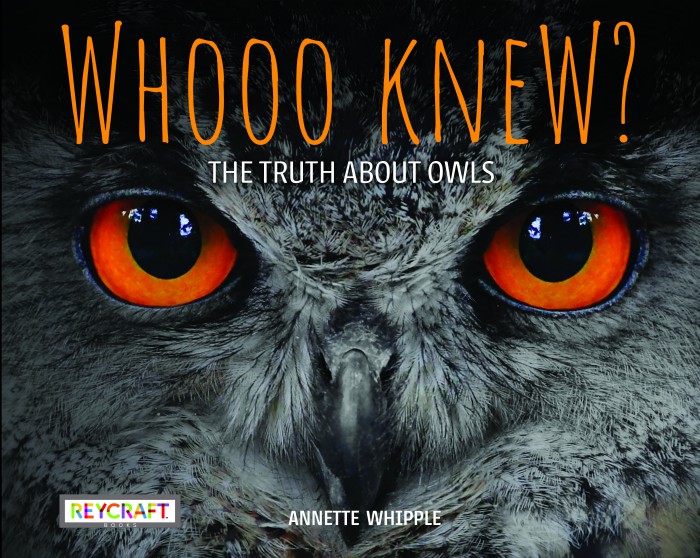
The cover of each book in the series has an attention-getting, up-close photo of the animal and its eyes—the fierce eyes of an owl, the dark, melting eyes of a puppy, the many eyes of a hairy spider, and now the big, bulging eyes of a frog!

Ribbit! The Truth About Frogs book image

The question-and-answer format paired with more amazing photos holds a child’s interest throughout. Like the other Who Knew books, Ribbit is the type of book some children will choose to read straight through, while others will dip into pages or photos that especially grab their attention.

Sidebars called Leaping Legs give more information in a humorous way children will love.

Whether children dip in here and there or dive in, they’ll soak up more than just basic facts. For example, though many children know frog eggs turn into tadpoles before becoming frogs, Ribbit helps them discover that some frog mamas lay eggs on leaves. When they hatch, they slide off into a pond.

Ribbit! The Truth About Frogs: fact sheet

Find Fascinating Photos and Funky Facts on Every Page of Ribbit! The Truth about Frogs

Here are some examples of page spreads:

  • How Do Frogs Eat?
  • What Sounds Do Frogs Make?
  • Why Don’t Frogs Freeze to Death?

And there’s toad-aly so much more more!

  • Frogs vs. toads
  • Facts or fiction about frogs
  • How to find and see frogs
  • DIY toad house to build
  • Free frog teacher guide with STEM and ELA activities for school or home.

How I Use the Truth About Books in My Classroom

I’m an art teacher, and I enjoy adding the A to turn the Truth About books into STEAM books, too! In art we teach children (and adults, too) that taking the time to look carefully is the way to learn to draw. So when Whooo Knew, The Truth About Owls came out, I knew it would be perfect for the art room.

To interest and prepare my third graders to make owl collages, I first asked them questions about owls as Annette does in her books. Then I read some of the surprising answers and showed the up-close photos. The page about what owls eat and the photo of the owl swallowing a mouse hooked them, and they pored over facts and photos as we worked on their collages. Those owl collages won rave reviews on Grandparent’s Day!

This year I’m introducing a mixed media art project with a 3-D spider to my first graders. I plan to pair Annette’s Scurry! The Truth About Spiders book with Eric Carle’s The Very Busy Spider to help them learn more about color and line. I’m working on an idea to use Ribbit! The Truth About Frogs with the lily pond paintings we do of Monet’s garden.

Soon Meow! The Truth about Cats will be out and will join our art room collection. I know those cats will leap into my student’s hearts to help them draw a variety of cats to sit on their woven mats project.

All so much fun, but I especially like Annette Whipple’s books because children clearly see the wonder and variety of creatures in the world and all the special ways God has made them for survival in their environments.

Are You Interested in Writing Nonfiction Books Children Will Love?

Write2Ignite Is Sponsoring a Virtual Master Class

with Annette Whipple on September 10!

Don’t Miss it! Sign Up Here!

Kathy O’Neill is an art teacher who loves to show everyone they can draw. Visit her website http://www.kathy-oneill.com/ to discover more about her writing and workshops, and her blog https://kathythepicturelady.wordpress.com/ for a Christian view of great art and related projects and devotions for children. Kathy’s goal is to engage children’s and adult’s hearts, hands and minds to discover God and their own creativity through art, history, and nature

5 Steps to Research When You’re Not an Expert by Master Class Teacher, Annette Whipple

Example books for 5 Steps to Research

I think facts are fun, so I write to celebrate curiosity. 

As writers, we have a unique opportunity. Our words inspire readers to appreciate the world. Our articles, stories, and books help others understand people of today and from the past. Our writing helps readers to see the world and others in a new way. 

Our readers expect us to be an authority on the topics we explore in our writing. We need to know more than our readers. And if you write nonfiction, every single word must be true. 

Nonfiction writers share truth—just truth—with readers. You don’t have to be a trained theologian, historian, or scientist to write nonfiction. But you must do your research. 

My published 11 books (and contracts for three more with general and Christian publishers) are packed full of facts. But I’m not a historian or scientist. So how is it that I write nonfiction for children? I research. And you can, too. Here are 5 tips for research when you are not an expert.

more “5 Steps to Research When You’re Not an Expert by Master Class Teacher, Annette Whipple”

WHERE DO WRITING IDEAS COME FROM? by Guest Blogger, Annette Whipple

Every published book has a unique story behind it. When I share about my nonfiction writing process during author visits and writing workshops, people ask what inspires me to write.

Personal stories of people and history inspire me. This world excites me. 

As a nonfiction writer, I keep a notebook of ideas on my desk. Do you have a notebook dedicated to writing ideas? If not, it’s time to start one, especially if you write nonfiction! (You may even want to include a table of contents like I use in my research notebook so you can find your ideas easily later.)

I tend to ask myself questions when I’m looking for writing ideas. You can ask yourself the same questions to find your next writing project. 

What have I done?

Have you visited a museum about tractors? Ridden a roller coaster? Reenacted a Civil War battle? Driven cross country?

Along with this, think of the people you have met—in real life, family stories, and books, and documentaries. If their story inspires you, take note of them and their accomplishments. 

Consider what you’ve done (recently and in the distant past) and people who inspire you. Add a few ideas to your writing notebook of ideas. 

What do I know about? 

Are you an expert on a topic? Or a knowledgeable enthusiast? 

Some people are experts on wind sailing or Harriet Tubman. But that’s not me.  

I make a fabulous chocolate chip cookie and a few other desserts, but five recipes don’t make a book. But I can rewrite some of my favorite recipes and submit to magazines—but only after I’ve studied exactly how the magazine formats their recipes. Recipes also make fabulous back matter in books of all kinds.

As an environmental educator, I facilitated an owl pellet dissection and taught about owls every week for years. Owls still amaze me. 

So, I knew I wanted to write about owls. It took 35 drafts, but Whooo Knew? The Truth About Owls (Reycraft Books) became a book in 2020.

What do I like to do?

Are you a rock climber? Watercolor artist? Sometimes a hobby—even reading—can inspire a book.

I was reading The Lion, the Witch, and the Wardrobe by C. S. Lewis with my kids in 2014. We had another book to dive deep into the world of Narnia called Roar! by David and Heather Kopp. That book inspired me to write a guide to the pioneer world Laura Ingalls Wilder wrote about in the Little House books. My book explores the history, people, “fact or fiction,” along with discussion ideas for Wilder’s nine books. To help readers “Live Like Laura,” I also included 75 activities in The Laura Ingalls Wilder Companion: A Chapter-by-Chapter Guide (Chicago Review Press, 2020).

What do you want to know more about?

What I’m curious about is the most important question of all. If I only wrote about what I know, I would not have ten published books and more on the way. Curiosity drives me. 

How do roller coasters work?

What animal builds a nest of leaves in trees? 

How did the International Space Station get built? 

When Reycraft Books, the publisher of Whooo Knew? The Truth About Owls, told me they were interested in making it a series, I created a list of animals I wanted to know more about. I love that readers now read about the science of dogs while cuddling with their pup in Woof! The Truth About Dogs. And Scurry! The Truth About Spiders helps readers to better understand spiders so they can celebrate them—or at least not live in fear. The series continues with books focusing on frogs and cats in 2022!

There’s truth that good writers write about what they know. But nonfiction writers also write about topics they’re curious about. Then, after researching and brainstorming—they write about what they know! (Read more about brainstorming a nonfiction writing project.)

For my faith-filled writing friends, it’s easy to look for God in this world since He made it. Whether you sprinkle faith in your writing or focus on it, God inspires us through the things we do, know, enjoy, and wonder. We’re designed with purpose, and your writing has purpose, too, whether you write for yourself or an audience.

Celebrate curiosity. Let yourself wonder. Ask questions. And keep a notebook full of ideas for writing projects. 

Annette Whipple celebrates curiosity and inspires a sense of wonder while exciting readers about science and history. She’s the author of many fact-filled children’s books including The Laura Ingalls Wilder Companion: A Chapter-by-Chapter Guide (Chicago Review Press), The Story of the Wright Brothers (Rockridge Press), and Woof! The Truth About Dogs (Reycraft Books) in The Truth About series. When Annette’s not reading or writing, you might find her baking for her family in Pennsylvania. Get to know her and explore her resources for teachers and writers at www.AnnetteWhipple.com.

Please connect with her here:

Twitter: @AnnetteWhipple

Instagram: @AnnetteWhippleBooks

Facebook: @AnnetteWhippleBooks 

Facebook: @LittleHouseCompanion

What Do You Do While You’re Waiting? — Part I

From blessthisemptynest.com

Like other writers, I’ve had a lot of rejection (and silence). I recently experienced another obstacle: waiting.

I drafted a sample manuscript and proposal for a book in 2014. I began submitting it the following year. Finally, in April of 2016 an editor made an offer for my middle grade nonfiction book.

We couldn’t move forward with the contract because of rights and permissions.

What’s a writer to do? After the initial disappointment passed, I got busy.

I studied other children’s books. I worked to improve my own writing. I attended workshops and took classes.

I wrote books for assignments. I wrote manuscripts. I wrote magazine articles. I wrote blog posts.

The possibility of the book wasn’t far from my mind. While I waited, my vision for the book changed.

After more than two years, we finally had the permissions needed to move forward. Chicago Review Press sent me a contract.

The dreaded waiting time worked to my advantage. I added an extra chapter, sidebars, and additional resources to the manuscript.

I’m thrilled to say my sixth book, The Laura Ingalls Wilder Companion: A Chapter-by-Chapter Guide, will be out next year. It’ll be a different book—a better book—than the originally proposed book.

For that I’m grateful for waiting.

Annette Whipple inspires a sense of wonder in young readers while exciting them about science and history. Her sixth book, The Laura Ingalls Wilder Companion: A Chapter-by-Chapter Guide, will release in 2020. When she’s not reading or writing, you might find Annette snacking on warm chocolate chip cookies with her family in Pennsylvania. Learn more about Annette’s books and presentations at www.AnnetteWhipple.com.?