What the Wisemen Can Teach us About the Epilogue

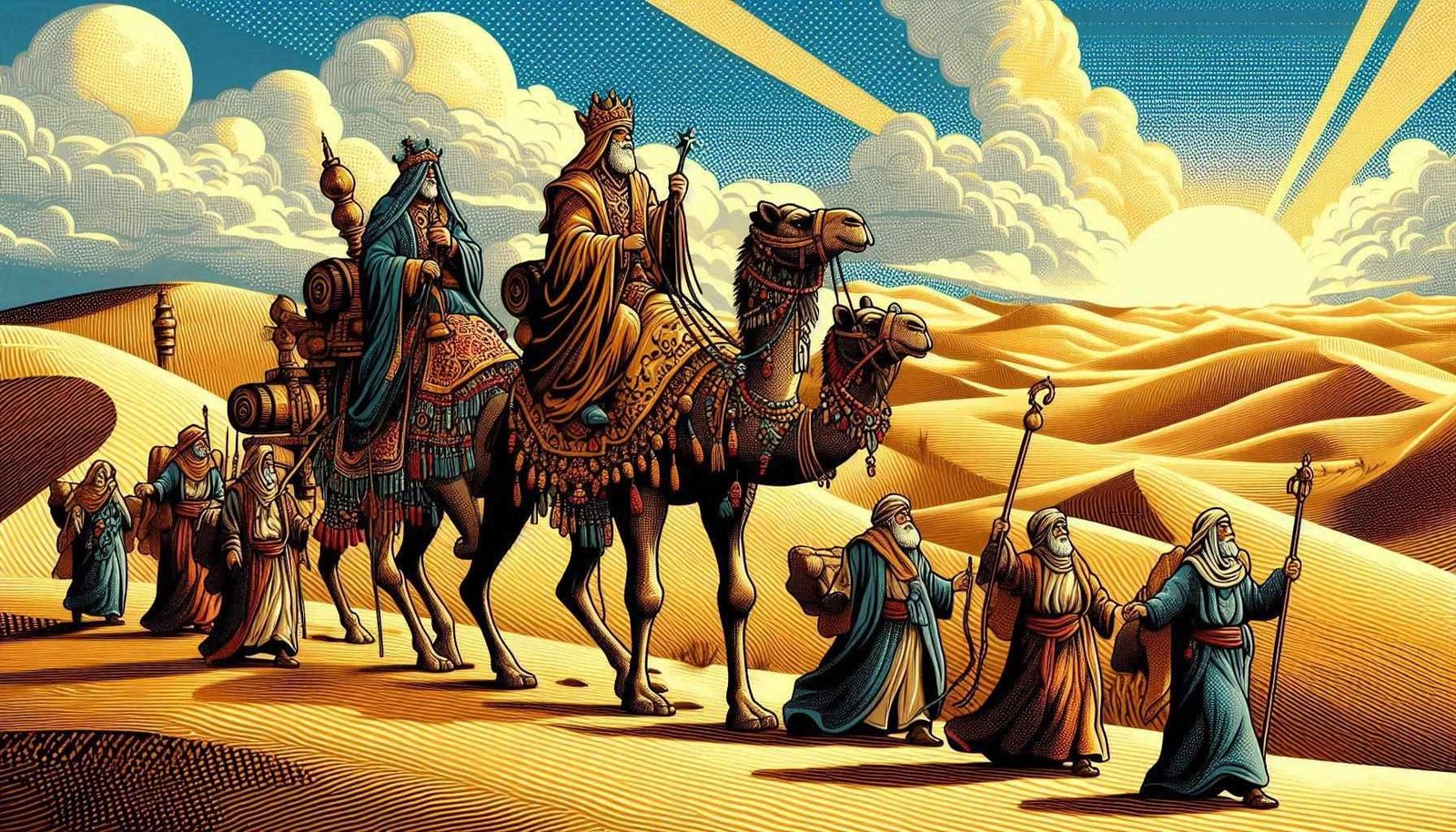
It always bugged me that depictions of Christ’s birth show the wisemen there alongside the shepherds. It just isn’t very accurate. Matthew 2 says that “After Jesus was born in Bethlehem in Judea…Magi from the east came to Jerusalem” (emphasis added). While I understand the convenience of placing the wisemen at the climax of the Nativity Story, the wisemen play a different role. They are the epilogue.

First, let me be clear that I intend no irreverence to the Bible by breaking down the story structure. I firmly believe the only reason we write stories the way we do is that we try to reflect the structure that God uses to tell the story of Himself. God is a God of order, and therefore the Bible is filled with the literary styles and structure that we still use today. In fact, the entire book of Revelation is an epilogue. A teaser of what is to come. So, what exactly is an epilogue?

An epilogue is a final scene of a story after the climax and resolution. It is a conclusion to the story. And while the story of Christ’s life on this earth does not end with the arrival of the wisemen, it is the epilogue of Christmas. The role of the wisemen is an intriguing one. Matthew is the only gospel to talk about it. But their involvement in the story of Christ carries a lot of significance. They are kings, bowing down to the King of Kings. They bring gifts that signify Jesus’s royalty, his role as priest, and his sacrifice. The wisemen’s appearance in the story also signify that from the beginning of his earthly life, Jesus was a gift for all people.

So here is what the story of the wisemen can teach us about the epilogue.

Use the same characters

An epilogue is important to your story, because it brings your story full circle. Your characters have returned changed. For Mary, her story begins with the angel Gabriel, and ends with the angel Gabriel appearing to Joseph, telling him to go to Egypt. Notice how Gabriel bookends her journey? This is one way an epilogue can enhance your story: use one character to bring a sense of completion to the story. For my Middle Grade novel Pirated! I open with the two main characters fighting with swords, reenacting a scene from their favorite pirate movie. While I have not written the ending, the plan is to end the book with a similar sword fighting scene with the same characters. However, this time they are more mature. They are using foils and proper fencing techniques. They have grown as characters. While the wisemen do not appear in the beginning, their arrival is the reason Mary and Joseph, and young Jesus have to flee to Egypt.

Tease what is next to come

As with the case of the wisemen, and the book of Revelation, a good epilogue teases the future of the story. Whether we ever get to see those characters again, doesn’t matter. If an epilogue is done right, the characters live on in our heads, having more adventures and never growing older. This is your typical happily-ever-after epilogue. Sometimes a good epilogue makes you want to jump right into the next story, eager to see what happens next. I don’t know about you, but after every Christmas, I want to read the dedication at the temple with the prophetess Anna. I want to read about 12-year-old Jesus in the temple. In short, I don’t want to stop until I get to the end of Revelation again. I want to know what happens next!

Bring in new characters

Let’s be honest, from a story standpoint, the wisemen come out of left field. Especially if you read Luke’s account first. “Wait, who were these Magi? Luke never said anything about this.” But an epilogue can bring in new characters to the mix. If you look at Matthew 2: 17, we discover that the whole point of the wisemen is to fulfill the prophecy in Jeremiah 31:15 for a second time, which references the slaughter of baby boys in Jerusalem, as well as the prophecy in Hosea 11:1 “Out of Egypt I called my son.”

For a secular, modern example, Nick Fury’s appearance in the post-credits scene of Iron Man is a new character in an epilogue used to tease more stories to come. Perhaps you are working on a series and want to give a taste of who will be in the next book. Debuting them in the epilogue of the previous book is a great way to get the reader excited for the next adventure.

Epilogues are an important part of our stories. Whether we acknowledge them as an epilogue, or they are simply included in the final chapter is irrelevant. Readers need that sense of completion a good epilogue offers. It is a chance to tie up loose ends. Add more details to the story. As you celebrate Christmas this year, notice that even in our calendar year, Christmas is the climax, and New Year’s Eve is the epilogue. So, I have a question for you. Does your story end abruptly? Should you flash forward a few years and add an epilogue? Take inspiration from the wisemen. And let me know in the comments below!

Author Bio

Just like his two older brothers, Kyle Morgan was homeschooled from Kindergarten through High School. When he is not busy writing, the next classic children’s book, Kyle loves spending time with his family, all things baseball, and watching black and white movies. He is a monthly contributor to Write2Ignite where he blogs about writing for children. His work has appeared in The Old Schoolhouse Magazine, The Caldwell Perspective and StarLight Magazine. You can check out his Facebook page or follow him on Instagram.

Don’t Give Children Nightmare Fuel

A scared child after a nightmare

Be sober-minded, be alert. Your adversary the devil is prowling around like a roaring lion, looking for anyone he can devour.

1st Peter 5:8 CSB

I walked into the kitchen, and there, tied up and in a pot, just waiting to be boiled, was my family. Yoda from Star Wars stirred them with a stick. I ran back into my bedroom, trying to escape the evil green ogre, but he ran back to my room and whispered something in my ear about how he was going to eat my family. I could feel his fuzzy hair, brush against my cheek. And then, I would wake up.

Having a recurring nightmare at 6 years old is hard to handle, but sadly it is not uncommon. While we can sometimes laugh off our childhood fears from the safety of adulthood, at the moment they seem all too real. And sometimes, they stick with us. While I’m no longer waking up in a cold sweat at the prospect of a green puppet eating my family, I have yet to finish the original Star Wars trilogy. I’m too scared. As a child, my mother was traumatized watching The Wizard of Oz and to this day, she hates the music and won’t watch anything with Judy Garland. I have a friend who was scared of E.T. as a kid, and I’m not sure one of my nieces will ever enjoy The Lion King.

A Unique Responsibility

While some childhood fears can be conquered, our personalities are shaped by those formative years. As children’s writers, especially as Christian children’s writers, I believe we have a unique responsibility: don’t give children nightmare fuel. Sure, we only have so much control over how a child will react to our stories. One child’s nightmare is another child’s favorite story. But we know as Christians that we are talking about more than just a child’s imagination running wild with terrifying dreams. Think about the verse at the top. While the context of this verse is talking about standing firm in the faith, I think it applies here as well. It’s not like the Devil prowls around adults like a roaring lion but leaves the kids alone. As much as Jesus loves the little children, the Devil hates them.

Generational Bias

As a Millennial growing up in what some people call “The Satanic Panic” I have a unique perspective. If you are unfamiliar with the term, it was a time around the 80s-90s, where fundamental Christians like my family were, well, panicking about spiritual warfare in our everyday lives. And we were especially concerned about what was going on in the popular culture. If you know anything about Fundamentalists and Homeschoolers, you know we are skeptical of anything that is popular. This is the reason I am hesitant to enjoy The Chosen. It feels too successful. Too mainstream. Whoopi Goldberg and I can’t enjoy the same Christian stuff!

I remember vividly the hot-button topic of Harry Potter. I remember there were Harry Potter book burnings. A kid wrote into Clubhouse Magazine, asking if Harry Potter was the antichrist because he had a mark on his forehead. I remember a kid at my local AWANA casting pretend spells while the leaders were talking about the Bible. Harry Potter, Voldemort, Hermione, I know these names because the franchise was inescapable.

From Legos to video games, to bookshelves, to movie posters. All the spells and witches and wizards and nose-less villains could give children nightmare fuel around the world. But the true irony, is that while I was afraid of my generation being seduced by the dark side, I myself was fearful of the stories without ever experiencing them. But as Christians, it is important to remember that we are not given a spirit of fear but of power, love, and a sound mind. And as Christian children’s writers, we need to equip this next generation to better handle fears.

Fear is so Scary

Fear is everywhere for a child now. It is inescapable. Even before the pandemic, anxiety was on the rise for children, and it is no wonder why. Their world is falling apart. America has the largest percentage of single-parent families in the entire world. There are violent protests, mass shootings, dire environmental warnings, and yes, a worldwide pandemic. But have secular children’s stories helped bring light to this new dark world? Have they given children hope? I don’t think so. Halloween is bigger than ever. Wednesday and Stranger Things are the biggest shows on Netflix. In this last decade, there were four Hotel Transylvania and two Addams Family films released. Check out this book from Scholastic.

Young Adult Horror is a rising interest on Google Trends. While some people may not see the connection, I think there is something to be said about the simultaneous rise in scary stories for children, and the rise in anxiety disorders among the young. Sure, some studies show scary stories can help children learn how to handle fear, but they can also make children convinced that a green puppet would eat their loved ones.

Personal Disclaimer

Now I will freely admit that I am a tender foot. I’ve never liked being scared. I remember not being able to sleep because of the Hardy Boys book The Disappearing Floor. The only horror movie I’ve ever seen was the 1954 film Them! Whose haunting giant ant sounds kept me awake at night. I am a lightweight. One of those sensitive viewers. I understand that not every kid is like me. But that is precisely why I am so passionate about this. Just as I grew up scared of watching new movies, TV shows, or reading new books, I know there are many children out there just like me who want nothing more than a fun, nightmare-free story. Somebody has to speak up for these kids, so it might as well be me.

As I begin to write my own Sci-Fi/Fantasy book, God has pressed on my heart to write for those kids. For the scared little kid who is still inside me. It is absurd when I think about my childhood fears. Dragons, zombies, vampires, monsters, wizards, and atomically enlarged ants are not real. The only reason children are scared of them is because someone has put that thought into their heads. But this problem goes deeper than just fantasy. There can be great Christian fantasy as we will learn about in our MasterClass this April. Sid from Toy Story is one of the creepiest villains out there. The bear in Fox and The Hound is nightmarish. “Injun Joe” in The Adventures of Tom Sawyer is a pretty scary, murderous villain for a child’s tale.

Call to Action

One of my older brothers got scared watching a Christian cartoon’s depiction of Satan. I have a cousin who got scared from VeggieTales. Secular children’s writers are under no obligation to tell sweet, nightmare-free stories. But as Christians, we must do better. We are called to be the salt and light of the world, and while there is nothing wrong with showing the evil that is in this world, let us also equally show the good. We cannot allow ourselves to be seduced by the darkness just because it makes our stories come alive. Besides, learning how to defeat an evil witch rarely comes in handy these days. Children are far more likely to have a Nellie Oleson or a brother like Rodrick Heffley in their lives instead of an evil witch who is jealous of their beauty and wants them dead.

So, before you give your villain glowing red eyes, a raspy voice, or a psychopathic personality, ask yourself “Could this give children nightmares?”

What book, movie, or TV show gave you nightmares as a kid? Let’s make the comment section below a virtual support group!

Just like his two older brothers, Kyle Morgan was homeschooled from Kindergarten through High School. When he is not busy writing, the next classic children’s book, Kyle loves spending time with his family, all things baseball, and watching black and white movies. He is a monthly contributor to Write2Ignite where he blogs about writing for children. His work has appeared in The Old Schoolhouse Magazine, The Caldwell Perspective and StarLight Magazine. You can check out his Facebook page or follow him on Instagram.
The Best Novel Written by ChatGPT

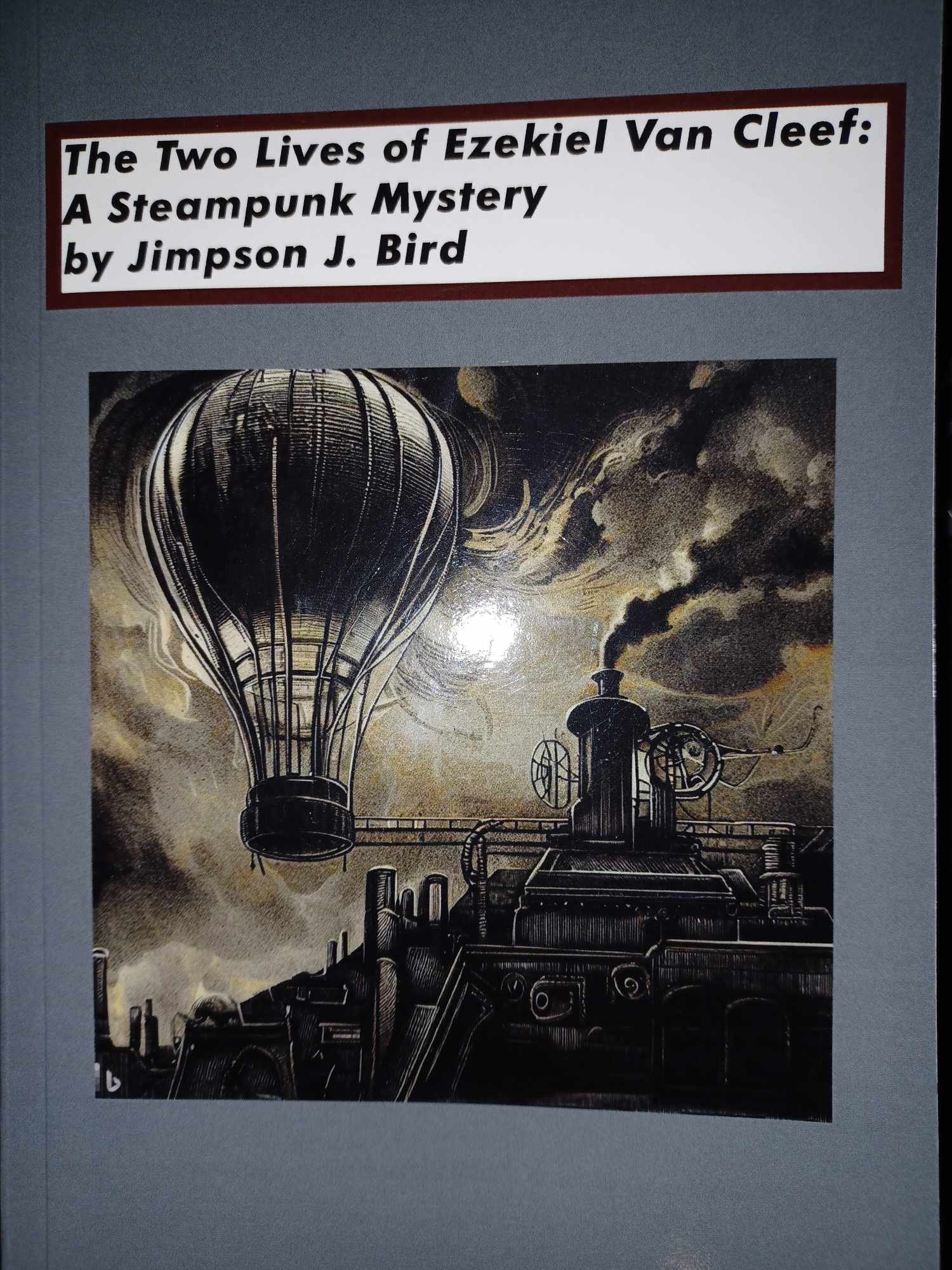
The Two Lives of Ezekiel Van Cleef is the greatest novel ever written by AI. Why? Because I helped write it. While this sounds arrogant, I think any novel that has 10% of the writing done by a human is better than any novel written 100% by AI. In fact, productivity aside, I would say 93% of all writers and wannabe writers are better than AI. But let’s be honest: as I stated in my previous blog about ChatGPT, AI is a problem solver and not a creative genius. So, when I decided to experiment writing a novel with ChatGPT, I didn’t ask it to come up with a story idea. I knew exactly what story I wanted it to tell.

It all started when…

When I was 17, the movie Sherlock Holmes: Game of Shadows was released in theaters, and my Sherlockian heart was furious. Tony Stark as Sherlock Holmes was the worst casting decision since John Wayne played Genghis Khan! Sir Arthur Conan Doyle would be rolling around in his grave at the idea of a kung fu fighting, steampunk version of his story. “If they wanted a steampunk mystery, why didn’t they just write a new one?” I said to no one in particular. But then a little voice in my head whispered, “Why don’t you?” Why my brother was so creepily whispering in my ear, I will never know. Freaky.

So, I cranked out a 1,791-word outline for a steampunk mystery story I titled “The World Gazette” which later became “The World Chronicle” and finally, “The Two Lives of Ezekiel Van Cleef.” This 81-beat outline sat on hard drives collecting digital dust for over a decade. Until now. I plugged in this outline and told ChatGPT that I wanted to create a detailed, 40-chapter outline for this story in the style of Jules Verne. After all, I had outright stolen the name of my hero from a Jules Verne short story “In the Year 2889.” That’s when the fun began.

The Plot Thickens.

The story opens with the Bank of Von Gilham being robbed by the notorious criminal Ezekiel Van Cleef. No one can bring this criminal to justice. No one that is, except the editor of the World Chronicle, Benedict Pierre Smith. He chases after the criminal, but tragically, they both fall into a lake, never to be seen again. Twenty years later, Smith’s son Fritz Napoleon Smith has taken over his father’s newspaper business and is the most powerful man in the world. But rumors have spread that Ezekiel Van Cleef has been raised from the dead, and is now committing crimes all over the city. Fritz, a skeptic of the supernatural, is faced with not only the question of resurrection but whether or not a certain carpenter was resurrected centuries ago.

The story is full of mystery, cane sword fights, glorious ballrooms in ginormous blimps, hot air balloons, pneumatic tubes for mass transportation, and a steampunk video chat device. To my utter delight, it reads like a dime-novel adventure story. Thanks to ChatGPT writing this one chapter at a time, there is little character growth, and the entire book is one hair-raising adventure after another. It mimics certain elements of Jules Verne’s writing style to give it that classic adventure feel that I could not have replicated on my own, and if you took one sip of soda every time someone has “a mixture of” two different emotions, you’d fall into a sugar coma.

Computers Can’t Banter.

It only took a few days for ChatGPT to pump out an entire draft, one chapter at a time. I would give it the prompt, copy and paste the results into my Word document, then rinse and repeat. What was even better was that once I told it to write it, I could work on my college classes, and then check on it later. Within a few days, I had a 40k-word draft of a story that I had given up long ago. I find it fitting that a story surrounding the question of scientific discoveries being able to bring people back to life, was given a second life through new technology. However, there was work to be done.

For one, the dialogue stunk. Thanks to AI’s problem-solving skills, every conversation was wrapped up in a few lines of dialogue. Everyone is polite, intelligent, and is inspired by the tritest of sayings. When I say I rewrote all the dialogue, that would be an exaggeration. 97% is probably more accurate. I am a stickler for dialogue. It is the first thing I notice in any story, be that a book, screenplay, TV show, play, or film. If the dialogue isn’t any good, I’m not interested. While I’ m not great at it, allow me to brag about how much better I am than ChatGPT. The characters may not have the sharp wit of Niel Simon, but at least the dialogue sounds better than George Lucas. After a long process of correcting the dialogue, I had a polished manuscript.

Allow Me to Illustrate my Point.

But I didn’t want to stop there. You see, I yearn for the olden times when adult stories had illustrations. Dickens, Conan Doyle, Verne, and Twain all wrote stories that were read by adults, yet they had beautiful drawings. And thanks to AI, I would illustrate my story as well. While I tried different AI art generators, I discovered Bing’s Chat creates the highest quality. But it’s not enough to tell it to create “a steampunk-looking city.” You need to know what style of art you want to emulate.

It took a lot of research to realize that “a lithograph with scratchboard elements” would give me the look I was going for. And so, over a few months, I created over 40 illustrations for this story. It wasn’t easy. I learned early on that it couldn’t create faces very well, or consistently give people all ten of their fingers. So, I gave it instructions like “with their back to the camera” or “a silhouette style of __.” But most of the time I chose to use lots of exterior shots of buildings.

The best thing about Bing’s AI image generator, is that you can add more instructions like “Can you make it at night?” or “Add the glow of a Gaslamp.” Because AI only creates square ratio images (for now) it would be harder to create a full picture book. However, these 3-inch images really help the story come alive, as well as add more than 40 extra pages!

Final Touches.

I designed the cover photo to mimic the simple Dover Thrift Edition paperbacks that many classics are printed on. In a few days, I held in my hands a brand-new take on a story that had been living in my head for over a decade. So, if you have the time, and want a story written in a style different than yours, or just to have a few copies with friends and family, you might consider using these resources. For me, it was an experiment in learning about the “competition” that human writers are facing. If this tech had been around when I was 17, I would have easily self-published a book a year. It really only costs time, and there’s something special about having a book that no one else has.

You can read “The Two Lives of Ezekiel Van Cleef” on Amazon either on Kindle or as a paperback. I have adjusted the prices so I get exactly $1 no matter how you buy it. If you want to see how good AI can write, or just want a fun steampunk adventure, you can check it out here.

If you could have AI write a book in any writer’s style, who would it be, and why? Let me know in the comments!

Just like his two older brothers, Kyle Morgan was homeschooled from Kindergarten through High School. When he is not busy writing, the next classic children’s book, Kyle loves spending time with his family, all things baseball, and watching black and white movies. He is a monthly contributor to Write2Ignite where he blogs about writing for children. His work has appeared in The Old Schoolhouse Magazine, The Caldwell Perspective and StarLight Magazine. You can check out his Facebook page or follow him on Instagram.

Book Review: The First Unicorn by Kathleen J. Shields

“And the unicorns shall come down with them, and the bullocks with the bulls; and their land shall be soaked with blood, and their dust made fat with fatness.” (Isaiah 34:7 KJV)

If you ever come across this verse in the King James Bible, it might give you some pause. Unicorns and blood? In Isaiah? What is going on here? While it is important to note that King James is the only version that calls these creatures unicorns, it does beg the question, “What creature was Isaiah talking about? Rhino’s? Wild One-horned Oxen? How did the unicorn legend even start?” If you ask my Grandmother, she’ll tell you that the unicorns got their horns stuck in a tree on the way to the ark and that’s why you don’t see them anymore.

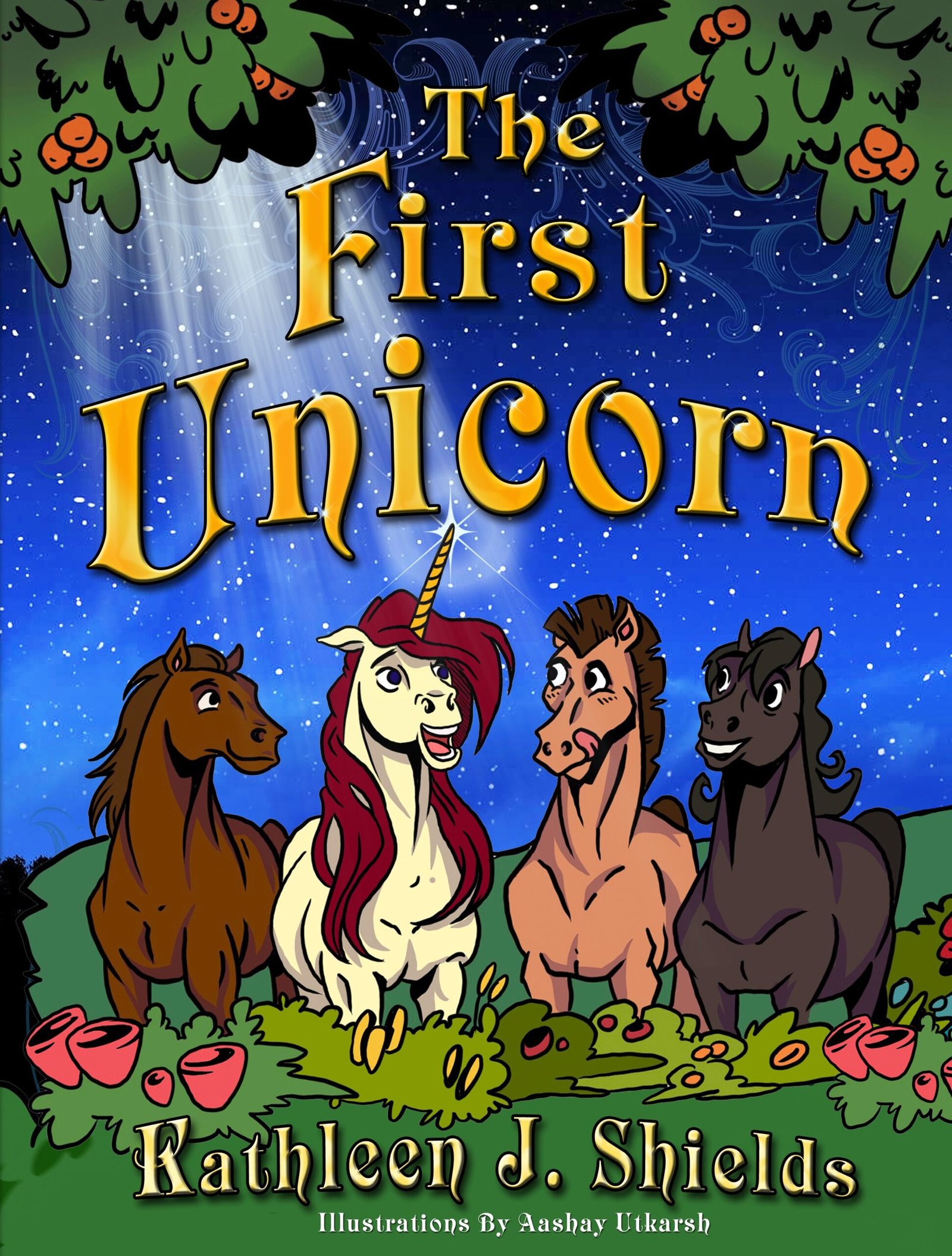
The First Unicorn is a picture book written in verse by Kathleen J. Shields with illustrations by Aashay Utkarsh, and it tries to answer these questions. You see in this story, unicorns aren’t mythical creatures who have names that sound like ice cream flavors and are all about rainbows and friendship. Nor did God create unicorns alongside horses, but instead gave horses unicorn horns as a reward for their kindness and good behavior.

Plot Summary

The book begins thousands of years ago in an unnamed land, where there is a herd of selfish horses. They are sinful creatures who only think about themselves. Well, everyone but Aden. Aden is a colt with a kind heart who likes to put other’s needs before his own. While most unicorn stories are about girl unicorns, I found it refreshing to see a story about a boy unicorn. This is no mistake. Aden is meant to be a Christ-like figure in this story. While he does not lay down his life for others, he does display many fruits of the spirit including love, gentleness, and goodness. The story itself is very episodic, with Aden helping out different animals throughout the land and protecting smaller creatures by chasing away their predators.

But things really change when an angel appears to Aden in the form of a bright light! The angel says that God has been watching Aden and is pleased with him. He wants to give him a gift: the unicorn horn. This horn has special powers, and Aden uses it for good. The story takes a dark turn toward the end when a wolf shows up and kills Aden’s mother. Parents of small children should be aware that there is blood in some of these illustrations but have no fear. Aden uses the unicorn horn that God gave him to heal his mother and bring her back to life! The book ends with Aden using his powers for good to help other animals, with a verse from Joshua to close out the book.

Joshua 1:9 “Have I not commanded you? Be strong and courageous. Do not be frightened,

and do not be dismayed, for the Lord your God is with you wherever you go.”

Final Thoughts

This is a short, 48-page story with colorful illustrations and a rhyming scheme. My niece loves unicorns, but after a disastrous viewing of Lion King, I decided to hold back on this story and wait a few more years. That being said, there are some good lessons here about putting others before yourself, even if you are the only one around doing that. It also shows how your Father in Heaven sees what you are doing and will reward you. Some may be skeptical of a Biblical God giving a mythical creature magic powers. But the story is all about how God rewards good behavior. And that’s a pretty good message for the kiddos!

Just like his two older brothers, Kyle Morgan was homeschooled from Kindergarten through High School. When he is not busy writing, the next classic children’s book, Kyle loves spending time with his family, all things baseball, and watching black and white movies. He is a monthly contributor to Write2Ignite where he blogs about writing for children. His work has appeared in The Old Schoolhouse Magazine, The Caldwell Perspective and StarLight Magazine. You can check out his Facebook page or follow him on Instagram.

3 Books Guiding Christian Teens to Make Wise Decisions – by Sally Matheny

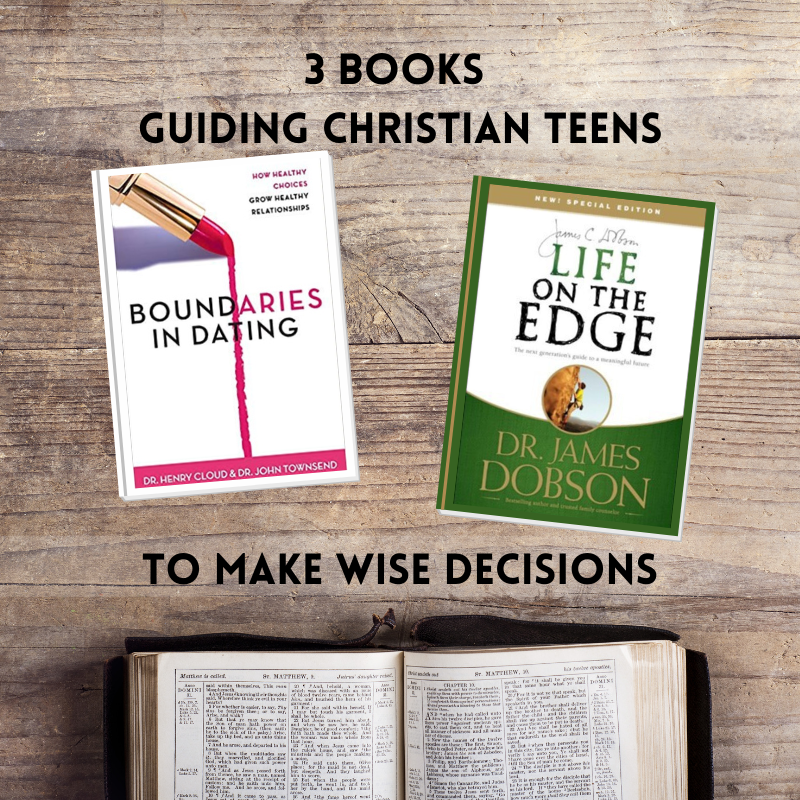
During my thirty-plus years of motherhood, one of my favorite things has been searching for exceptional books to read to, and to be read by, our children. For this post, we’ll talk about three books guiding Christian teens to make wise decisions.

There are numerous books for Christian teens out there. However, I thought I’d feature three of the books our eleventh-grade son is reading this year.

If you have high school kids, then perhaps you’re sensing how quickly the time is passing. It is not the time to let up in praying for and with them. Nor is it time to stop guiding them in how to make wise decisions.  

There are times to speak, times to act, and times to hand them a book!

Our son is not an avid fan of reading, but he has always enjoyed us reading aloud to him—even as a teen. So, if you have kids who aren’t big on reading, consider reading aloud to them. Read as much as you think is enjoyable to them—whether that’s a chapter or just a few pages a day.

One of my greatest temptations is to “preach” after an author makes a great point—sort of like “amen-ing” at church. The other temptation I have is trying to engage my teen too long in a conversation about what we’re reading.

Each child is different. Our oldest would’ve loved an hour-long discussion of a book. Our youngest, not so much. The key is to find excellent books and let them speak for themselves. Talk with your teens but stay in the enjoyable fellowship zone. Stop well before your teens’ tipping point to frustration.  

A Book to Guide Wise Decisions in Dating

Whether your teen is dating or not, Boundaries in Dating: How Healthy Choices Grow Healthy Relationships is a book that’s helpful, even in building friendships.

Published by Zondervan, this book is written by two best-selling authors, Dr. Henry Cloud and Dr. John Townsend. Both are Christian psychologists and leadership experts.

One way I approached this book with my son was mentioning how his friends seem to come to him for advice concerning their relationships with others. I told him if teens were coming to him for advice, then he might find this book helpful. Not only could he share insights from the book with them, but in the process, he, too, would learn and store beneficial information about how to grow healthy relationships.

Even I learned a lot by reading this book. Many of the examples of a relationship problems given in the book made me think of someone who had experienced something similar. Sadly, the people who came to my mind were people with marriage problems. I wonder if things would’ve turned out differently for them if they had been able to read this book prior to marriage.

When you see the words “boundaries in dating,” you may think it’s only about physical boundaries. This book addresses far more than that. The authors give examples of how boundary problems present themselves. Loss of freedom to be oneself; being with the wrong person; dating from inner hurt rather than our values; not dating; dating too much in the relationship; freedom without responsibility; control issues; not taking the responsibility to say no; and sexual impropriety are all covered.

Readers are encouraged to value what their boundaries protect—their emotions, values, behaviors, and attitudes. “Boundaries help you be yourself, instead of losing yourself in someone else.”

Each chapter is summarized with a “Conclusion” and ends with practical, easy-to-understand “Take-Away Tips.”

Currently, we are about two-thirds into reading this book. So far, everything we’ve read has been presented with a biblical worldview. Scriptures used in the book are from the NIV Bible.

I highly recommend this book to anyone who is dating, from teen to older adult. It offers wise Christian counseling on how to determine the root of problems in relationships and practical steps to take in dealing with them.  

A Guide for Making Meaningful Life Decisions

Life on the Edge: The Next Generation’s Guide to a Meaningful Future is written by Dr. James Dobson, the founder of Focus on the Family. Like Dr. Cloud and Dr. Townsend, Dobson, too, is a licensed psychologist. Also, he has years of experience as a marriage, family, and child counselor.

Our son is reading this book on his own. However, I am reading it as well and usually stay a chapter or two ahead of him. It’s been interesting how the content in this book coincides with and confirms some of the topics mentioned in the Boundaries in Dating book.

I bought this book several years ago but didn’t think our son was ready then for some of the topics addressed. In fact, Dr. Dobson recommends the book for ages 16 -26. He calls this the “critical decade” in which some of the most dramatic and permanent changes take place.

Now, our son is seventeen. He and his friends have had challenging moments as they learn how to make wise decisions. Many parents dismiss these years as a phase teens go through. But, as Dr. Dobson points out, it’s a time when life-altering decisions are made.

Dr. Dobson helps young adults see how often disappointment occurs due to the refusal of placing God first and foremost in their decision-making.

In addition, Dr. Dobson candidly shares about battles and failures from his own young adulthood years. His stories, as well as those of others, reveal principles to help young adults move in the right direction for making wise choices.

Much of the book contains Dr. Dobson’s answers to questions sent to him. Dr. Dobson is not afraid to tackle tough subjects.

The interview Dr. Dobson had with serial killer, Ted Bundy, is eye-opening. Bundy shares how he was raised in a Christian home but how his sampling of pornography led him down a horrible path of destruction. Significant life-changing points are driven home in this interview.

I recommend parents preview this book to determine the appropriate time for their teens to read it. But, definitely read it. Ignorance is not bliss when our kids are naïve and led astray. It’s important they learn about Satan’s subtle tactics before they encounter them.

Published by Multnomah Books, the scriptures quoted in this book are from various versions of the Bible. The gospel is clearly imbedded throughout Life on the Edge.

The Most Important Book for Christian Teens

I’m mentioning the Bible last, but only for emphasis. When you click away from this blog, I want your last thoughts to be about the most important book of all.

First, teens must decide if they believe the Bible to be the inerrant word of God, the creator and ruler of all things.

There are resources to help families learn about the history and validity of the Bible. One place to start is with this FOF post on How Do We Know the Bible is True?

As for me and my family, we believe the Bible to be the best book of all. God’s words of truth and wisdom are the foundation on which all else is weighed. We are all at various points of spiritual maturity. None of us have arrived at a full understanding and will not until we are in heaven.

As a young believer in elementary school, I did not appreciate the immeasurable value of the Holy Bible. It wasn’t until I was a teen that I began to “hammer out” my faith.

It was during that critical decade which Dr. Dobson talks about in Life on the Edge when I began praying for understanding of God’s Word and for wisdom in making decisions.

Even though the best book to guide Christian teens is the Bible, no doubt, there are teens who will pick up many other books to read before they’ll pick up a Bible. God can use Christian writers to point to biblical truth.

Share your thoughts with us. What excellent book have you found for Christian teens?

It doesn’t necessarily have to be a nonfiction book, just one that’s written in a way that doesn’t contradict God’s Word.  

A freelance writer, Sally Matheny’s writing is published in worldwide, national, regional, online and print publications including AppleseedsClubhouse Jr., Homeschooling Today, and The Old Schoolhouse. As a writer, blogger, and speaker, Sally encourages parents to live victoriously and courageously tell the next generation wondrous things. Connect with her on several social media sites, although her favorite hangouts are at SallyMatheny.com and Pinterest. Sally is Write2Ignite’s Pinterest editor.