Five Tips for Celebrating Christmas with Books by Nancy I. Sanders

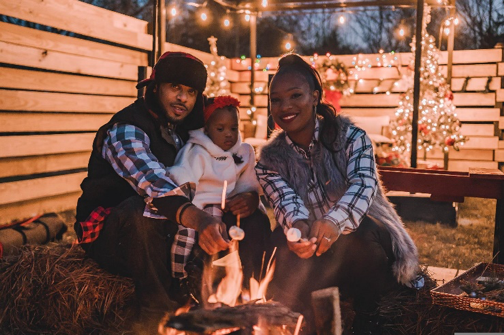
Our neighbors built a fire in their firepit and invited the children on our street over to toast s’mores. The wonderful fragrance of woodsmoke made everyone feel so festive! It’s Christmas time! 

This year as we’re getting to celebrate the birth of baby Jesus, there are so many things I’m thankful for this year, even in the midst of all the news and all the national and world events that are going on. Most of all, I’m thankful that God is still on the throne. I’ve read the end of the Book…and His plan will come to pass in perfect timing. We are more than conquerors in Christ!

One thing I’m especially thankful for is the list of good books for our families and children that are made available through resources such as Answers in Genesis, the Institute for Creation Research, and Master Books. They didn’t have books like this when our kids were growing up.  If you want to try celebrating Christmas with books, here are a few tips to help you get started.

TIP #1 Prioritize Gifting Christian Books

With Christmas arriving sooner than later and everyone tightening their belts with their budget this year, I want to encourage you to be intentional about your gift giving. Prioritize gifting books to your children and grandchildren that build a foundation of faith while teaching them to grow more like Christ and believe the Bible is trustworthy and true.

Tip #2: Choose Books by Christian Publishers

Choose books published by Christian publishers with biblical-based values. Master Books has great biblical-based and Creation-based curriculum resources for homeschooling families. CLICK HERE to visit their online store. We purchased some of their math books by Angela O’Dell. How wonderful it is for kids to learn adding, subtracting, and solid math skills while reading stories and examples about a Christian family who visits Grandma and Grandpa on their farm and takes missionary trips together!

Tip #3: Choose Creation-based, Biblical Books

Answers in Genesis offers a line-up of amazing books for kids (and grown-ups) of every age! CLICK HERE to visit their online store. Perfect for homeschooling families, church libraries, and every family wanting to grow in our faith, there are so many resources I don’t know where to start. You can learn the truth about dinosaurs, Creation, Noah’s Ark, answers to questions about the Bible…and more! Check out CREATION FUN WITH THE GRANDKIDS: ACTIVITIES THAT INSPIRE CONVERSATIONS ABOUT OUR CREATOR.

Tip #4: Choose Books that Teach the Truth about Science and the Bible

The Institute for Creation Research offers great resources for “Proclaiming Scientific Truth in Creation.” Science and the Bible. What an amazing combination! CLICK HERE to visit their online store. I recently purchased two copies of their brand-new book about our National Parks, PARKS ACROSS AMERICA: VIEWING GOD’S WONDERS THROUGH A CREATIONIST LENS. One copy is for our bookshelves and another is to gift to a friend for Christmas.

Tip #5: Build Your Own Personal Library of Christian Books

Tip #5: Build Your Own Personal Library of Christian Books

Unfortunately, our local libraries and stores are promoting books for children that simply do not reflect our family’s values, let alone biblical truth. My personal goal is to build up a library of books here in our home that teach God’s truth and support biblical values so we can grow stronger in the ways of the Lord on every topic from penguins to ancient history. Yes, it is a financial investment, but it’s an eternal investment that is definitely worth making a priority. I encourage you to prayerfully do the same!

Nancy I. Sanders, a bestselling and award-winning children’s author of over 100 books including her newest bedtime board book, BEDTIME WITH DADDY. For more information about Nancy and her books, CLICK HERE to visit her website.
Barking with The Big Dogs: Hope and Honesty for Children by Karley Conklin

“It is necessary to be hopeful to write successfully for children, yes, because children themselves are generically hopeful, but the quality of hopefulness is not an immature quality.” -Natalie Babbitt ( pp 42)

Natalie Babbitt’s book Barking with the Big Dogs is a collection of her essays and speeches written over several years. In all the various topics she focuses on, from types of fantasies to critical thinking to childhood itself, there are two major themes that pop up repeatedly: hope and honesty.

Hope is woven into the very nature of children’s books. Babbitt kicks off with an essay on happy endings and explains that children’s literature contains a quality of joy adult fiction lacks. In fantasy for kids, the belief that the world can and will be better is proven true. What is a happy ending if not a proof of hope? The villain can be defeated, the ordinary child can be a hero, and the world can be saved. Hope and optimism reign in children’s literature.

Does this mean that children’s books must present utopias?

Absolutely not. Natalie Babbitt claims that when authors try to write perfect worlds, they instead create worlds that are, “patently artificial, a placebo, lacking. . . consistency with the author’s philosophy” (37). In order to escape the one-dimensional depictions of life, Babbitt explains that authors need to write with “as much honesty and skill as we can muster,” (40).

She argues that we need to write stories that have flawed characters and flawed worlds, because flaws are part of human nature. But she also writes that we need to write authentically within our worldview. If we try to write what we don’t believe, we rob our stories of depth.

Herein lies the important message for Christian authors. For Christians, a huge part of writing truthfully is writing hopefully. Hope and honesty go hand in hand for us.

Natalie Babbitt misses this connection between the two. She writes, “it seems a peculiarly contradictory thing for the Bible to say in one place that truth is liberating when in another place it puts hope on a level with faith and charity. . . For hope and truth don’t always go together” (108).

However, hope and honesty are inseparable.

As Christians, the truth we cling to is our hope. God overcomes our greatest fears with His power and promises. The hope of eternity stands in defiance to death, the promise of God’s provision quiets our daily worries, and prayer itself brings us to God’s throne when we face trials.

Babbitt views as a contradiction something she doesn’t understand. She doesn’t recognize a solid hope. Her hope seems to be simply defined as the belief in possibility. She writes, “Life is infinitely more interesting when we can believe in the possibility of something wonderful just over the next hill” (110).

For Christians, hope is so much deeper. We know that something wonderful lies over the next hill. We know that the God of the universe is sustaining His creation. The son of God came to bring us life, and He’s coming again soon. His resurrection is the promise that everything broken will be renewed. A new heaven, a new earth, and a life forever with Him. What greater hope could we ask for?

Therefore, since we have such hope, the only honest way we can write is with that same joy. Hope and honesty should define Christian fiction.

Perhaps more than any other authors, we have the ability to write happy endings authentically. We believe in the greatest happy ending the world will ever know. The ultimate defeat of evil, ordinary people chosen by God for great tasks, and the world forever saved.

As we enter Easter week, may we reflect on the incredible hope that Jesus has brought to the world. May our hope and honesty in our writing be a light in the darkness.

Book Review:

What about the book itself? Natalie Babbitt’s essay collection wasn’t what I expected. While the essays usually focus on discussions around children’s literature, they also tap into Babbitt’s philosophy on life. Her words are instructional at times, but are more personal at others. If you choose to read this book, pick it up as an opportunity to hear the perspective of a fellow author. You’ll learn far more from her words if you view it as a conversation rather than as a lesson.

Overall, I give her book 3  1/2 out of  5 stars. She makes some strong points, but there are still lulls in the book, as well as points that seem out of place or repetitive.