Summary and Takeaways: The 2025 Write to Publish Conference by Kathy O’Neill

It’s summer, and that means it’s writers’ conference season! A time for education, encouragement, making connections, and building friendships.

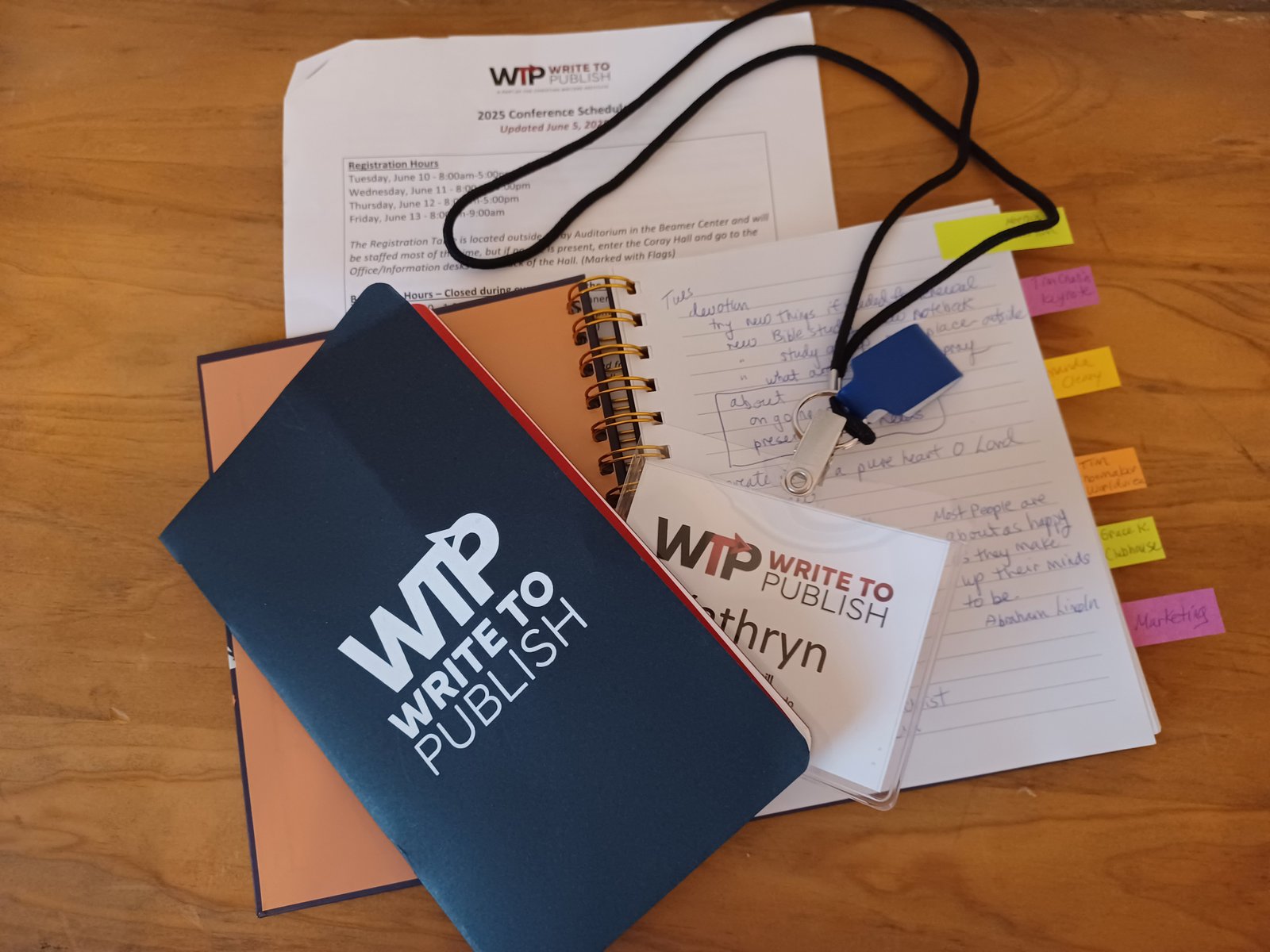
Recently, four of us Write2Igniters attended the Write to Publish Conference near Chicago. We came from all over—Missouri, New Jersey, Colorado, and Australia. We all write for children but are at different stages of our writing careers and write in different genres—fiction, nonfiction, picture books, chapter books, and YA. Yet, the 3-day Write to Publish Conference, held each June on the campus of Wheaton College, provided each of us with just what we needed!

I’m going to first give you a bird’s eye view of the conference, and then each of us will zoom in to give you our individual insights and responses. On Tuesday after dinner in the college cafeteria, Eric Redmond, a pastor, author, and professor of Bible at Moody Bible Institute, kicked off conference activities. Authors Tim Shoemaker and Saundra Dalton-Smith spoke on the other evenings. Each evening, a casual time of snacks with socializing, book signings, or games followed the speakers.

Wednesday morning, after an early breakfast and devotional time, workshops and continuing sessions got under way. Continuing sessions were classes that continued over the 3 days, while each workshop finished in one session. Workshops and continuing sessions were taught by various editors, authors, and agents. Throughout each day, people who had signed up could have short meetings with authors, editors, or agents. Authors also bring their books to sell, and there’s a great variety to choose from.

At midmorning each day, we gathered to hear from Tim Challies, a well-known blogger and author.

Mealtimes in the cafeteria were a great time to meet other writers, build friendships, and exchange business cards. Penny told us this was a custom peculiar to American conferences, but you can see her card turned out great, and it is a good way to remember people and connect with them later. Sometimes impromptu conversations happen with an author, editor, or agent that only God could have arranged.

That’s the bird’s eye view! Now let’s zoom in:

Penny Reeve

I’m an Australian writer, so coming to Write To Publish was quite the journey, but from the opening keynote I knew I was in the right place. The teaching was powerful and spoke directly to where I was at in my writing (and life) journey. I also loved the opportunity to visit the Wade Center and was deeply moved by the legacy and impact of the writers featured there.

I loved the professional nature of the conference and the many opportunities to meet other writers and be encouraged. Steve Laube’s workshop on potential land mines in contracts was extremely helpful as was Lori Roeleveld’s session on peaceful productivity! I’ll be going back to my notes over the next few months to maximize my learning and am giving thanks for the connections made.

Ashley Alden

God opened the doors for me to attend Write to Publish in June, and I am so grateful for the whole experience! Since I am new to the publishing world, I attended the Publishing 101 track with Anne Kroeker, which was full of information. I think the thing I loved most about the conference was all the people I met. I was nervous because I was attending alone, but I’ve never been to a conference where everyone was so friendly, encouraging, and helpful.

I was overjoyed to find out several W2I ladies were there, and I enjoyed so many conversations with writers across many genres. I feel like God met me in very personal ways as I contemplate how this season of life intersects with writing. My key takeaway was to JUST WRITE, and I’m looking forward to doing just that!

Pam Halter

This was my first time attending Write To Publish. I had been wanting to attend, but it hadn’t worked out before. I was not disappointed. The continuing session on marketing and publicity, taught by Becky Robinson, was the most helpful. “You don’t have to do everything.” That was so freeing!

What I liked most about the conference was the old-fashioned feel. What I mean by that is it’s a small enough conference to feel like family. And it wasn’t overloaded with all the bells and whistles other conferences are doing, like awards, fancy dinners, over the top evening sessions, etc. While those are fun, it’s such the norm now that I forgot how conferences were when I first started attending them in 1997. It was refreshing and encouraging. I felt welcome and wanted and seen, if that makes sense. I know I won’t be able to attend every year, but I’m already looking forward to going back!

Kathy O’Neill

At this, my second Write to Publish conference, I attended the continuing class on marketing. Becky Robinson encouraged us to find what worked best for us and think of marketing as “expanding our audience with lasting impact through value, consistency, longevity, and generosity.” One example of generosity was to remember that those who write similar things are our colleagues, not competitors, and we can all help each other.

In a workshop Amanda Cleary Eastep, whose area was hard hit by Hurricane Helene, spoke on ways to write through hard times, and Tim Shoemaker encouraged us to write from a Christian world view without being preachy.

I love catching up with old friends as well as getting to know new ones at meals and evening social times! Their sincere interest, and the generosity and expertise of the agents and editors encourage me to keep writing!

Writing Conferences Can Help Guide Your Writing Journey

Writing conferences like Write to Publish offer great education, encouragement and continuing friendships. And conferences come in all sizes, locations, and price ranges around the country, as well as online, like our Write2Ignite Master Classes in the spring and fall. C.S. Lewis took children on adventures that helped them know God. At conferences, the generous community of Christian writers can help you learn to do that, too!

Kathy O’Neill grew up on the coast of Maine. She loves the Lord and His gifts of family, friends, art and nature. Today she lives in Colorado, exchanging walks on the beach for horseback riding in the Rockies, where the wind sings through the pines. As an art teacher, writer, and speaker, she enjoys engaging children’s and adult’s hearts and hands to discover God and their own creativity through art, history, and nature. Kathy has written for, Clubhouse Jr., DevoKids, Highlights, The Quiet Hour, Light from the Word, Starlight, and Appleseeds. Kathy has a middle grade devotions book about horses coming out with Tyndale in 2026.

You can connect with Kathy here:

Website and blog http://www.kathy-oneill.com/

Newsletter  Engaging Hearts and Hands with Art and Nature
Facebook  https://www.facebook.com/writerkathyoneill

Pinterest  https://www.pinterest.com/Kathythepicturelady/

Writing Down Under by Guest Blogger Penny Reeve

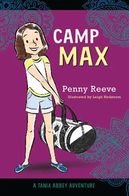
Last week our teen reviewer, Kathryn Cover, reviewed Penny Reeve’s book, CAMP MAX. This week, we welcome Penny back to our blog for an inside look at being a Christian children’s writer in Australia.

I am a Christian children’s and YA author living and writing in Sydney, Australia. My little red brick house is about an hour’s train ride from the Harbour Bridge and the famous white sails of the Opera House. There are no kangaroos jumping around our street, no koalas in the gum trees beyond our back fence, and apart from the lorikeets and cockatoos I get to watch as I write, being a children’s writer in Australia may seem quite similar to being a writer anywhere else in the world.

For the most part, I write alone as most writers do no matter where they are. But as we all know, it can be incredibly helpful to connect and network with other writers on our author journey. For Australian children’s authors living in major cities like me, there are many opportunities to connect. Local and regional SCWBI branches develop a strong sense of community within the children’s literature world. Writers’ centers offer courses and training, and the Children’s Book Council of Australia is a major driver promoting local children’s books. Writers who live further afield, or in rural and remote communities, are sometimes able to access scholarships or online courses to replace these invaluable face-to-face connections.

In my own journey as a Christian author, I’ve also found conferences such as the Omega Writers Conference to be an invaluable source of encouragement and direction for my growth as a writer. The Omega Writers Conference is a unique conference in Australia, specifically designed to equip, encourage and celebrate Australasian Christian writers. It’s one of my favorite events of the year and I’m often involved either teaching workshops or facilitating editorial appointments. I’ve also developed some important friendships and gleaned vital support from like-minded writers by attending these conferences.

Because the Australian book industry is smaller than those in other English speaking markets, it’s crucial that Australian authors learn as much as they can about their local and international markets. Whereas UK or US authors need agent representation, in Australia having an agent is an optional extra. Direct networking between authors and editors often occurs quite naturally at industry events or conferences and can lead to submission opportunities without agent support. However, the comparatively small market can also make it difficult for publishers who have to pitch their lists to readers in competition with large quantities of imported books.

For a Christian writer this situation is exacerbated yet again because while there are still designated Christian bookstores in Australia, they are predominantly filled with US or UK titles. The dedicated Christian publishers who work within this market must make tough and limited decisions to publish new books that are both commercially viable and meeting the need for Australian voices and perspectives. Because of this, it is not uncommon for Australian Christian authors to be creative about the way they reach their intended audience. For me, I’ve decided to widen the scope of what I write to include both the Christian and general markets, and I’ve also pursued publication both within Australia as well as overseas.

If you haven’t read many Australian authors yet, I’d recommend giving it a try! We’ve got some wonderful writers here and a small but strong group of Christian children’s writers producing high-quality books. A suggested reading list might include some of the following authors. For Christian authors writing for the general market try Lisa Shanahan’s The Grand Genius Summer of Henry Hoobler, Rosanne Hawke’s The Truth About Peacock Blue or Cecily Anne Patterson’s Invisible series. For the Christian book market, try Simon Camilleri’s When Santa Learned the Gospel, Penny Morrison’s The Mighty Mighty King or my most recent children’s novel, Camp Max. We mightn’t be able to travel physically at the moment, but we can still travel in the books we read.
Enjoy!

*******

Penny Reeve (also writing as Penny Jaye) is the award-winning, Australian author of more than 20 books for children. She writes picture books, junior fiction, children’s Bible studies and young adult fiction. Her most recent picture book, The Other Brother, was released in February 2020. She’s an experienced writing workshop leader, conference presenter and writing coach with a particular interest in equipping Christian children’s writers. You can learn more about Penny at www.pennyreeve.com and www.pennyjaye.com


CAMP MAX – Book Review by Kathryn Dover

I enjoyed reading the delightful children’s story, Camp Max by Penny Reeve. The illustrations drew me into the book. The first page is an illustration of the main character, Tania Abbey, and several more exist throughout the book.

Camp Max goes beyond being a simple children’s story; it reveals powerful life lessons. Through Tania’s point of view, the reader observes her internal conflicts. In the story, Tania; her brother, Daniel; her friend, Emily; and Emily’s brother, Sam are planning to attend a summer camp, Camp Max. Tania and Daniel have been before and are excited to bring their new friends with them this year. In reality, bringing Emily is a solace for Tania, whose best friend, Sue, has moved away.

As the story unfolds, Tania learns that Emily and Sam gave their camp money to a hospital in India. This shocks Tania because she would be unwilling to make a sacrifice like that herself. By donating their money, Emily’s Indian friend’s mother is able to get a job at the hospital. Tania doesn’t understand Emily’s sacrifice until she reads 1 John 3: 17: “If anyone sees his brother or sister in need but has no pity on them, how can the love of God be in that person?” Understanding Emily and Sam’s sacrifice helps Tania to be willing to make a sacrifice of her own.

In addition, the story teaches a lesson about friendship. Tania learns of a talent show offering two Camp Max tickets as prizes. She and Daniel help Emily and Sam develop acts for the show so they can win the prizes. However, when Tania’s camp ticket gets lost in the mail, only two slots are left: the talent show prizes. If she hopes to attend Camp Max, Tania must also enter the talent show but only two of them, Tania, Sam, or Emily, can win the prize. Who will be the one who does not attend Camp Max? Is Tania’s winning a ticket for herself greater than helping her friends?

The ending reinforces these lessons and leaves the reader feeling she has learned something too. The reader sees her development by comparing Tania’s actions at the beginning of the story to her last action. The ending also sums up the pervading theme of Shanti’s story and her family. Though not what I expected, it was very satisfactory.

I recommend this story to elementary-age children, and I wish I had known about it sooner!

****

There are several coloring pages on Penny Reeve’s website as well as teaching notes. This would be a great book to order for your children during your time of sheltering at home. The teaching notes includes questions and activities.

BLOG BONUS! Next week Penny Reeves will be sharing what it’s like to be a Christian children’s writer in Australia. Make sure you come back next Monday!

*******

Kathryn Dover lives in South Carolina with her family including her cats, Prince and Harley; dog, Lady; and two fish, Minnie, and Gilligan. She is a homeschool student and enjoys math, playing the piano, reading, and writing plays.


Himalayan Adventures: A Teen Review

I was instantly drawn to this book by the beautiful illustrations of animals on the cover and the interior pages. Since I am an animal lover, the stories of exotic animals kept my attention.

Himalayan Adventures by Penny Reeve is a unique book. As the name implies, the book relates adventures the author heard about or experienced while she was a missionary in Nepal. In the introduction, the author describes her struggles as a missionary, especially the difficulty of learning the Nepali language. She tells a story about the beautiful Nepali mountains, reminding readers to look up to God during turbulent times. Each subsequent chapter contains a short story about Nepal, its people, or its animals. Then, the author uses that story as an analogy to illustrate one of God’s truths, ending each chapter with a Bible verse.

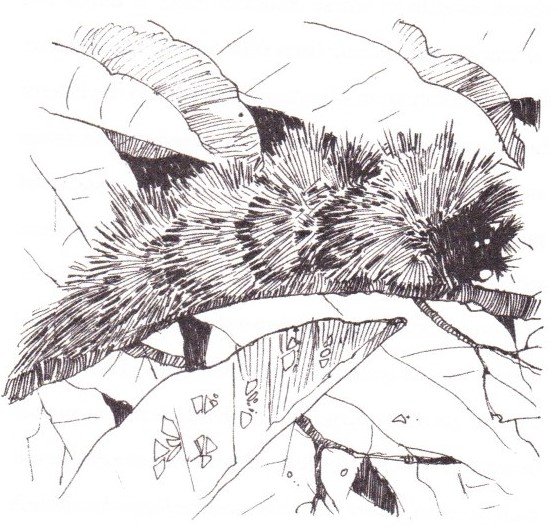
Illustration by Fred Apps

The stories are interesting, and the vivid imagery instantly draws the reader in. I was fascinated not only by the tales of exotic people and animals, but also by the way the author found biblical symbolism in her stories. In addition to simple truths, the author relates her stories to the way God’s creation works together. One story tells how the Chepang hunters catch bats, which provide needed protein for their people. A unique tree attracts the bats, and the hunters set traps at these trees. The bats help pollinate the trees and are caught by the hunters. Thus, they nourish the trees and the Chepang people. Without the bats, neither could survive. Also, many stories tell of the miracles God worked in the Nepali peoples’ lives to aid in the spread of the gospel. One of my favorites was about a man who was attacked by a leopard and miraculously survived. He thanked God for his survival and used his scars to witness of God’s grace to others. However, my favorite story was the one about Kanchi, a pet monkey who was very bossy to her owners; it reminds the reader not to be prideful.

I think this book is a great educational resource because it provides information about Nepal, its people, and the work of a missionary. It would make a good devotional for middle-grade students, yet the lessons and truths provide encouragement to readers of all ages. I thoroughly enjoyed reading this book and would recommend it to anyone, especially those who need encouragement.

********

Kathryn Dover lives in South Carolina with her family including her cats, Prince and Harley; dog, Lady; and two fish, Minnie and Gilligan. She is a homeschool student and enjoys math, playing the piano, reading, and writing plays.


Navigating Your Writing Goals by Guest Blogger Penny Reeve

Have you ever stood at the edge of a road, holding the hand of a small child, getting ready to cross the road safely? You glance up the street. You look back down the other way. You take notice of the cars and the traffic lights and when all is clear and safe and your small person is ready, you head towards your destination.

Goal setting for writers can be a bit like that. You generally know the direction you are headed; you need this or that manuscript to be researched/written/edited/revised/submitted and so forth. But pinpointing the goals into language and tasks that make them manageable and successful can be a little tricky. Sometimes the oncoming traffic of our to-do list feels overwhelming, or the rejection truck swerves closer than we would like, tipping us off balance. Occasionally we can even find ourselves standing still, lost and unsure of the direction we should be heading and why.

Because of this, it can be helpful to slow down and carefully navigate our way forwards in regards to our writing goals. Here are four directions we need to look in order to prioritise our writing goals for 2020:

  • Look Back

Looking back is remembering our writing dreams and reflecting on the progress we’re made so far. We can celebrate our writing achievements and be kind with our disappointments. Even a rejection can indicate progress if it means we’re putting in the hard work and growing as writers! Looking back allows us to deliberately build on last year’s progress and provides powerful motivation for our new year’s writing goals.

  • Look Ahead

Looking ahead as a writer means thinking strategically about what we’d like, or need, to achieve in the New Year (and beyond). It means realistically considering what might be achievable (for example: write a children’s devotional, or complete my middle grade novel), but it can also mean allowing yourself to dream. This is especially important if you’ve had a tough year writing wise.
Looking ahead allows us to create goals that move our writing forwards.

  • Look Down

Looking down means checking what’s already on our writing desks. Literally, this may mean doing a clean-up. Clear your physical and mental space for new projects. Sort the paperwork, tidy your desk, flick through your ideas notebook and choose the fun ones you’d like to work on this year. Looking down also means checking the status of your works-in-progress. It ensures us there’s nothing in our way to trip us up as we step out to achieve our writing goals.

  • Look Up

Looking up means reminding ourselves of God’s perspective. It’s so easy to get swept away in the try-harder mentality, or to be discouraged because our writing dreams haven’t turned out as we might have liked. But when we remember Christ and the extent of his humility and love (Philippians 2: 5-11) it reminds us that our writing is but a small thing in the scope of God’s glory. Our task is obedience. Walking humbly in step with the Spirit of God, we write as an expression of worship.


So as you step onto the curb of the New Year, don’t forget to look ahead, look back, look down and look up as you journey through goal setting for your writing in 2020.


Which direction do you find easiest to consider when setting new goals? Which one makes the most impact in your planning? Leave a comment below.


Invitation: If you’d like to spend some more time reflecting on your writing priorities and goals for the New Year, why not join the Summer Writer’s Refresh Facebook Group? It’s a January 2020 challenge for writers of any stage and genre, to celebrate, reassess and reflect on their writing. Join here: https://www.facebook.com/groups/summerwritersrefresh/

Penny Reeve is the award-winning author of more than 20 books for children and older readers. She lives in Sydney, Australia and writes picture books, junior fiction, children’s Bible Studies and young adult fiction (she also writes as Penny Jaye). Penny is also a writing workshop leader, conference presenter and writing coach with a particular interest in equipping children’s book writers. For more information visit www.pennyreeve.com or follow her on Facebook: https://www.facebook.com/pennyreevethepennydrops/