
Two Kinds of Children’s Books

There are two kinds of children’s books: the kind that grownups want children to read and the kind that children want to read. As adults, we may be tempted to write the first type of book. The kind that gets Newberry and Caldecott medals. The kind that ends up on librarian and teacher’s lists. They catch the attention of editors, receive critical acclaim, and give us the validation we so desperately crave as writers. But today, I want to encourage you to try writing the latter.

Speaking from Experience

I remember it like it was yesterday. My mother would pull a book off the shelf at our local library.

“How about this one?” she would say, foolish optimism in her eyes.

I would shake my head. “It’s not about baseball.”

My poor mother would try every trick in the book to broaden my horizons. But my horizons wouldn’t budge. Occasionally, I would be forced to read some textbooks with boring stories meant to expand my vocabulary. But these stories felt like having a tooth pulled. Soon, my mother relented and checked out exclusively baseball books for me. I can’t remember some of the titles, and sometimes I didn’t finish them before the deadline, but a spark had been lit. One book I do remember was In the Year of the Boar and Jackie Robinson by Bette Boa Lord.

There are Exceptions

“Now wait a minute Kyle,” you say. “In the Year of the Boar and Jackie Robinson is a classic. You’ve already destroyed your argument.”

Well, not so fast. I listened to the book for Jackie Robinson. Notice I said listened. If it hadn’t been an audiobook, I may not have finished it. But that’s a different blog post. I would have read Charlotte’s Web or The Story of Doctor Dolittle if the animals could turn a double play.

If you play your cards right, you as a writer, parent, teacher, etc. can get a child interested in a great book if it’s about something they are obsessed with. Do they like dogs? Go Dog, Go! is great. They love their teddy bear and all things British? A Bear Called Paddington is pretty good. But writing a great book in hopes that you’ll trick children into reading something great is…well…tricky. And you know why?

Children Can Tell When It Feels Like Homework

Don Quixote, Gulliver’s Travels, and The Adventures of Pinocchio all felt like homework. And you know what? I never finished them. Children can tell when a book feels like homework. That’s what I loved about being homeschooled. My mother allowed us to read whatever we wanted, which meant we consumed more books and were more invested in what we were reading. I know sometimes it feels like children are reading garbage like Dog Man or a Minecraft book, but that’s because these writers are not thinking about what children should read, but what they want to read. They are giving them recess while other authors are giving them more homework. But you don’t have to sacrifice your integrity as an author.

You Don’t Have to Talk Down to a Child

While some books talk to children like they are adults who read The New Yorker, others try to “dumb down” a story. Both are bad. A book should never feel like an adult is talking to them, but a peer. That’s why I enjoy first-person narrative so much. It allows me to talk to the reader like I am a 12-year-old boy. It also helps that I have not matured past this age. Bob Smiley does this so well with his Average Boy books. It feels like being in the mind of a 12-year-old boy. Literacy rates are declining, so we don’t want to write like the 1800s. But we also don’t want to write a middle-grade book using only the words Dr. Seuss used for The Cat in the Hat. S.D. Smith fills The Green Ember series with heavy paragraphs that only works for readers who like Tolkien and an older style of writing. They are great books to get your kids used to a more classical type of novel. But for those who struggle to read, it might be difficult.

It’s Not Just About the Words

Sometimes it is not about the word choice, or how fat the paragraphs are. It’s about the story. If you write a chapter book about an accountant filing taxes, your chances of a child reading it are slim. You may like stories of hitmen and lawyers today, but what about when you were a kid? What were the types of stories you loved? Today, I will read books that don’t even mention baseball. But there was a time when I held onto my principles. As writers, we need to remember what mattered to us when we were a child. What struggles we had. What were our obsessions? If we do this, we might just write a children’s book that children will want to read!

Author Bio

Just like his two older brothers, Kyle Morgan was homeschooled from Kindergarten through High School. He graduated from Grand Canyon University in 2025 with a Bachelor of Arts in Professional Writing for New Media. When he is not busy writing the next classic children’s book, Kyle loves spending time with his family, all things baseball, and watching black and white movies. He is a monthly contributor to Write2Ignite where he blogs about writing for children. His work has appeared in The Old Schoolhouse MagazineThe Caldwell Perspective and StarLight Magazine. You can check out his Facebook page or follow him on Instagram.
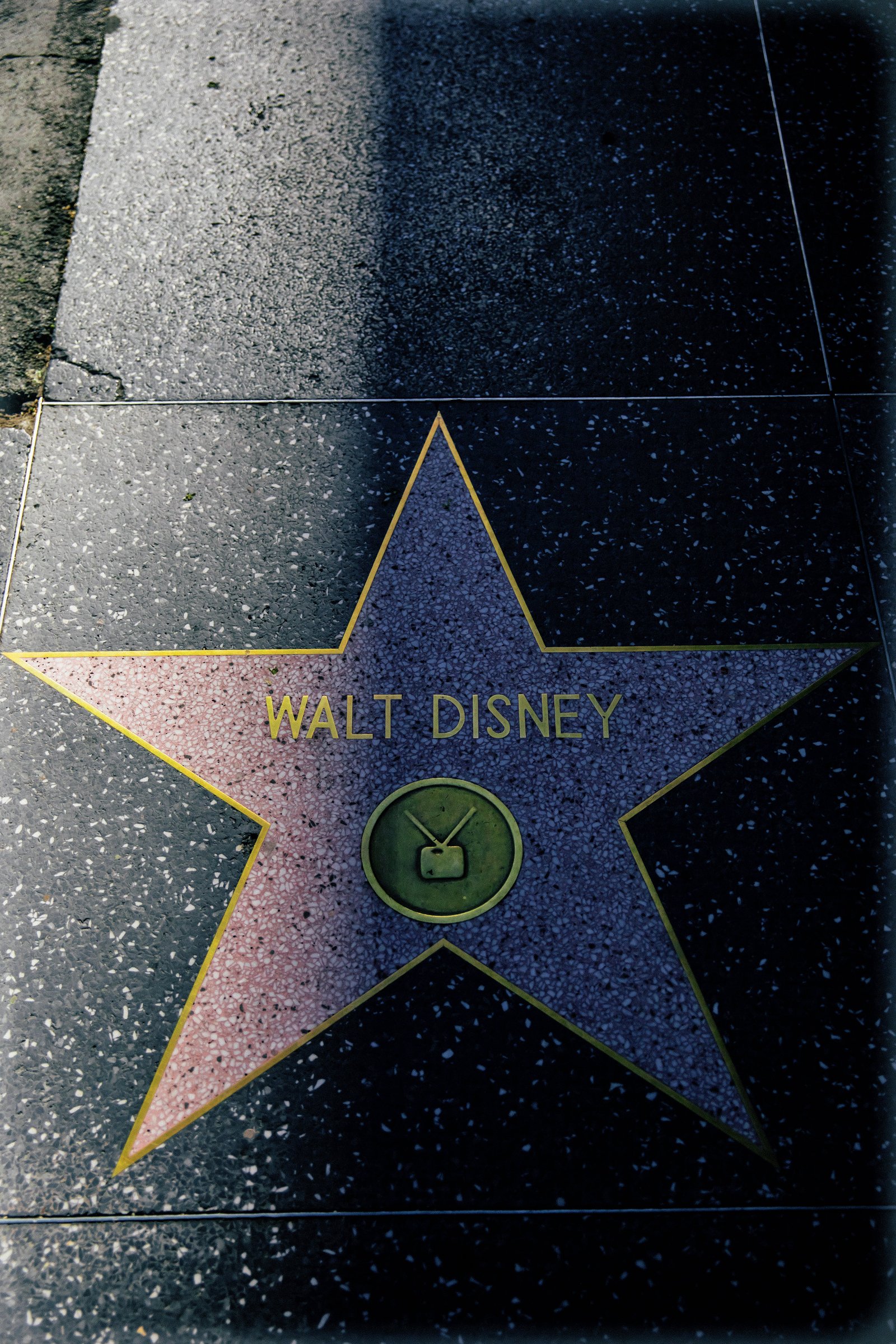
What Writers Can Learn from Walt Disney

Out of the 62 animated films from the Walt Disney Company, only 8 are original ideas, and 2 of those were propaganda films made during WWII to help strengthen our relationship with South America. Everything else was based on either a book, mythology, poems, folk tales, or a piece of classical music. So why do we complain when Disney remakes their movies when the “originals” are remakes of older stories? Was Walt Disney a thief? A fraud? Just another Hollywood executive that recycled stories for a quick cash grab? Not so fast. After all, as I previously wrote, you don’t want to write an original story, but a timeless story. So, let’s take a look at what writers can learn from Walt Disney.

New format.

While it could be easy to credit Walt’s genius to his use of animation, I think this is only scratching the surface. Sure, the story of Snow White had never been told through animation (unless you count a Betty Boop short, which I do not). It was a new medium for film. So, as Disney moved down the line of fairy tales, it was new and exciting to see what the House of Mouse’s take would be. However, that only gets you the excitement of one generation. For a story to truly last, there has to be something timeless about it. As we have seen far too often, new technology only covers up bad storytelling for one generation. No matter what bells and whistles you add to your story, be that technology, really cool illustrations, or fanciful writing, the story has to stand on its own.

Much needed changes.

You could also claim that by telling old fairy tales, Disney was already working with tried and true stories. All he had to do was animate it, throw some music in there, and voila! People would eat it up. But Dumbo was a little known kid’s Roll-A-Book, and if you’ve read the original stories, you know that they are much darker than Disney’s version. The seven dwarfs didn’t have names or personalities. Pinocchio was crucified like a scarecrow. There were no talking animals in Cinderella. Not only did he change elements of a story, but he morphed these tales to fit the American world he lived in. Dumbo is drafted into the war. Peter Pan and Winnie-the-Pooh have American accents. Mary Poppins is much nicer and does not punish the children by shrinking them and placing them inside jars. For all the criticism Disney movies have of giving children nightmares (and I’m living proof of that), more often than not, Disney made the stories lighter than the originals.

Keep changing.

So, what does make a Disney film stand the test of time? Is it the cute factor? The teardrop for every laughter? Well, if I’m being honest, I don’t think these stories are timeless. I’ll go even further and say the quiet thing out loud: I think these stories have aged poorly, and I think Disney knows it. While the company keeps getting criticized for trying to cash in on nostalgia, I think there is something else going on. I think as Disney began making their streaming service available with their whole library, they realized something: some of these movies will get us cancelled! “What makes the red man red?” in Peter Pan. The Siamese cats in Lady and the Tramp. The crows in Dumbo. This is more than just about making money twice off of one story: this is about saving a legacy. Because if there is one thing that is timeless, it’s that racism always goes out of style.

Same story. Different angle.

This is where I may ruffle some feathers. People want to defend these older films and accuse the Disney company of giving into the “woke agenda.” But I’m not here to talk politics. I’m here to talk about what Disney did, and what his company is continuing to do. Because while you may think that the Disney company has strayed from Walt himself, they are using the same strategy he used: retell the old stories in a way that resonates with people today.

What writers can learn from Walt Disney, is that when we retell stories that are timeless, we sometimes have to update them. Sometimes it’s due to technology. Other times, it’s due to changes in culture, or location. Pinocchio did not address what was going on in Italy during the late 1930s, but what was happening in America. Winnie-the-Pooh didn’t retain any of his British identity. Bambi did not take place in Austria like the original book. Walt took stories from around the world, and changed them to reflect the values of the America he lived in and he did it in such a way that his versions became the definitive version of the story. So, when you’re adapting, keep in mind your audience. Don’t just adjust the story to fit the modern times, improve upon it. Innovate with it. But whatever else you do, please! Don’t put racist jokes in upbeat songs. Learn not only from Disney’s success but also his mistakes.

Just like his two older brothers, Kyle Morgan was homeschooled from Kindergarten through High School. When he is not busy writing, the next classic children’s book, Kyle loves spending time with his family, all things baseball, and watching black and white movies. He is a monthly contributor to Write2Ignite where he blogs about writing for children. His work has appeared in The Old Schoolhouse Magazine, The Caldwell Perspective and StarLight Magazine. You can check out his Facebook page or follow him on Instagram.