Joyce Moyer Hostetter’s Master Class: The Story Safari

This past Saturday was our Master Class hosted by Joyce Moyer Hostetter: The Story Safari: Tracking Down the Story Through Research, Focus, and Revision. I read her Bakers Mountain series several years ago and thoroughly enjoyed it, so I was excited to get to learn more about her writing process.

The Workshops

The Master Class consisted of three workshops, each followed by a breakout session with Write2Ignite team members.

Workshop I: Researching the Story

Throughout the day, Hostetter compared the writer’s journey to a safari. You would do research before going on a safari; likewise, you should do research for your writing journey. All genres need research. You should research your plot, structure, setting, and your audience.

Workshop II: Focusing the Story

This workshop was about keeping the main point of the story in mind as you write and relating the protagonist, secondary characters, and the setting to that main point. The protagonist needs to be the right character with the right personality for this story. Hostetter gave several examples of how to develop this character. This workshop was my favorite—it gave me a lot to think about!

Workshop III: Revising the Story

The final workshop was on how to revise and why it is important. Hostetter gave tips on how to check for inconsistencies and how to include specific details. Different synonyms of the same word have different connotations, and which one you chose can change the meaning of your sentence.

Guest Speakers

We also got to hear two authors, Sherri Seligson and D. J. Williams, talk about their revision process. Some of their suggestions reiterated the workshops, but other aspects were different. Hearing different perspectives was a helpful reminder that each writer has his own process that works for him.

My Takeaways

I think my favorite part of the class was the breakout sessions. I enjoyed getting to meet new people and hearing about what stories other writers are working on.

Also, a few tips from the workshops stood out to me:

  • Keep track of your research and create a bibliography: Both Hostetter and Seligson emphasized this. Keeping track of your sources and where you use them as you write makes it easier to remember where you got the information from and what topics you have researched.
  • Write the backstory, or the “before,” for your story: Even if you don’t use it in the story, knowing the backstory helps you understand your characters better.
  • Different types of sentences convey different moods: Not only does your word choice impact the meaning of your sentence, but the placement of the words in the sentence and the length of the sentence are also important.

What Attendees Had to Say

“Excellent resource for new writers!” Cynthia O’Neal

“It’s always exciting to participate in a breakout session and get clarity on something in a storyline that I’ve been struggling with. It never fails!” Brenda Covert

“I’m inspired to keep going! Thank you all!” Ashley Alden

“A whole lot of encouragement, insight, & helpful instruction. Loved it!” Sara Luchuk

If you missed this…

If you registered for the Master Class but weren’t able to attend, the recordings will be available this week, and you will be able to access them until August 1. Make sure you subscribe to Write2Ignite and check out our critique groups and Time2Write. If you missed this Master Class, our next one, “Indie Publishing for Picture Books and Chapter Books” by Darci Pattison, will be on Saturday, September 27, 2025.

Also, we announced at the Master Class that we are creating a Write2Ignite podcast! Stay tuned for more information.

We gave away some of Joyce Hostetter’s books as door prizes, but if you missed them, please check them out.

Kathryn Dover lives in South Carolina with her family including five cats, a dog, three fish, and many house plants. She recently graduated from Presbyterian College with a Bachelor of Science in Mathematics and was a valedictorian of the Class of 2024. She’s not sure what she wants to do as a career, only that she wants to write, but is trusting that God has a plan for her life to use her in a powerful way. In her free time, she enjoys reading, photography, playing with her pets, and growing plants.

Interview with Joyce Hostetter by Pam Halter

Today on our blog, I interview Joyce Moyer Hostetter, who will be leading our Master Class in April.

Joyce Hostetter, our next Master Class speaker

Interview

PAM: Hi, Joyce! Thanks for being here with us on the Write2Ignite blog.

JOYCE: It’s great to be here!

PAM: I read about you on your website and how you got your love for history by looking at family photo albums. There’s something special about gazing into the faces of relatives you’ve never met. What was the first picture that really caught your attention?

JOYCE: Hmmm, Maybe the photos of an older generation gathered around a long dinner table loaded with dishes of meat, vegetables, and mashed potatoes! They were my grandparents, aunts and uncles and even members of a generation before them. I’d see some of these folks at most, once a year and when I did, I picked up on their Pennsylvania Dutch accents or heard them speaking the language to each other. All of this was both strange and comforting. So, my first connection to history was a connection to family history with a hint of something broader and even foreign. Those people who came before me had originated in far-away places and lived through things like the great depression. Also, my mother’s maiden name had been Rush and her family wanted to believe we were descendants of Dr. Benjamin Rush, one of the signers of the Declaration of Independence. That intrigued me! Eventually, I think research proved we weren’t connected. But hey, we tried!

PAM: That would have been super cool! In school, you said you discovered books that showed a broader world where life was more painful. Will you expand a little on that?

JOYCE: One of the earliest chapter books I read was the story of Squanto, a member of the Pawtuxet tribe who helped the Pilgrims. His story was inspiring but it also reduced me to tears. By reading Elsie Dinsmore books from my mother’s book case I learned about slavery in America. From a small book in my church library, I read about a child being kidnapped. Of course, some of these stories were fiction but the characters were people I cared about, and I began to understand that they represented the hurts of the world in general. Up until I began reading, my world was fairly sheltered. These books informed me about hardship and I believe they helped me develop empathy.

PAM: Sometimes, fictional characters create more emotions than reading non-fiction for me.  What about those books/stories made you want to write?

JOYCE: I think it was just a natural progression. Reading taught me to love stories. Because I read so much, words became my strong suit. By the time I was asked to write book reports I knew my way around a sentence and recognized the power of words to express ideas and emotions. Teachers affirmed my writing and one, in particular, predicted I’d be a writer someday. I held that prediction in my heart until mid-life when I suddenly felt the need to regroup. At that point, I made a conscious decision to move from teaching to writing. By then, I’d figured out how complicated life can be and I was ready to write some of my questions into my stories instead of delivering pat answers to life’s difficulties.

PAM: That is so wonderful you got encouraged by your teachers. So many teachers don’t recognize when a student is good at writing. My teachers didn’t. And now, the question all authors get asked; Where do you get your ideas?

JOYCE: I don’t have the sort of mind that is brimming with plotlines or even basic story ideas. My stories come from history – usually something relatively hidden (or at least new to me!) I’ve found that often the research for one story, uncovers a fascinating bit of history that I want to write about next.

PAM: I’ll never live long enough to write all the ideas I have.  Haha! I love talking to kids about writing. They’re so honest and creative. Do you talk to kids about your book ideas? Have they given you ideas you hadn’t thought about? 

JOYCE: When I visit schools, students usually want to know what I’m working on.  They often suggest titles for a sixth book in the Bakers Mountain Series. And yes, they have ideas for what that book could be about. But truthfully, lots of people have ideas for me to write. Ultimately, I have to write what I care most about because writing for publication is hard and often discouraging. To stay with it, I need my own passion for the topic. A good idea alone is just not strong enough. (Even when it’s my own good idea!) But that doesn’t mean I’m not inspired by kids. Their honesty and creativity do remind me to keep my characters real. I want my characters to respond to any given situation, just as the children who I know might react in similar circumstances.

PAM: Which is why kids love your books! They’re real. Give us a quick look at your research and writing process.

JOYCE: Once I’ve decided what topic or piece of history, I’m going to write about, I peruse everything I can about the topic – just to get an overview. This gives me ideas for what might happen to my character based on what really happened in history. It also helps me sort out who my character might be – what gender, age, and what characteristics he or she will need for these circumstances, etc. Then I usually start writing a scene, just to meet my own character and find his or her voice. As I write, I keep reading, talking to experts, watching YouTube videos, visiting the locale of my story, and digging into archives related to the history I’m writing about. The research informs my story and helps me find my plot. And honestly, I just have to live with the story for a while to think through the story line and find each next scene.

PAM: I love that – you have to live with the story. We really shouldn’t rush through writing any story! You said you write books about tough topics because you’re trying to understand the world’s sorrows. What is one thing you’ve learned so far?

JOYCE: I think I’ve learned that sorrow is universal. That people are resilient. And that, throughout history, others have endured hard times and come out stronger. I can do the same. Also, that I can respond compassionately to the sorrows of others rather than simply live for myself and my family.

A Sneak Peak

PAM: Compassion and strength. Two attributes we all need, but they’re often painful to develop. We’re excited to have you teach the Masterclass in April! Will you give us a sneak peek at what we can expect?

JOYCE: We’ll go on a Story Safari! In the first session, I expect to share some of my own writing journey and use that for indicating steps that writers can take to begin or to broaden their own writing adventure! In Session Two, we’ll explore ways to zoom in on the heart of the story so that the reader can experience an emotional ride. Then, in the last hour, we’ll look at how line editing and fine tuning can intensify the reader’s experience! And, of course there will be writing exercises and small group experiences along the way!

PAM: Oooooooooooh! A Story Safari! Sounds so fun! Thank you for helping us get to know you, Joyce!

JOYCE: Thanks for having me!

PAM: You can learn more about Joyce on her website. I especially encourage you to read her “Where I’m From” poem!

Don’t Wait!

To get updates on our Master Classes, be sure to go to the Write2Ignite’s website and sign up on the email list! You can also follow us on Facebook for more information on the upcoming Master Class. Registration begins on March 12.

Pam Halter is a former home-schooling mom, has been a children’s book author since 1995, a freelance children’s book editor since 2006, and was the children’s book editor for Fruitbearer Publishing until January 2023. She’s the author of Fairyeater, a YA fantasy, and the Willoughby and Friends picture book series (available on her website.) Pam has also published short stories in Ye Olde Dragon Books , the Whitstead Anthologies and Renewed Christmas Blessings. Her first short story won Readers Choice in Realmscapes.  

Pam lives in Southern New Jersey with her husband, Daryl, special needs adult daughter, Anna, and four cats. When she’s not writing, Pam enjoys spending time with her grands, reading, quilting, gardening, cooking, playing the piano, Bible study, and walking long country roads where she discovers fairy homes, emerging dragons, and trees eating wood gnomes.

Reflections from a Fiction Master Class by Jarmila Del Boccio

Write2Ignite

Our logo truly became a reality to me last Saturday as I attended the online Fiction Master Class taught by the gifted Joyce Moyer Hostetter. Not only has she written a popular MG Historical fiction series, but she is able to impart her knowledge of writing to her students in a simple and engaging way.

Such was my experience as we met online with writers from the Carolinas and beyond. It was a delight to gather, share experiences, and put into practice what we had just ingested in our breakout sessions. After the PLOT session, my mind was sparked and my writer’s block shattered when I discovered new scenarios for my MG Historical fiction WIP.


Write2Ignite Fiction Master Class

Our sometimes overwhelming but satisfying day was divided into three sections (and we know how important the concept of “3s” is in our writing): Character, Plot, and Voice/POV/Dialogue. I found those sessions to be super motivating! Let me share some of the tidbits I learned during our class.

CHARACTERS

  • Invent a backstory for each of your characters.
  • Give your character a personality test.
  • Write an obituary for your MC.

In the breakout session, we used a template for the poem, Where I’m From by George Ella Lyon.

We filled it out for ourselves, then the suggestion was made to use it for our characters. Also, a recommendation was made for the website One Stop For Writers as an aid for character development.

PLOT

  • The power of 3’s – think of three things the MC hates/loves.
  • Without conflict, you don’t have a story. Each scene should have it.
  • Write the “mid-scene” or the turning point for your MC’s transformation first, before you begin your story. Then you know where you are headed (suggested by James Scott Bell)

In our breakout session, I brainstormed options for my WIP with these three scenarios: think of 6 difficult things that could happen to my MC; two ways she can respond to each; then imagine what happens next after each of these responses. Voila! I had fresh twists for my tired plot.

Joyce suggested we read The Three Trees by Angela Hunt for clever plot ideas. And hey – it’s the power of 3 again!

VOICE, POV, AND DIALOGUE

That’s quite a bit to cover in an hour, but our master teacher succeeded! She a few words of wisdom – some of them I have listed below:

  • First-person (I, me, we, us) is appropriate if you are telling an emotional story and you want the reader to empathize.
  • Third-person omniscient (inside everyone’s heads) is useful for high fantasy, action, and sci-fi, especially for world-building.
  • Voice is your unique way of telling a story – your word choice, the sentences you craft (and their length), your attitude, and the descriptions you choose.
  • Does your MC talk too much? Interrupt? Use incomplete sentences? Talk slang or with an accent? These specifics in dialogue reveal character and make them stand out. Each character should have a distinguishable and unique dialogue.

During our breakout session, we filled in simile phrases (red as a _____, stout as a ______, angry as a ____) from your main character’s world (farmer, professor, artist, policeman, etc.)

Kudos for the Master Class

All in all the master class was a complete success and left us with plenty of ideas to spur our writing on to the next level. So, what did the participants think of their experience??

“As a beginning fiction writer, I mainly learned that there’s a lot I don’t know! But the Master Class gave me lots of tools to improve my writing. The speaker’s talks were insightful & full of great tips & resources on building characters & plots. Everyone in my small group – especially Jean Hall, our facilitator – was super supportive, accomplished, and helpful. Working through the activities with them has really motivated me to keep writing.” – Jane P.

“I can’t stop thinking about how awesome Saturday was. I miss people so much! I took seven handwritten pages. I was inspired to keep going amidst Covid.  – Theresa P.


Joyce M. Hostetter

For more info on Joyce M. Hostetter and her books, visit her website.

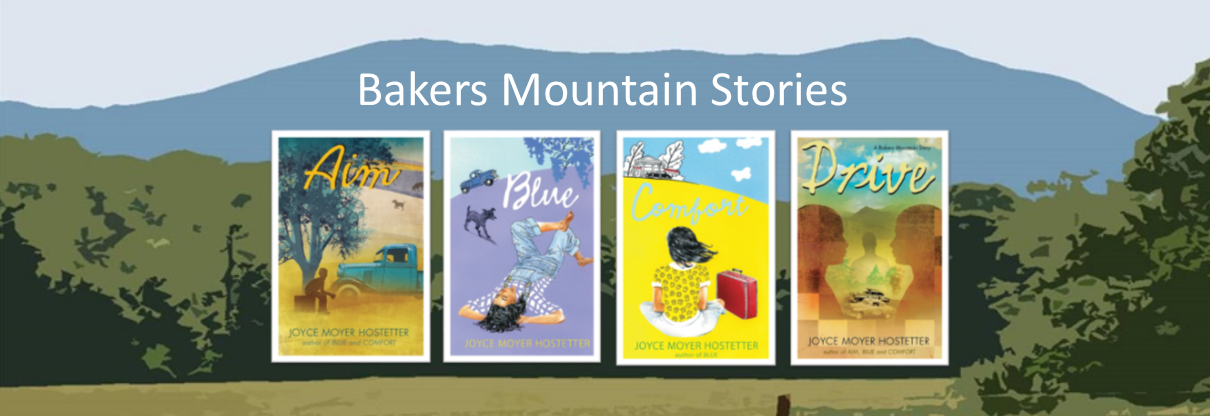
Bakers Mountain Stories

 So, which part of fiction writing do YOU struggle with? Let me know below. . .

******

Congratulations to Carrie Schmidt who won Ships, Secrets, and Survivors from last week’s blog.


DRIVE: A Book Review by Kathryn Dover (and a Giveaway!)

When I first heard about the Baker Mountain series by Joyce Moyer Hostetter, Drive, the fourth book in the series, sounded the most interesting. Drive occurs several years after the previous novel, Comfort, and follows the story of Ida and Ellie Honeycutt, Ann Fay’s younger twin sisters.

 REVIEW

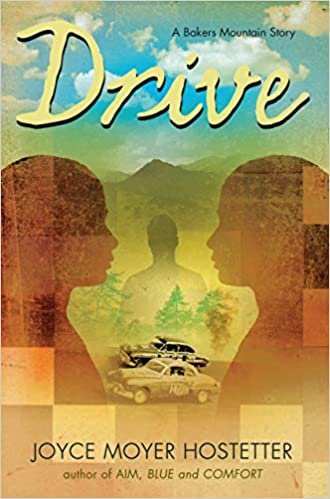
The cover of Drive is stunning; the image with both twins, a boy, and two old race cars instantly intrigued me. The story picks up almost where Comfort left off. Ann Fay’s father is still suffering from his war wounds, and Junior is still in love with Ann Fay. The plot pace is a little slow, but the story keeps moving. The style is also different from that of the previous three novels because it alternates between two perspectives instead of using only one, going back and forth between the different perspectives of Ida and Ellie.

Both twins are transitioning to high school, and Ida feels that Ellie is trying to put distance between them. At a glance, both twins seem complete opposites: Ida is shy, while Ellie is outgoing. Ida’s shyness originates in a scene from Comfort where her father mistakenly slams her against the wall. After that, Ida ceases to be outgoing and becomes very meek and shy. Ellie instantly takes her place. Life becomes a competition, and the twins are constantly in conflict with each other. However, the novel’s greatest conflict arises when the twins fight over the same boy.

The story is historically accurate: the Korean war and continuing polio epidemic are important to the story. In addition, the story takes place during the first year of NASCAR racing at the Hickory Speedway, near Bakers Mountain. Ellie loves the fast-paced, dangerous racing, while Ida is frightened by the danger and loud noises. The NASCAR races become important to the story’s theme, thus leading to the novel’s title, Drive.

The word “drive” serves a dual meaning, much like “blue” does in the series’ second novel, Blue. The first meaning is figurative: a motivation to succeed. Ida feels that Ellie has “the drive” to succeed while Ida does not. “Drive” also serves as a metaphor for Ida and Ellie’s stormy relationship, which Ida states as, “Remember. . . When Daddy slammed me up against the wall? It scared me so bad I couldn’t breathe. I guess I was like one of those race cars that gets smashed and then it just limps around the track. But you stepped on the gas and kept going. Enjoying all the attention you could. You got ahead of me, Ellie. You liked being first. And you sure do hate losing. But it’s not a race. It’s just both of us driving the best way we know how” (236).

By the end of the novel, the twins have matured greatly. Ellie matures by being more considerate, selfless, and respectful towards others. Ida learns she is capable of more than she ever dreamed, she is just as strong and as smart as Ellie. The ending is perfect. Ellie gets what she has been wanting the entire novel, and both twins have learned a valuable lesson in selfishness. Drive is very emotion-provoking; the bond between Ellie and Ida is stronger than they realize. I have enjoyed the entire Baker Mountain series and recommend them to teenagers and young adults. I think Blue is my favorite, though I eagerly await the next novel, Equal, coming in Spring 2021. I expect it to be equally enjoyable.

*******

Kathryn Dover lives in South Carolina with her family including three cats (and counting!), a dog, two fish, and many house plants. She attends Presbyterian College and is studying Math and Creative Writing. She enjoys playing the piano, reading, and writing plays.


GIVEAWAY

Boyds Mills & Kane donated a hardback copy of Drive for one of you to win! Leave a comment by Thursday, September 17th and we will enter your name.

FICTION MASTER CLASS

Joyce is leading our first Master Class on September 19. For more information, please click here. One attendee will receive all four books that have been published in the Bakers Mountain series. The fifth book, Equal, comes out in April 2021.


Registration ends TODAY!


COMFORT: A Book Review by Kathryn Dover (and a Giveaway!)

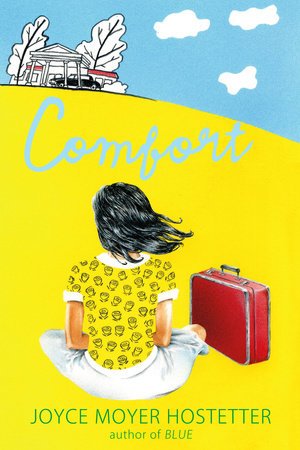
Comfort, the third book in Joyce Moyer Hostetter’s Bakers Mountain series, picks up almost exactly where the previous novel, Blue, left off. Ann Fay Honeycutt narrates this novel as well. The polio epidemic and World War II have left her family shattered, and Ann Fay must pick up the pieces.

The beginning is intriguing, but the plot pace is slower than that of the previous two novels. Even so, the story’s many conflicts kept me interested. One conflict involves Ann Fay’s colored friend, Imogene. The author vividly portrays the racial tensions of the time period. Ann Fay states, “Colored and whites being separated was as normal to me as walking. But . . . hearing how things looked from [Imogene’s] side of town made me see things in a new light” (121). During hard times, the people of Hickory bonded together and overcame prejudice. Ann Fay’s experiences give her a fresh, more biblical perspective. However, the central conflict of the novel is Ann Fay’s father’s changed personality due to his war experiences. His war wounds run deeper than his injured arm, and Ann Fay struggles to hold the family together.

While the novel is mostly about Ann Fay, I enjoyed reading how her friend and neighbor, the protagonist of the first novel, Aim, Junior Bledsoe, matures. He continues to look after Ann Fay and her family. Junior also gives Ann Fay sage advice. For instance, he tells Ann Fay: “If you want something bad enough, you can get it” (19). Junior has developed greatly from Aim; several events show his maturity. In Aim, Junior is jealous of Ann Fay and her father’s close relationship, yet in Comfort he watches that relationship fall apart and tries to pull it back together. Additionally, in Comfort, readers learn that Junior’s feeling for Ann Fay go beyond friendship. Ann Fay does not realize Junior’s feelings, and I enjoyed their interactions.

The Honeycutts are in desperate need of comfort: the desire for comfort is so strong it is mentioned several times throughout the novel, making the title very fitting. The family is still healing from the wounds they received in Blue, and the end of these trials does not seem to be in sight. As Ann Fay struggles to find comfort, her father whittles her a tiny doll in the likeness of herself. She names the doll Comfort, and it comforts her by reminding her of her father. Ann Fay also receives encouraging advice from a friend, Mr. Botts. He tells her, “Everyone in life has a handicap, Ann Fay. But the struggle to overcome it is worthwhile” (169).

Altogether, I enjoyed seeing how all the characters developed, especially Ann Fay, her father, and Junior. The ending is happy and would probably be satisfying to most, but it left me wanting to know what happens with Junior and Ann Fay’s relationship. Comfort is almost as emotion-provoking as Blue, and anyone who enjoyed Blue will not want to miss this thrilling sequel. I recommend Comfort to teens and young adults, and I look forward to reading Drive, the next novel in the series, soon.

******

Kathryn Dover lives in South Carolina with her family including three cats (and counting!), a dog, two fish, and many house plants. She will be attending Presbyterian College in the fall and wants to study Math and Creative Writing. She enjoys playing the piano, reading, and writing plays.


GIVEAWAY

We have a copy of Comfort to give away to one of our readers! Please leave a comment by August 20 and we’ll enter your name.

MASTER FICTION WRITING CLASS

Joyce is leading our first Master Class on September 19. For more information, please click here. One attendee will receive all four books that have been published in the Bakers Mountain series. The fifth book, Equal, comes out in April 2021.

ON WRITING PLOT: What’s the Problem? by Joyce Moyer Hostetter


One of the most boring books I ever read was about Jesus.  Okay – to be honest, I mostly said that to get your attention – please don’t get mad and click over to Facebook!

But, the truth is, I never actually finished reading Joshua by Joseph Girzone because this modern-day portrayal of Jesus did not contain a page-turning plot. Joshua, who represents Jesus, was just a little too perfect for my reading tastes. As I remember it, (And it has been a long time!) problems arose, Joshua responded, and the problems fell by the wayside. But of course!  Jesus was perfect. He could defeat his antagonists with a searching gaze or a searing question. Anyone rewriting His story has the daunting challenge of presenting Him with all His deity and His humanity at the same time.

I suspect that the Bible is the only book capable of doing this. And the Bible? Well, it’s filled with conflict. Do I need to mention the sexual immorality of King David, the rebellion of the Prodigal Son, and the betrayal by Judas Iscariot? Then there’s the ultimate conflict – government-sanctioned murder by crucifixion!

I’m a follower of Jesus Christ. I want his character to be perfected in me. But I am a long way from arriving at that goal. So, along the way, I manage to create a ton of conflict. When I write, I have to sometimes let my characters behave as badly as I do. Or worse. Or maybe they struggle in different areas than I do or make adolescent mistakes that I have hopefully outgrown. I have to put obstacles in their paths, give them problematic relationships, and allow them to make some wrong choices.

The thing is – without conflict we don’t have a plot. Or, at least, not an interesting one. So how does one write an interesting plot? I confess this is an ongoing challenge for me. But I’ve learned some things about plotting while writing BAKERS MOUNTAIN STORIES—my series of historical novels. This summer I’ve moved away from those stories. I’m all set to revise a novel set in western North Carolina during World War I. But first, I’m reading up on some popular plot structures in hopes of applying their methods to my story.

On September 19, I’ll share what I’m learning at Write 2 Ignite’s Fiction Writing Master Class.  We’ll explore some of the challenges and pitfalls of plotting, discover tips for finding plot ideas, and discuss using the power of three. Of course, we’ll take a look at some of those popular plot structures!  I hope to see you there!

*****

Our teen reviewer, Kathryn Dover, has been reviewing the Bakers Mountain series, written by Joyce. If you missed the reviews, here they are Aim and Blue. Watch for Kathryn’s review and our giveaway of Comfort next week!

Because of Covid, Joyce’s Master Fiction Writing Class will be virtual. But one fortunate attendee will still receive ALL FOUR books! Click HERE to register.

******

Joyce Moyer Hostetter lives in Hickory, North Carolina, where she enjoys spending time with her children and grandchildren. Before she wrote historical novels, Joyce taught special education, worked in a camp for at-risk children and directed a preschool program. She also wrote Christian curricula, magazine articles, and a newspaper column & feature stories. Her novels have won an International Reading Association Children’s Book Award, Parents’ Choice Honor Awards, and a North Carolina Juvenile Literature Award. Her books include Healing Water: An Hawaiian Story about a teen boy’s survival in Hawaii’s leprosy settlement and the Bakers Mountain Stories series: Aim, Blue, Comfort, and Drive. Equal, the fifth book in the series will be released in Spring, 2021.


Viewpoint and Dialogue by Joyce Moyer Hostetter

In my book, Drive, Ida and Ellie Honeycutt are forced by difficult circumstances to step out of their natural roles. As identical twins, they see and experience the world differently but are so emotionally connected that they easily understand the other’s viewpoint. At one point Ida, the homebody, feels forced to take a trip that her adventurous twin had dreamed of making. Neither girl is happy about the unfortunate change of plans but their love enables each of them to sacrifice for the other. Ellie narrates the following.


I told Ida to go on the trip.  It was the hardest thing I’d ever done… “I want you to go.”

         “You’re lying,” said Ida. “I see it all over you. Look, you’re trembling. And your nostrils are flared the way they do when you’re not telling the truth.”

I couldn’t pretend anymore. I wanted to just break down and cry and tell her to save the money for me and maybe I could travel with it later. And I was crying. I could feel the tears building. I couldn’t hold them back. I wiped at my cheeks with the palms of my hands. “Okay so I’m lying. Are you satisfied? I really want to take the trip. I do. But I can’t. And Daddy needs someone to go with him. And that someone is you.”

Ida squeezed her eyes shut, but the tears leaked out. I knew she felt guilty for getting this. The trip and Arnie both. It was too much for her to take from me.

         I couldn’t let up though. “No one else can experience it for me the way you can!” 

As the author, I could have written Drive from only one of the twins’ viewpoints. However, I loved them both and wanted each to have a voice – a chance to tell the story from her own perspective. I wanted the reader to pull for both of the twins, even when they were at odds with each other. Writing their stories in alternating chapters pushed me to find their unique personalities, speech patterns, and responses to life.

In September, when I teach Write2Ignite’s Fiction Writing Master Class, we’ll delve into the topic of choosing viewpoint characters and how a chosen character influences the storytelling. We’ll also look at creating compelling dialogue, ways that dialogue is tied to viewpoint, and how to use speech to illustrate unique personalities.

Every story needs a narrator. Finding the one with the right voice for your particular story can make all the difference!


Our teen reviewer, Kathryn Dover, has been reviewing the Bakers Mountain series, written by Joyce. If you missed the reviews, here they are Aim and Blue. Watch for Kathryn’s review and our giveaway of Comfort next!

The Write2Ignite early bird special is over on August 1.  What are you waiting for? You don’t want to miss Joyce’s Master Fiction Writing Class. And one fortunate attendee will receive ALL FOUR books!!


Joyce Moyer Hostetter lives in Hickory, North Carolina, where she enjoys spending time with her children and grandchildren. Before she wrote historical novels, Joyce taught special education, worked in a camp for at-risk children and directed a preschool program. She also wrote Christian curricula, magazine articles, and a newspaper column & feature stories. Her novels have won an International Reading Association Children’s Book Award, Parents’ Choice Honor Awards, and a North Carolina Juvenile Literature Award. Her books include Healing Water: An Hawaiian Story about a teen boy’s survival in Hawaii’s leprosy settlement and the Bakers Mountain Stories series: Aim, Blue, Comfort, and Drive. Equal, the fifth book in the series will be released in Spring, 2021.

BLUE: A Book Review by Kathryn Dover

I was excited to follow Junior Bledsoe’s journey in the second novel in the Baker Mountain series, Blue. Junior does not have as large a role in this novel as he does in the series’ previous novel, Aim, but his character is crucial because he helps his friend and neighbor, Ann Fay Honeycutt, who is the protagonist and first-person narrator of Blue.

The beginning is very moving—Ann Fay’s father is going off to war and leaves her as the “man of the house” while he is away (11). He also instructs Junior to keep an eye on the family in exchange for the privilege of driving his truck, which, as Ann Fay states, “Junior would do anyhow, on account of that’s just how he is. He’s got a big heart” (15). Similarly, Ann Fay describes Junior as “the definition of a true friend—someone who knows you might be dangerous to be around and they stick by you anyhow” (63). Thus, Junior’s character has developed much from the selfish, bitter teenager he was in Aim.

The plot pace is moderately fast and suspenseful, and the story flows very well. The story’s many conflicts keep the plot moving. World War II presents one conflict in Blue, but another conflict, the polio epidemic, affected the home front just as strongly. The Honeycutt family faces many trials during Ann Fay’s father’s absence, and Ann Fay’s character develops immensely throughout the novel. She describes her father’s departure as “the beginning of a journey for me. I didn’t go anywhere, really. But I was never in the same place after that either” (14). Ann Fay develops spiritually as well. On her “journey,” Ann Fay befriends a black girl, Imogene. Imogene’s testimony of how God has helped her get through some trials inspires Ann Fay to trust God more.

As with Aim, the title of Blue is perfect and very fitting, but its meaning is not as explicit as that of Aim. The word “blue” serves a dual meaning for Ann Fay. The color blue is very important to her. Her favorite flower, the wisteria, is blue. The wisteria links Ann Fay to her father; they often argued over whether the wisteria blooms are blue or purple. Ann Fay believes they are blue, and every time she looks at them, she is reminded of her father. On the other hand, “blue” represents Ann Fay’s sadness. Ann Fay has many reasons to be sad and describes her mood as “blue” (101). Also, as with Aim, the novel reads as if Ann Fay wrote it herself. The rich dialect and elements of the time period make Blue realistic and thus appealing to me.

The ending is a wonderful surprise; the story ends happily but leaves room for more character development and growth to follow in the subsequent novels. While I enjoyed Aim, I enjoyed Blue even more. The story is much deeper, more involved, and full of rich details and metaphors. Any story that evokes a reader’s emotions as well as Blue does is certainly well-written. I recommend Blue to teenagers and young adults, and as with Aim, I think almost any age reader will enjoy it. I look forward to seeing how Ann Fay’s “journey” continues in the next book, Comfort.


Kathryn Dover lives in South Carolina with her family including three cats (and counting!), a dog, two fish, and many house plants. She will be attending Presbyterian College in the fall and wants to study Math and Creative Writing. She enjoys playing the piano, reading, and writing plays.

GIVEAWAY

Boyds Mills and Kane have generously provided a copy of each of Joyce Hostetter’s books to give away in conjunction with Kathryn Dover’s reviews. To enter the giveaway for Blue, please leave a comment by 9 AM on July 3  We’ll enter your name for each time you share it on a social media site; just make sure to tell us in the comment what you did. The continental United States addresses only.

MASTER CLASS

Joyce will be presenting on writing fiction at our first master class on September 19. There is a $20 Early Bird discount if you register by August 1. If you come–bring your book so she can autograph it! PLUS we will be giving away a set of four books to give as a door prize!


Inspired by History by Jarm Del Boccio


Globe from Versailles

Paris is one of my favorite cities. Its history and ambiance intrigue me. There is something about strolling down the streets of Paris, crossing the bridges, or walking along the Seine, even in the rain, that can’t be experienced anywhere else in the world. It has a certain “Je ne sais pas” (I don’t know what. . .)  Hard to describe!


A Tale of Two Cities

And what surprised me was that London and Paris are truly sister cities. But don’t tell the Brits and Frenchies! Seriously, other than the ornateness of the Paris buildings and stateliness of the English, both cities are identical – a large expanse of buildings designed around a river, with gorgeous bridges, cathedrals, and governmental buildings abound, an iconic skyscraper, an underground to transport the masses, and pages and pages of historical events that entwine them both.

Ornate Paris Lamppost

Ornate London Lamppost

Hidden History

You’ve got the picture! All this historic “eye-candy” inspires me. But let me show you the three images from our trips that sparked a trio of stories:

Below is the bun shop where I discovered a tiny basement museum with a minuscule note mentioning the possibility that Sally Lunn (aka Solange Luyon) was a Huguenot girl who fled to England in the 1700s to escape persecution. With that tidbit of info, I am in the process of bringing Solange (Soli’s) story to life. I tentatively entitled my MG novel, “Soli’s Saving Grace.”

Sally Lunn’s Bun Shop in Bath, UK

I wrote a picture book inspired by the gorgeous creature below — only my MC was a white peacock, embarrassed with his ugliness until one day . . .

I call it “Feathers White, Feathers Bright.” Although I have submitted it to editors, I’ve had no luck. Today I will try again with #FaithPitch

Years ago, I discovered a little known medical expedition sanctioned by King Carlos of Spain in the very early 1800s. A smallpox vaccine was brought back to the Americas via 22 orphan boys, keeping it alive on the skin from one boy to the next until they arrived at their destination.

Their orphanage was in La Coruña, Spain — imagine my delight when I realized our sailboat cruise along the northwest coast of Spain would stop there!

I was impressed by this woman’s bravery and named the ship that sailed across the Atlantic with the 22 orphans the “Maria Pita” after Galicia’s (Northern Spain) heroine.

Maria Pita statue in La Coruña, Spain. She saved Galicia from the British. The ship that

I found the area where the orphanage probably was located, and walked from there to the sea, as my boys in “The Orphan’s Who Saved the World” would have done on their way to board the ship!

I wrote The Orphans Who Saved the World for the Institute for Children’s Literature‘s advanced course two years ago, and have submitted it a few times to agents and editors, also with no response, other than a new Christian publisher who was interested and wants me to resubmit it in the fall since they were publishing two already this year.

So many ideas, so little time!

Here are some links you might use for historic research:

Museum Virtual Tours

Museum Resources

Hathi Trust

National Archives

New York Public Library

Picture Gallery

Getty Images

Historical Picture Gallery

National Geographic

Google Aerial Maps

Virtual City Tours

I hope this has inspired you to dig into history with the links above. Better yet, it’s time to plan a vacation. We’ve been sequestered far too long.

Have a suitcase I can hide in?

Jarm Del Boccio’s debut middle-grade historical fiction, The HeartChanger, released with Ambassador International in 2019. You can connect with her at https://www.jarmdelboccio.com/

*****

You don’t always have to travel to find historical fiction ideas. Joyce Hostetter, our Fiction Master Class instructor, found inspiration in her own community–Hickory, NC. Next Monday, Kathryn Dover will review BLUE, the first book Joyce wrote in the Bakers Mountain Series.


AIM: A Book Review by Kathryn Dover and a Giveaway!

I have been interested in reading the Bakers Mountain series by Joyce Moyer Hostetter since I first heard about it at Write2Ignite 2018. When I was offered this opportunity to review all four books in the series, I gladly accepted. I am beginning my reviews with Aim, the first book, and will progress through the series with Blue, Comfort, and Drive over the summer.

The beautiful artwork on the novel’s cover and its intriguing synopsis instantly drew me into this novel. The beginning of Aim is captivating; the plot pace is fast, and the story flows extremely well. The story is told by first-person narrator Junior Bledsoe, who is growing up in North Carolina during the outbreak of World War II. The war is not Junior’s only struggle. His grandfather has come to live with his family, and his father has died. Junior describes his struggle well: “Sometimes it felt like war wasn’t across the ocean. It was right there in my own house. And inside me too. I didn’t know which way to think or feel” (54). Junior is suffering a loss no one seems to understand. While his father was an unpleasant man, he was still Junior’s father, and Junior loved him dearly.

Even so, Junior realizes his father’s shortcomings and wants to be a provider who is always there for his family, in contrast to his drunken father. Yet everyone, even Junior’s own family, makes fun of Junior’s attachment to his father and predicts he will end up like his father—a comment not encouraging to Junior. They also continually remind him that he does not have a father. Junior states: “It seemed like I couldn’t turn around without somebody rubbing my nose in the fact that I didn’t have a father anymore. I knew it wasn’t what they intended. It’s just the way it was” (64). As a result, Junior becomes bitter and a troublemaker. Junior must decide if he is going to let other people dictate the course of his life and follow in his father’s footsteps or if he is going to forge a new path for himself.

The title of Aim is perfect, as the story follows Junior’s aim for his life. I enjoy simple, one-word titles because they summarize the entire story with one powerful word. In addition, the story is historically accurate, containing details from the time period, such as quotes from President Roosevelt’s speeches. Dialect also contributes to the realism of Aim and adds depth to the characters. One detail from the time period that interested me was that Junior is left-handed. Society pressured left-handed people to use their right hand, and Junior’s teacher forces him to write with his right hand, contributing to his bitterness. Once again, no one understands him.

Readers can learn from reading Aim the influence their actions and words can have on someone who is suffering. Their words can encourage him to follow the right—or wrong—path. Thus, Aim gives great insight into the mind of a child who has lost a parent.

Aim is written in an unusual style that did not appeal to me at first, but as I kept reading, I began to appreciate the author’s unique voice. Every author has his own voice that makes his works special, and Joyce Hostetter’s informal, realistic style reads as if Junior himself had written the novel, attesting to her great skill as a writer. By the end of the novel, I enjoyed the style. The ending marks how much Junior has matured throughout the novel, leaving me feeling satisfied but wanting to know Junior’s role in the next book. I recommend Aim to readers from middle graders to young adults, as I think almost any age would enjoy it. I look forward to reading Blue, the next book in the series, soon.

****

Kathryn Dover lives in South Carolina with her family including three cats (and counting!), a dog, two fish, and many house plants. She will be attending Presbyterian College in the fall and wants to study Math and Creative Writing. She enjoys playing the piano, reading, and writing plays.

GIVEAWAY

Boyds Mills and Kane have generously provided a copy of each of Joyce Hostetter’s books to give away in conjunction with Kathryn Dover’s reviews. To enter the giveaway for Aim, please leave a comment by 9 AM on June 25.  We’ll enter your name for each time you share it on a social media site; just make sure to tell us in the comment what you did. Continental United States addresses only.


MASTER CLASS

Joyce will be presenting on writing fiction at our first master class on September 19. There is a $20 Early Bird discount if you register by August 1. If you come–bring your book so she can autograph it! PLUS we will be giving away a set of four books to give as a door prize!